はじめに:EDMが金型キャビティ加工で主流となっている理由
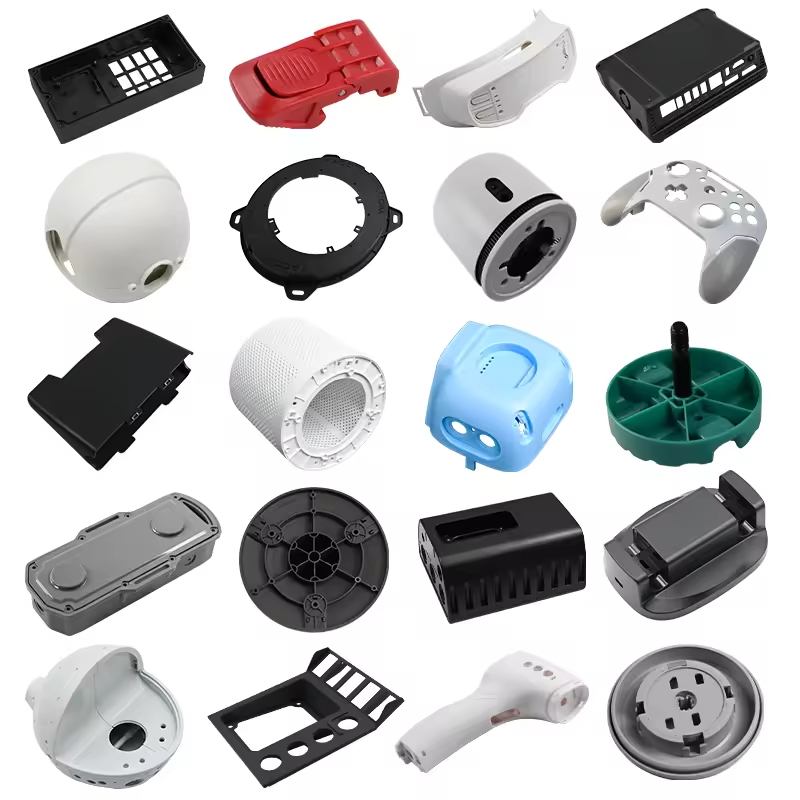
焼入れされた工具鋼に複雑な金型キャビティを形成するとなると、放電加工(EDM)に勝るものはありません。CNCフライス加工では、鋭い内角、深く狭いリブ、および50 HRCを超える硬度を持つ材料の加工には苦戦します。 シンカーEDM(ラムEDMまたはダイシンキングEDMとも呼ばれる)は、機械的な切削力を伴わずに放電による材料除去を行うことで、これらの課題をすべて解決します。そのため、射出成形金型のコア、キャビティ、リブ、ボス、およびフライス加工では不可能、あるいはコストがかかりすぎるような複雑な細部の加工において、EDMは定番の加工法となっています。.
シンカー放電加工の仕組み:放電加工の基礎
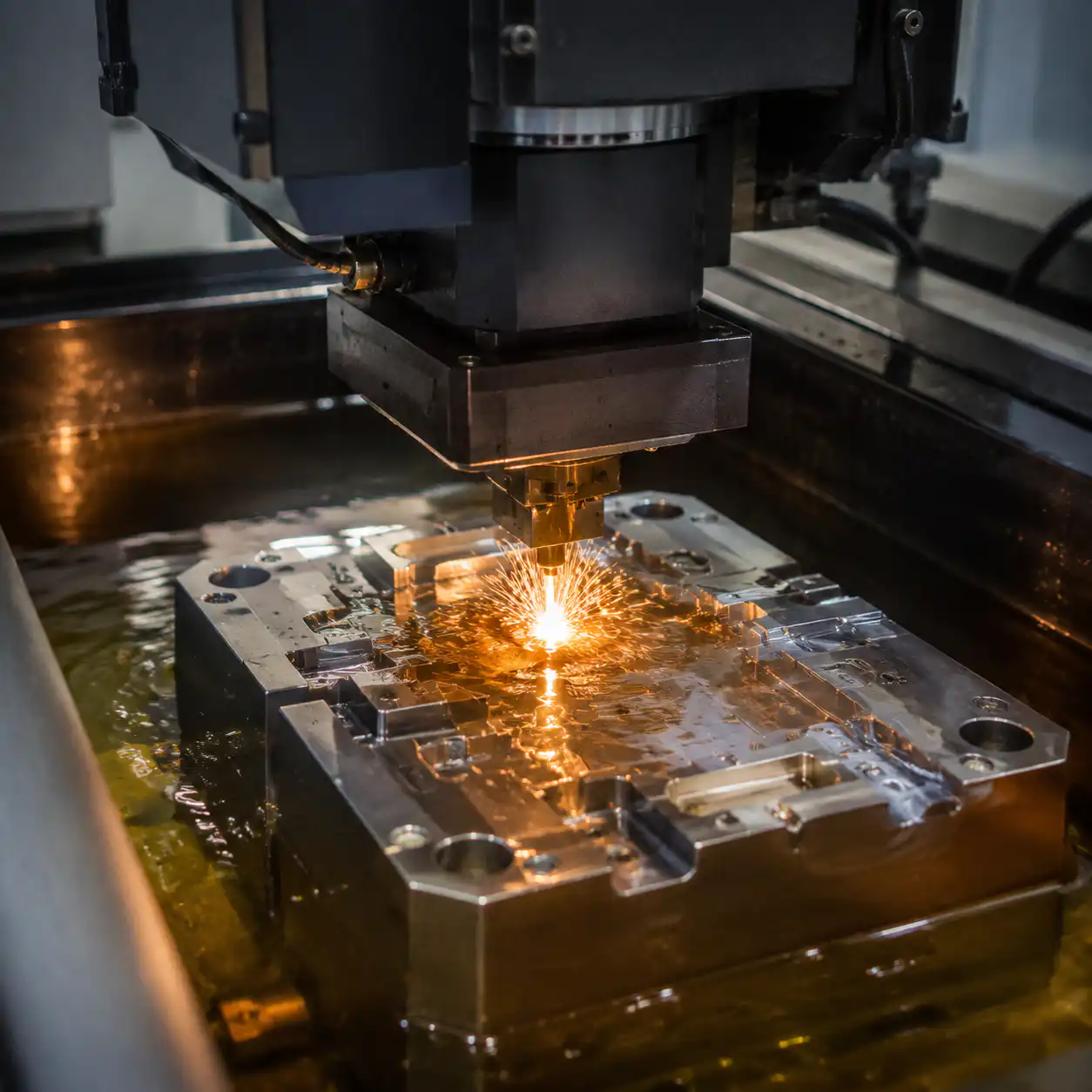
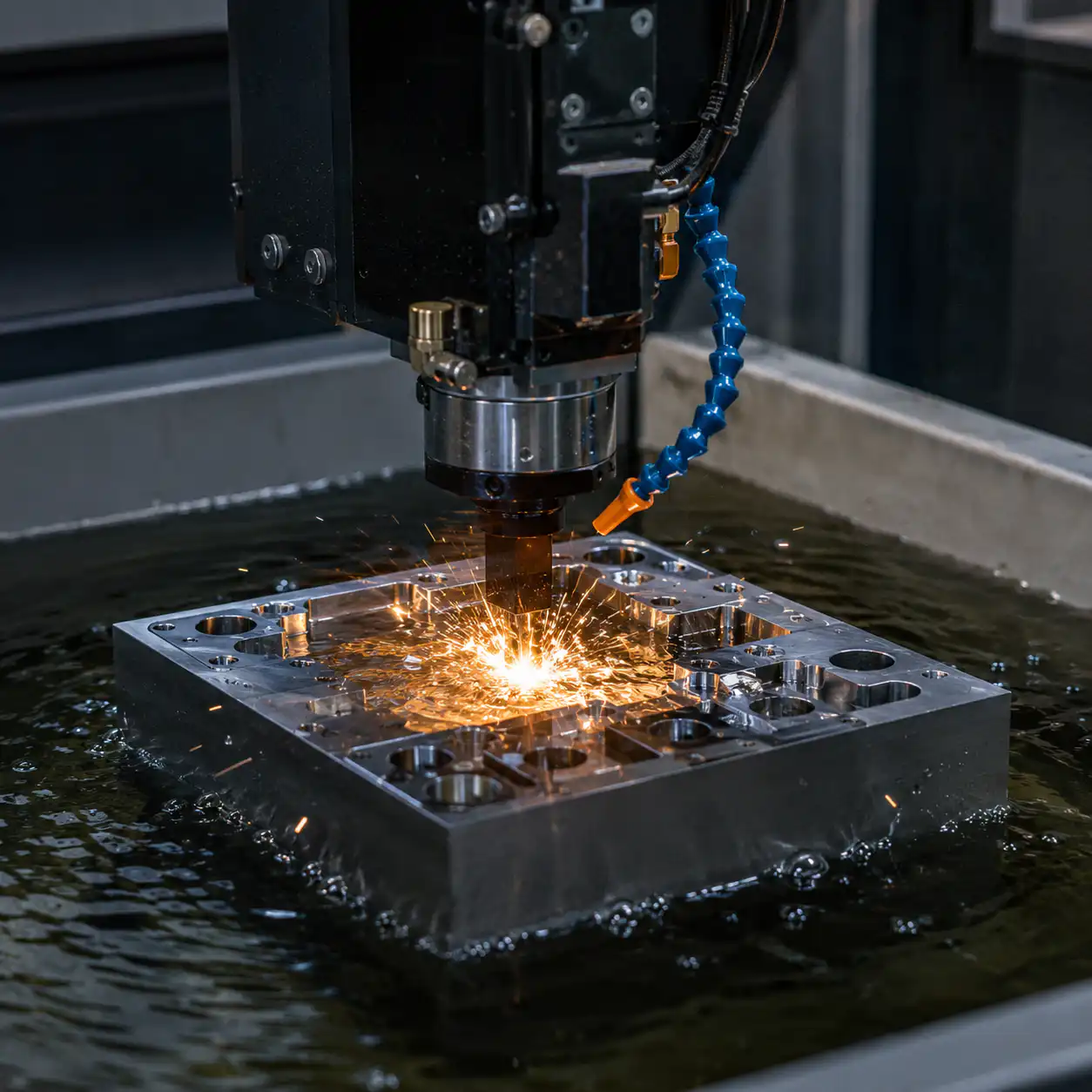
沈下式放電加工(Sinker EDM)は、制御された火花侵食という、シンプルでありながら強力な原理に基づいて動作します。 このプロセスでは、成形された電極(通常はグラファイトまたは銅)を「逆型」として用い、これを被加工物に押し込みます。電極と被加工物の両方は誘電液(通常は炭化水素系油)に浸漬され、その間に精密に制御された電位が印加されます。.
ギャップがわずか数ミクロンまで狭まると、誘電体流体がイオン化し、8,000~12,000℃に達する温度でスパーク放電が発生します。これにより、被加工材の微細な粒子が瞬時に気化します。 その後、誘電液が切粉を洗い流し、次のパルスが始まる前にギャップを冷却します。サーボ制御されたZ軸が、最適なスパークギャップ(荒加工や仕上げ加工の設定に応じて、通常0.01~0.10 mm)を維持します。.
EDMの性能を決定づける主なパラメータ:
- オーバーカット(スパークギャップ): 電極と被加工物の間に火花が発生する空間は、電極と完成したキャビティとの間の寸法オフセットを決定する。.
- パルスオン時間: 各スパークの持続時間??パルスが長いほど、除去される材料量は多くなりますが、表面は粗くなります。.
- パルスオフ時間: 火花間の冷却間隔が短すぎると、アーク放電や表面損傷の原因となります。.
- ピーク電流: 1パルスあたりの電流??電流が大きいほど材料の除去速度は速くなりますが、電極の摩耗も増えます。.
- デューティサイクル: 総サイクル時間に対する定時時間の比率??アークの不安定化を招くことなく、効率的な材料除去が行えるようバランスが取られている。.

電極材料:金型に適した材料の選び方
Electrode material selection directly impacts machining speed, surface finish, electrode wear, and overall mold accuracy. Each material has distinct tradeoffs that mold makers must weigh against part requirements and production volume. If the cavity finish target is still being debated, our surface finishing guide helps connect EDM outcome to final SPI and VDI requirements.
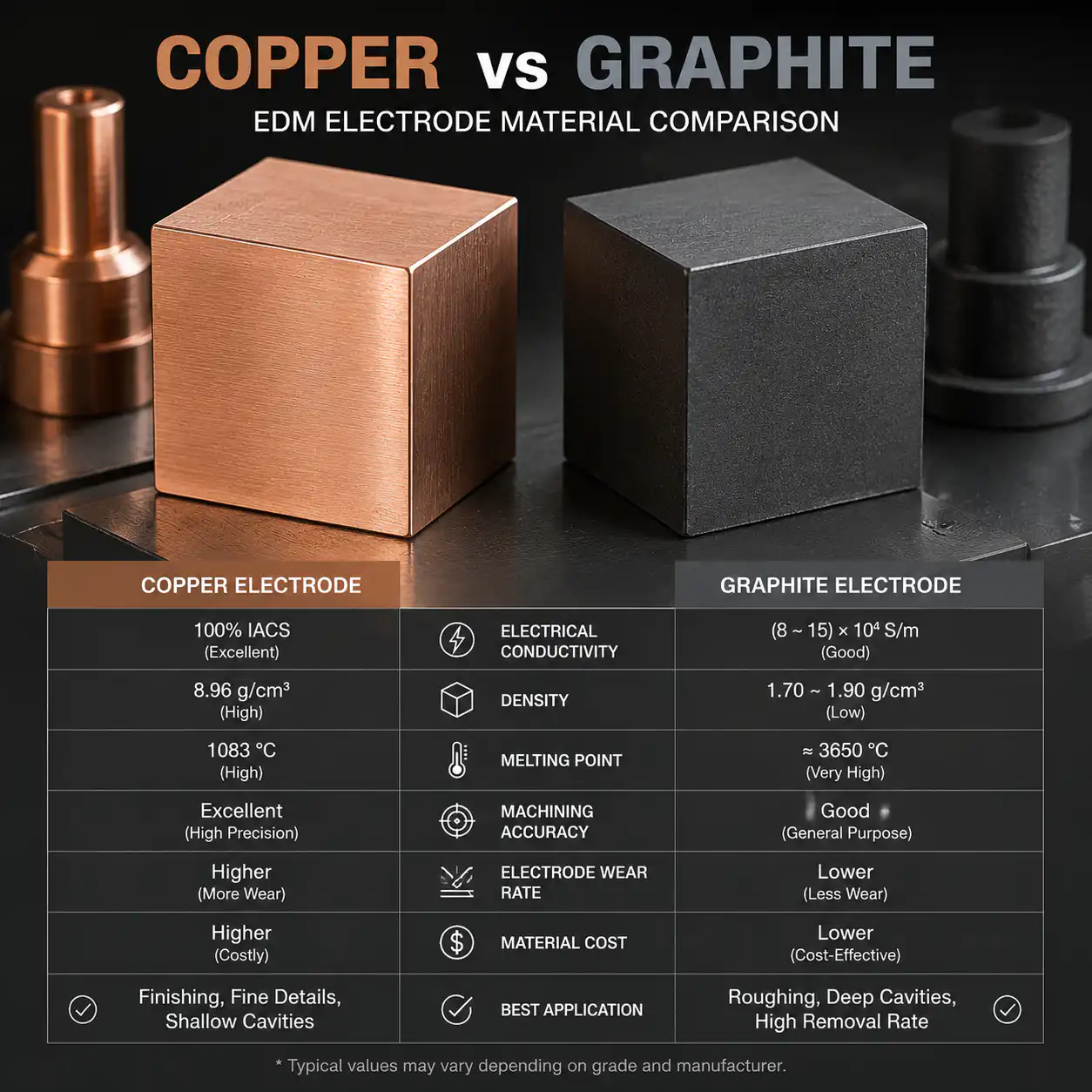
グラファイト(金型製作に最も一般的に使用される)
グラファイトは、いくつかの説得力のある理由から、金型キャビティの放電加工において主力材料となっています。これは、被削性、耐摩耗性、熱安定性の点で最高のバランスを備えているからです。Poco EDM-3や超微細グレードなどの最新の高密度グラファイトは、0.1 mmまでの微細な形状を再現でき、二次研磨を行わなくてもVDI 18以下の表面仕上げを実現できます。.
- 一般的な等級: EDM-1(一般的な荒加工)、EDM-3(中~微細な仕上げ)、Pocoシリーズ(超微細仕上げ)
- 摩耗率: 適切なフラッシングと極性設定(正極)を行えば、0.1%未満となります。
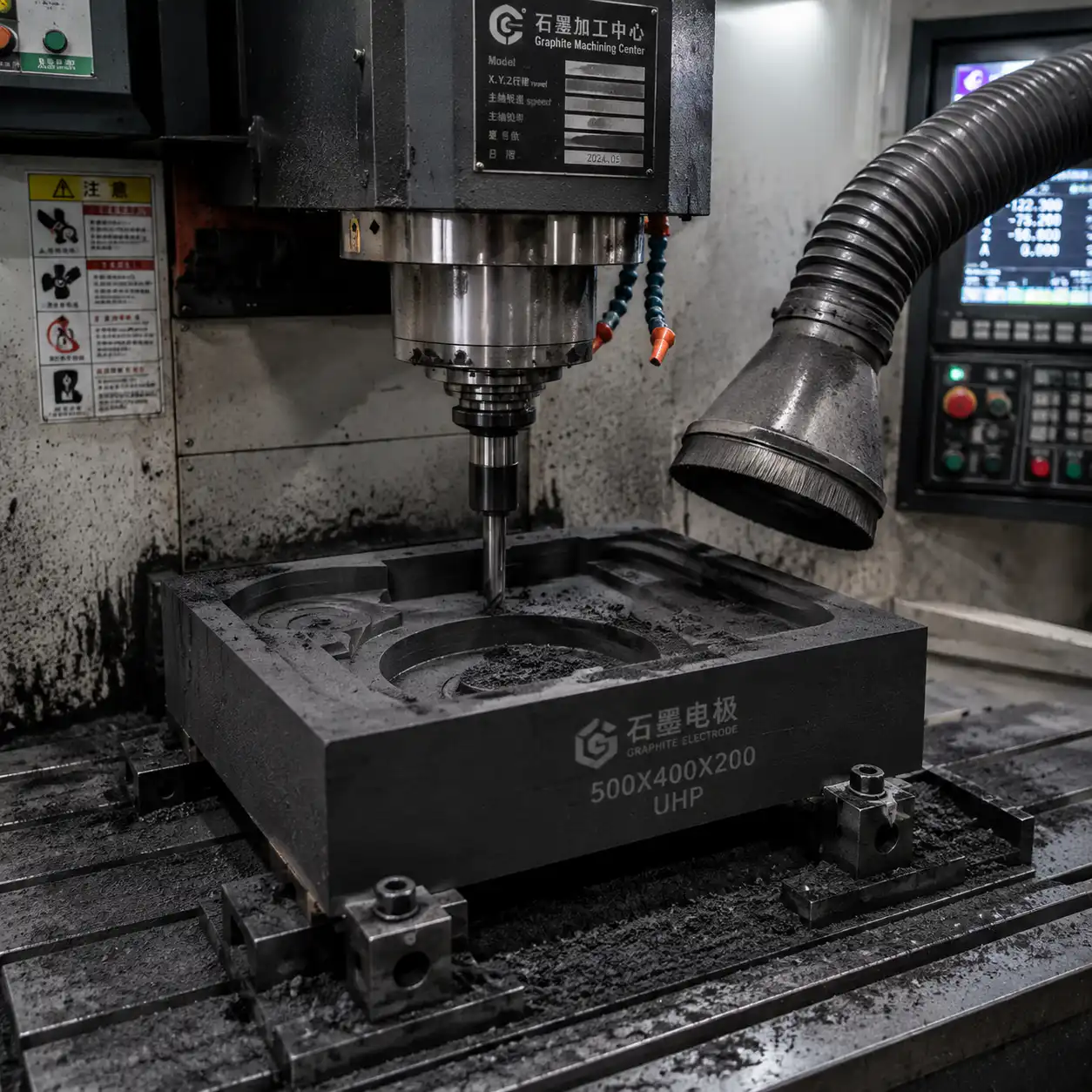
- 加工性: 高品質な黒鉛は、標準的な超硬工具を用いて高速で切削できるため、1回のセットアップで複雑な形状の電極を加工することが可能です。.
- 制限事項: 粉塵には研磨性と導電性があるため、CNCフライス盤では専用の集塵装置が必要です。粒状構造のため、非常に小さく壊れやすい部品(0.05 mm未満)には適していません。.
銅
一般的な放電加工用電極材料の中で、銅電極は最高の表面仕上げを実現します。鋼材に対して鏡面仕上げ(VDI 6~8相当)を実現するため、細部の精細さが求められる医療用や光学用の金型部品に好んで使用されています。 しかし、銅はグラファイトに比べて加工が著しく困難です。粘着性があり、切削工具にガリングを起こしやすく、加工速度を低く抑える必要があります。.
- 摩耗率: 設定に応じて0.5~2%で、グラファイトよりも高い。.
- おすすめの用途: 高光沢の化粧面、光学グレードのキャビティ、10 mm未満の微細なインサート。.
- 制限事項: 熱膨張率が高いため、長時間の燃焼サイクル中に寸法変動が生じる可能性があります。標準的な黒鉛グレードよりも高価です。.
銅・タングステン(CuW)
銅タングステンは、銅の熱伝導性とタングステンの耐摩耗性を兼ね備えています。電極の健全性が極めて重要なマイクロ放電加工や鋭角部の加工において、最適な選択肢となります。高密度であるため、過酷な荒加工条件下でも摩耗を最小限に抑えることができます。.
- 摩耗率: 通常は0.1%未満であり、仕上げ加工では0.05%を下回ることも多い。.
- おすすめの用途: 鋭角、幅0.5 mm未満の微細リブ、数百回の焼成にわたって形状を維持しなければならない大量生産用電極。.
- 制限事項: 高価(グラファイトの5~10倍)で、加工が難しく、重い。.
真鍮
真鍮は、電極の摩耗が激しいことから、精密金型のキャビティにはほとんど使用されません。ただし、ワイヤ放電加工(真鍮ワイヤは標準的な消耗品です)や、電極コストが最優先事項であり、寸法精度を多少犠牲にしてもよい低コスト・小ロットの荒加工といったニッチな用途では利用されています。.
- 摩耗率: 10-30%??すべての電極材料の中で最も高い。.
- おすすめの用途: 単発のプロトタイプ、複数の電極を使用することが経済的に妥当な大規模な荒加工用キャビティ、教育・研修の現場。.
金型製作における電極設計のルール
電極の設計こそが、EDMの専門知識によって、平均的な金型と卓越した金型を分ける鍵となります。電極は、キャビティの形状と完全に一致する負像でなければならない??ただし、放電加工の物理的特性を考慮した重要な寸法オフセットや戦略的な修正が加えられている必要があります。.
ルール1:スパークギャップ分だけ小さめに設定する
すべての電極は、最終的なキャビティに対して、スパークギャップ分の寸法が小さくなければなりません。荒加工用電極の場合、これは片側あたり0.2~0.03 mm程度となります。仕上げ用電極の場合、片側あたり0.01~0.03 mm程度と、さらに小さくなることもあります。 このアンダーサイズをわずか0.02 mmでも誤ると、数千ドル相当の金型インサートが廃棄される可能性があります。最新のCNC放電加工機では、これを電子的に補正(軌道運動)することが可能ですが、精密な単方向加工においては、依然として機械的なアンダーサイズが標準となっています。.
ルール2:軌道運動のパターン
軌道運動??これは、溶融中に電極が所定のパターンで移動する動きのことです。これは、溶融物の排出、表面仕上げ、および寸法管理に不可欠です。主に以下の3つのパターンが用いられます:
- 球面(3D軌道): 電極は球面状の軌跡を描き、あらゆる方向からの洗浄が困難な複雑な3D空洞に最適です。等方性の表面仕上げを実現します。.
- 円筒形(2D円形): 電極はXY平面上で円を描くように回転します。ポケット、リブ、および主スパークギャップが半径方向にある形状に最適です。.
- ベクトル(線形): 電極は直線ベクトルに沿って移動します。スロット形状や細いリブ、あるいは一方向からのみ面取りが可能である場合に使用されます。.
ルール3:複雑な空洞に対する電極の分割
単一のモノリシック電極では、すべてのキャビティを加工することはできません。深くて狭いリブの場合、十分な洗浄を確保するために専用のリブ用電極が必要になることがあります。鋭角なコーナーについては、それらの領域のみを仕上げ加工する別の仕上げ用電極が必要になる場合があります。 多部構成のキャビティ(異なる領域で異なる表面仕上げが求められる場合)では、多くの場合、粗取り用電極で材料を大量に除去した後、仕上げ用電極を使用します。この「電極戦略」(粗取り→半仕上げ→仕上げ)は、厳しい表面仕上げ要件が求められる金型における標準的な手法です。.
ルール4:フラッシングホールの戦略
効果的なフラッシングの有無が、安定した燃焼と短絡による事故との分かれ目となります。深いキャビティ(深さ対幅の比が 3:1 を超えるもの)の場合、電極に貫通して開けられた内部フラッシング穴により、誘電液がスパークギャップに直接供給されます。穴の位置決めにあたっては、以下の点を考慮する必要があります:
- デッドゾーン: ごみが自然にたまりやすい場所(奥まった隅、くぼみの底など)。.
- 穴の直径: 通常、電極のサイズや洗浄圧力に応じて0.5~3 mmとなります。.
- 撤退戦略: フラッシング穴は、キャビティ表面に小さな「痕跡」を残しますが、これらは許容される外観上の基準の範囲内であるか、あるいは後続の工程で切削によって除去されるような位置に配置されていなければなりません。.
EDMとCNCフライス加工:それぞれのプロセスが優位となる場面
EDMとCNCフライス加工のどちらをいつ使用すべきかを理解することは、コスト効率の良い金型製作において極めて重要です。以下の表は、プロの金型製作者が用いる判断基準をまとめたものです。.
| パラメータ | シンカー放電加工 | CNCフライス加工 |
|---|---|---|
| 焼入れ鋼(HRC 50以上) | 「Excellent??o」の硬度制限 | 不適切??工具の過度な摩耗、チャタリングのリスク |
| 鋭い内角 | 半径0.05 mmまでの優れたコーナー加工 | 工具の最小半径(約0.2 mm)による制限 |
| 深い窩(アスペクト比>5:1) | 電極の長さによって深さが制限される?? | 曲げ剛性が低い、リーチが限られている |
| 表面仕上げ(加工直後) | VDI 45(ラフ)から VDI 6(ミラー)へ | Ra 0.4~3.2ミクロン(ツールパスによって異なる) |
| 材料除去率 | 遅い(mm/時間、cmではない?) | 高速(アルミニウム:cm?/分、鋼:cm?/時間) |
| 電極・金型費用 | 電極加工が必要(追加工程) | 標準的な超硬工具(既製品) |
| リードタイム | より長い(電極の設計、機械加工、セットアップ) | より短い(CAMから機械への直接出力) |
| おすすめのアプリ | 硬化された金型キャビティ、リブ、ボス、鋭角、テクスチャ加工された表面 | 軟鋼の予備焼入れ、大型キャビティ、アルミニウム製試作金型 |
EDMによる表面仕上げ:荒仕上げから鏡面仕上げまで
EDMによる表面仕上げは、パルスエネルギーに依存する。高エネルギーのパルスは材料を素早く除去するが、表面は粗く、クレーター状になる。低エネルギーのパルスは材料の除去速度は遅いものの、より滑らかな表面が得られる。この材料除去速度と表面品質の逆相関関係は、EDMの工程計画における基本的なトレードオフである。.
リキャスト層(ホワイト層)
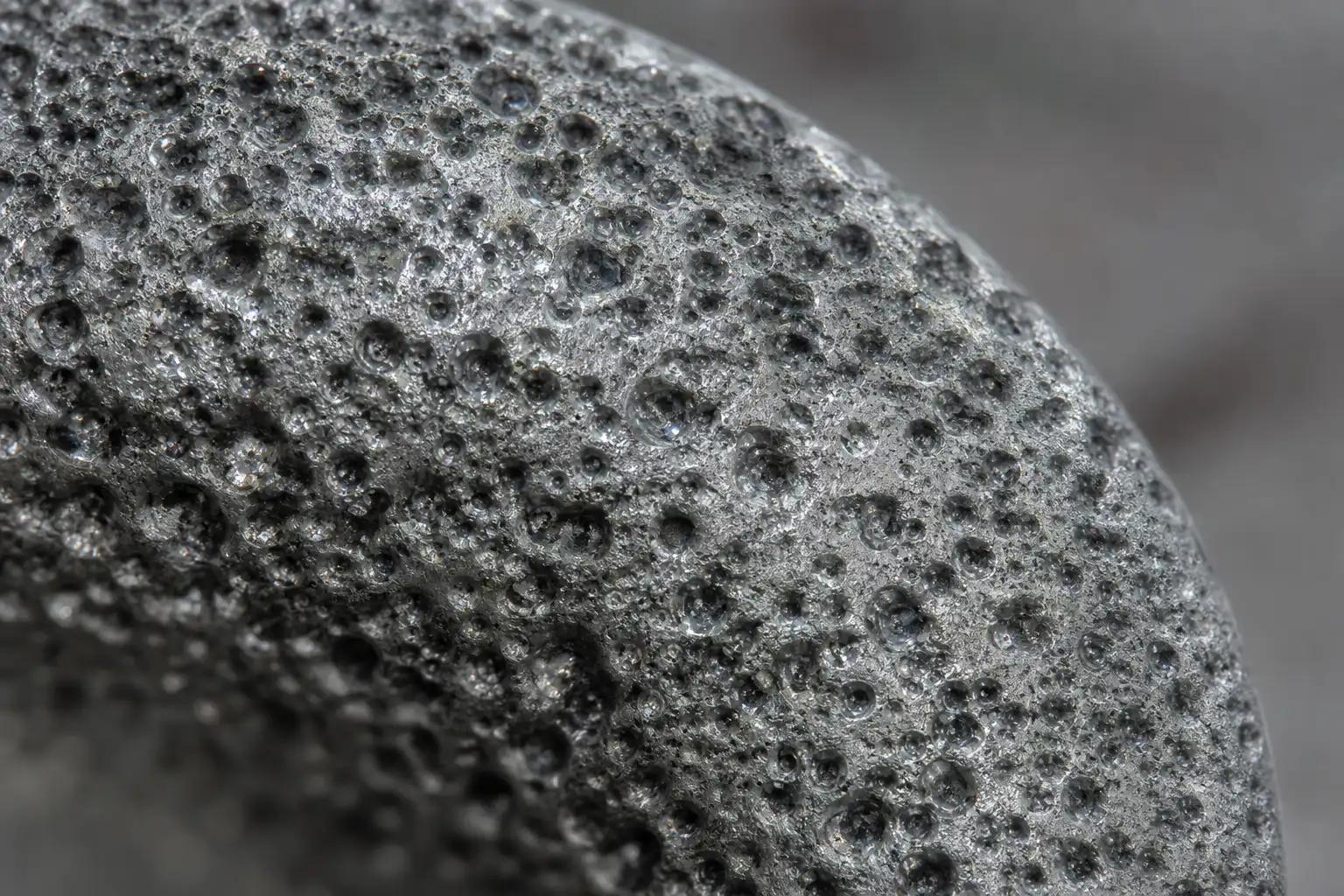
EDMによる火花一つひとつが微細な溶融池を形成し、それが急速に冷却されることで、キャビティ表面に薄い「リキャスト層」または「ホワイト層」が残ります。この層は母材とは異なる金属組織を持っており、一般的に硬く、脆く、熱衝撃による微細な亀裂を含んでいます。 再結晶層の厚さは、パルスエネルギーが増加するにつれて厚くなります:
| クリアレベル | VDI相当 | レイヤーの再作成 | 代表的な用途 |
|---|---|---|---|
| 荒加工 | VDI 45-52 | 15~30ミクロン | 大量の組織切除、美容目的以外の部位 |
| 半仕上げ | VDI 27-33 | 8~15ミクロン | 機能性を重視した表面、外観上の要件はそれほど厳しくない |
| 精密仕上げ | VDI 15-21 | 3~8ミクロン | 目に見える装飾面、テクスチャ仕上げ |
| 超仕上げ | VDI 6-12 | 1~3ミクロン | 光学グレード、医療機器用、高光沢部品 |
リキャスト層の除去: 再結晶層は、金型の耐久性や表面の完全性を損なう可能性があります。一般的な除去方法には、次のようなものがあります:
- EDM加工後の仕上げ: 手磨きまたは研磨流体加工により、表面の5~10ミクロンを除去し、再結晶した材料の大部分を取り除きます。金型の外観面における標準的な処理方法です。.
- 化学エッチング: 制御された酸浴により、再鋳造層が均一に溶解されます。機械研磨が困難な複雑な形状の場合に特に効果的です。.
- 低エネルギーの仕上げパス: パルスエネルギーを段階的に低く設定して複数回のパスを行うことで、最初からリキャストの厚みを最小限に抑えることができます。.
- 応力除去熱処理: 重要な金型の場合、EDM加工後の焼戻しサイクルを行うことで、再結晶層に残留応力を緩和することができます。.
ワイヤ放電加工と沈め放電加工:相互に補完し合う加工法
ワイヤ放電加工と沈め放電加工は競合関係にあるわけではない??これらは、金型製作において異なる課題を解決する、互いに補完し合う加工法なのです。.
ワイヤ放電加工の強み
- 貫通機能のみ: ワイヤ放電加工は、被加工物を完全に貫通させます。エジェクタピン穴、冷却路、コアピンスロット、ストリッパープレートの切り欠きなどの加工に特に適しています。.
- 2D断面図: ワイヤ放電加工では、垂直な壁面やプログラム可能なテーパー角を持つあらゆる2次元輪郭を加工することができます。.
- 精度: 最新のワイヤ放電加工は、0.002 mmという位置精度を実現しており、あらゆる加工プロセスの中で最も高精度です。.
- 電極加工なし: 消耗品の真鍮線または被覆線(直径0.1~0.3 mm)を使用します。??o 特注の電極は不要です。.
シンカーEDMの強み
- 盲孔: 決定的な利点とは???インカーEDMは、ワイヤ放電加工では物理的に到達できない底面が閉じたキャビティを形成できる。.
- 3D自由曲面: 3D軌道運動を伴うシンカー放電加工では、複雑な造形面を形成することができます。.
- テクスチャ転写: 電極表面のテクスチャがワークピースに転写されることで、金型の各キャビティ全体で一貫した粒状感やパターンの質感が実現されます。.
実際には: 一般的な射出成形金型では、この2つのプロセスが併用されています。 ワイヤ放電加工では、完全焼入れされたプレートからエジェクタ穴、スライドガイド、インサートポケットを切削します。沈め放電加工では、コアおよびキャビティインサートに、キャビティ形状(リブ、ボス、ゲート、テクスチャ)を焼き付けます。これら2つの工程は、DFM(製造性設計)の検討段階で一体として計画されます。.
射出成形金型購入者向けの実用的なヒント
If you are procuring injection molds, understanding EDM can help you make better decisions about lead time, cost, and quality. Here are practical tips for evaluating whether your mold maker is using EDM appropriately. This ties directly into our lead-time guide, because EDM planning is often on the critical path for complex tools.
EDMが使用されているかどうかを尋ねるべきタイミング
- 鋭い内角: 部品の角がR0.5 mmより鋭い場合は、ほぼ間違いなく放電加工が必要となります。金型メーカーに確認を依頼し、電極の設計図を見せてもらってください。.
- 深いリブ: 深さ対幅の比率が3:1を超えるリブには、通常、放電加工(EDM)が必要となります。硬化鋼の場合、このアスペクト比では、フライス工具がたわんだり、振動したり、破損したりします。.
- 硬化キャビティ: 金型用鋼をキャビティ加工の前に焼入れする場合(大量生産用金型では一般的)、EDMがキャビティ成形の主要な工程となる。.
- テクスチャの要件: 化学エッチングでもテクスチャを形成することは可能ですが、EDMによるテクスチャ加工(テクスチャ付き電極を使用)の方が、複数のキャビティにわたってより均一な仕上がりを実現できます。.
EDMがリードタイムとコストに与える影響
- 電極の設計と加工: 金型のリードタイムは、キャビティの複雑さにより1~5日程度長くなります。これは前払いの固定費用となります。.
- 燃焼時間: 複雑なキャビティの加工には、放電加工機で8~48時間かかる場合があります。これが主要な変動費となります。.
- 複数の電極: 複雑なキャビティの場合、多くの場合、2~4個の電極(荒加工、半仕上げ、仕上げ、細部加工)が必要となります。電極が1つ増えるごとに、コストとリードタイムが増加します。.
- コストのベンチマーク: 大まかな目安として、EDMを使用すると、軟鋼製のCNC専用金型と比較して、金型総コストが15~30%増加します。このコスト増は、硬化鋼を用いて鋭利な形状を成形できることに起因しています。.
試作部品上の工具痕の読み取り
成形されたサンプル部品を拡大して観察することで、使用された加工プロセスを特定できることがよくあります:
- EDMマーク: ランダムなクレーター模様(オレンジの皮のような)があり、特定の方向性を持つ工具痕はなく、形状にかかわらずすべての表面で均一な質感となっている。.
- CNCの刻印: 平行なカスプマーク(ツールパスのスカラップ)、表面の向きに応じた方向パターンの変化、半径が明確に確認できる滑らかなコーナー。.
- 研磨済みEDM: 表面は滑らかだが、10倍の倍率で観察すると所々にクレーター状の痕跡が残っている?? これは、コスト効率に優れた放電加工(EDM)を施した後、軽く研磨した跡である。.
よくある質問
金型製作におけるシンカー放電加工の精度はどの程度ですか?
クローズドループサーボ制御を備えた最新のシンカー放電加工機では、通常、位置精度±0.005 mm、寸法精度±0.01 mmを達成しています。軌道運動を用いた仕上げ加工において、適切に設計された電極を使用すれば、±0.005 mmの公差を実現することが可能です。 制限要因となるのは、電極の加工精度、放電サイクル中の熱的安定性、および洗浄の均一性です。ワイヤ放電加工はさらに高精度(±0.002 mm)ですが、シンカー放電加工の精度は、事実上すべての射出成形金型のキャビティ要件に対して十分すぎるほどです。.
電極には、なぜ銅よりも黒鉛が好まれるのでしょうか?
金型製作における放電加工(EDM)において、グラファイトが主流となっているのには、主に3つの理由があります。第一に、グラファイトは銅よりもはるかに高速に加工できることです。ダイヤモンドコーティングされた超硬工具を用いた高速CNCフライス加工により、複雑な形状のグラファイト電極を数日ではなく、数時間で製作することができます。 第二に、適切な設定下では、グラファイトの摩耗率は0.1%未満であり、これは数百回の放電加工を経ても電極の形状が維持されることを意味します。 第三に、グラファイトは銅に比べて熱膨張がごくわずかであるため、長時間の放電加工サイクル中も電極の寸法が安定しています。銅は、最高レベルの表面仕上げ(VDI 6~8)が求められる用途に限定されており、その高い摩耗率は、単一の仕上げ加工工程において許容されるものです。.
EDM加工は金型用鋼を弱めるのでしょうか?
EDMは金型用鋼の母材を弱めることはありませんが、金属組織が変化した薄い再結晶層(設定に応じて通常1~30ミクロン)を形成します。この層は母材よりも硬く、脆く、急冷による微細な亀裂を含んでいます。 ほとんどの射出成形金型用途において、この再結晶層は、EDM後の研磨、研磨材流動加工、または化学エッチングによって除去されます。 重要な高圧金型や高サイクル金型の場合、EDM後の応力除去熱処理が推奨されます。適切に後処理が行われれば、EDMで作成されたキャビティの疲労寿命は、従来の機械加工によるキャビティと同等になります。.
シンカー放電加工では、研磨を行わずにどのような表面仕上げが可能ですか?
研磨を行わなくても、シンカー放電加工では、VDI 45~52(粗面、Ra 約12~18ミクロン)からVDI 6~12(鏡面、Ra 約0.4~1.6ミクロン)までの表面仕上げを実現できます。 最も微細な仕上げを得るには、銅電極を用いた低エネルギーの仕上げ加工と、サイクル時間の延長が必要となります。研磨を行わない実用的な生産仕上げとしては、通常、黒鉛電極と最適化された仕上げパラメータを用いて、VDI 18~24(Ra 1.6~3.2 ミクロン)が得られます。 VDI 12 以下の鏡面仕上げの場合、EDM サイクル時間を延長するよりも、EDM 後の研磨を行う方が、ほとんどの場合、経済的です。.