Two-Shot これは、選択肢を比較したり、限界を確認したり、リスクの少ないプロセスを選定したりする必要がある場合、実用的な工学上のテーマとなります。.
Multi-Material Molding Overview

Multi-material molding combines different materials in a single part to achieve functional or aesthetic benefits. Two-shot molding and overmolding are the primary techniques, each with distinct advantages.
Two-Shot Molding
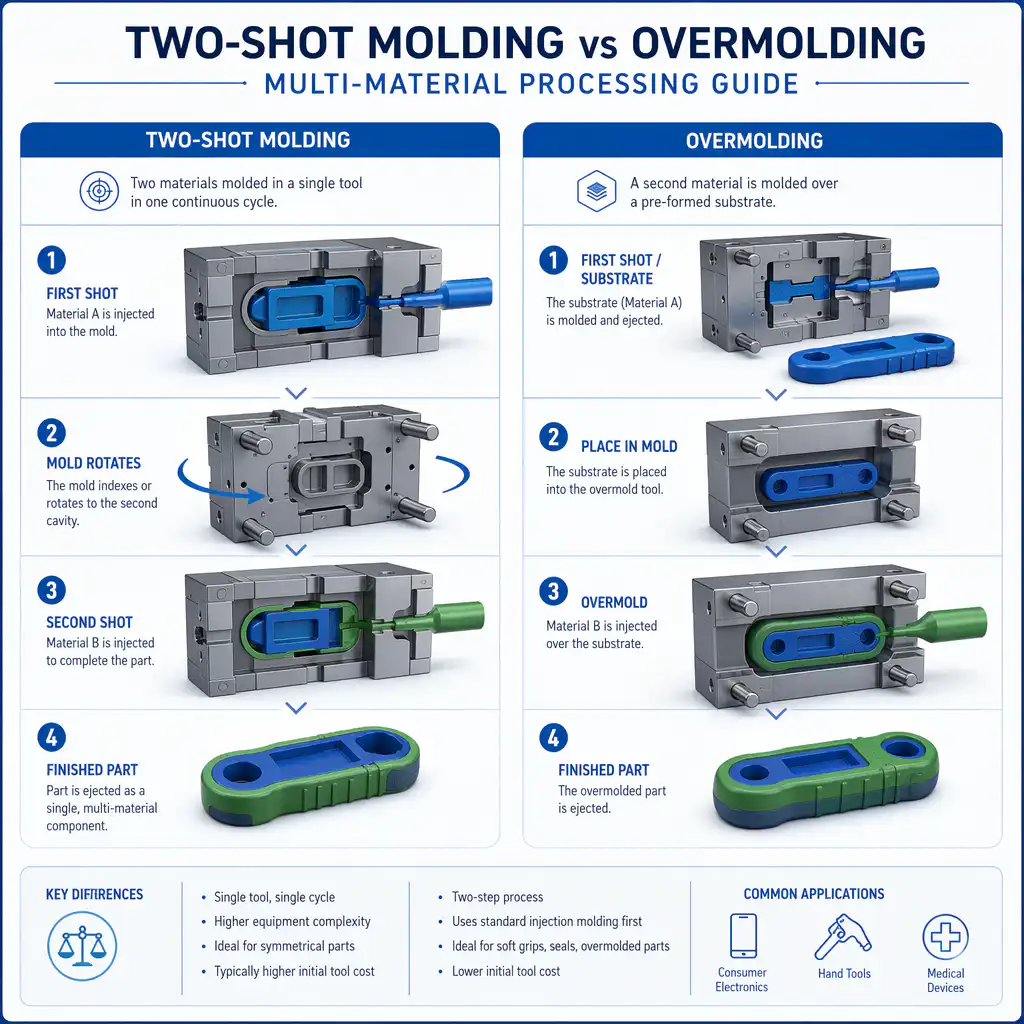
Two-shot molding (also called 2K molding or multi-component molding) injects two different materials in a single molding cycle using a specialized machine with two injection units.
プロセス説明
- First material injected into mold cavity
- Mold rotates or transfers to second position
- Second material injected over or alongside first
- Part ejected as complete unit
メリット
- Excellent material bonding (chemical bond possible)
- High precision and repeatability
- Single cycle production
- Design flexibility for complex geometries
- Reduced labor and handling
Disadvantages
- Higher machine and tooling cost
- Requires specialized equipment
- Less flexibility for design changes
- Longer tooling lead time
オーバーモールド
Overmolding uses two separate molding cycles. A substrate part is molded first, then placed in a second mold where additional material is injected over it.
プロセス説明
- Substrate molded in first mold
- Substrate placed in second mold
- Second material injected over substrate
- Completed part ejected
メリット
- Lower equipment cost
- Can use standard injection machines
- More design flexibility
- Easier to change colors/materials
- Suitable for lower volumes
Disadvantages
- Requires two molding cycles
- Additional handling and labor
- Bond quality depends on mechanical interlock
- Higher per-part cost at high volumes
Material Compatibility
アプリケーション
Two-Shot Molding:
- Automotive interior components
- Medical devices with soft grips
- Consumer electronics buttons and keys
- Sealed enclosures with gaskets
Overmolding:
- Tool handles and grips
- Encapsulated electronics
- Cable connectors
- Product branding and logos
Decision Factors
- Volume: High volume favors two-shot; low volume favors overmolding
- Bond requirements: Chemical bond needs two-shot
- Budget: Overmolding has lower upfront costs
- 設備 Two-shot requires specialized machines
結論
Both techniques produce multi-material parts successfully. Evaluate production volume, bond requirements, and available equipment to determine the best approach.
関連リソース
Process Decision Table for Production Parts
| Decision factor | Two-shot molding | オーバーモールド |
|---|---|---|
| Tooling route | One indexed or rotary tool with two injection units | Separate substrate and overmold steps, or an insert tool |
| 最適なサイズ | High registration, repeatability and production volume | Flexible launches, inserts or lower initial tool complexity |
| Main risk | Transfer alignment, shot balance and interface validation | Insert position, surface preparation and bond variation |
| Validation | Registration, weld lines and interface strength | Retention features, cleanliness and pull testing |
Choose after checking the material pair, annual volume, gate and parting-line limits, substrate tolerance and the test method for the completed interface. Include the DFM drawing, material datasheets, trial plan and bond requirement in the RFQ. See the overmolding guide for the broader tooling route.
よくあるご質問
When does Two-Shot Molding vs Overmolding — Multi-Material Processing Guide make sense?
Two-Shot Molding vs Overmolding — Multi-Material Processing Guide makes sense when the part volume, material choice, geometry, and repeatability needs justify mold design and tooling investment.
What design factors matter most for Two-Shot Molding vs Overmolding — Multi-Material Processing Guide?
肉厚、リブ、ボス、抜き勾配、ゲート位置、収縮、パーティングライン、およびエジェクションは、いずれも成形品の品質に影響を与えます。.
金型製作の前に、どのような情報が必要ですか?
サプライヤーは、3Dモデル、材質、予想年間生産数量、外観要件、公差要件、および組み立てや機能試験に関する要件を確認する必要があります。.
What is the biggest risk in Two-Shot Molding vs Overmolding — Multi-Material Processing Guide?
最大のリスクは、実際の用途において、材料の挙動、収縮、流動性、および部品の機能が十分に確認される前に、金型を承認してしまうことです。.