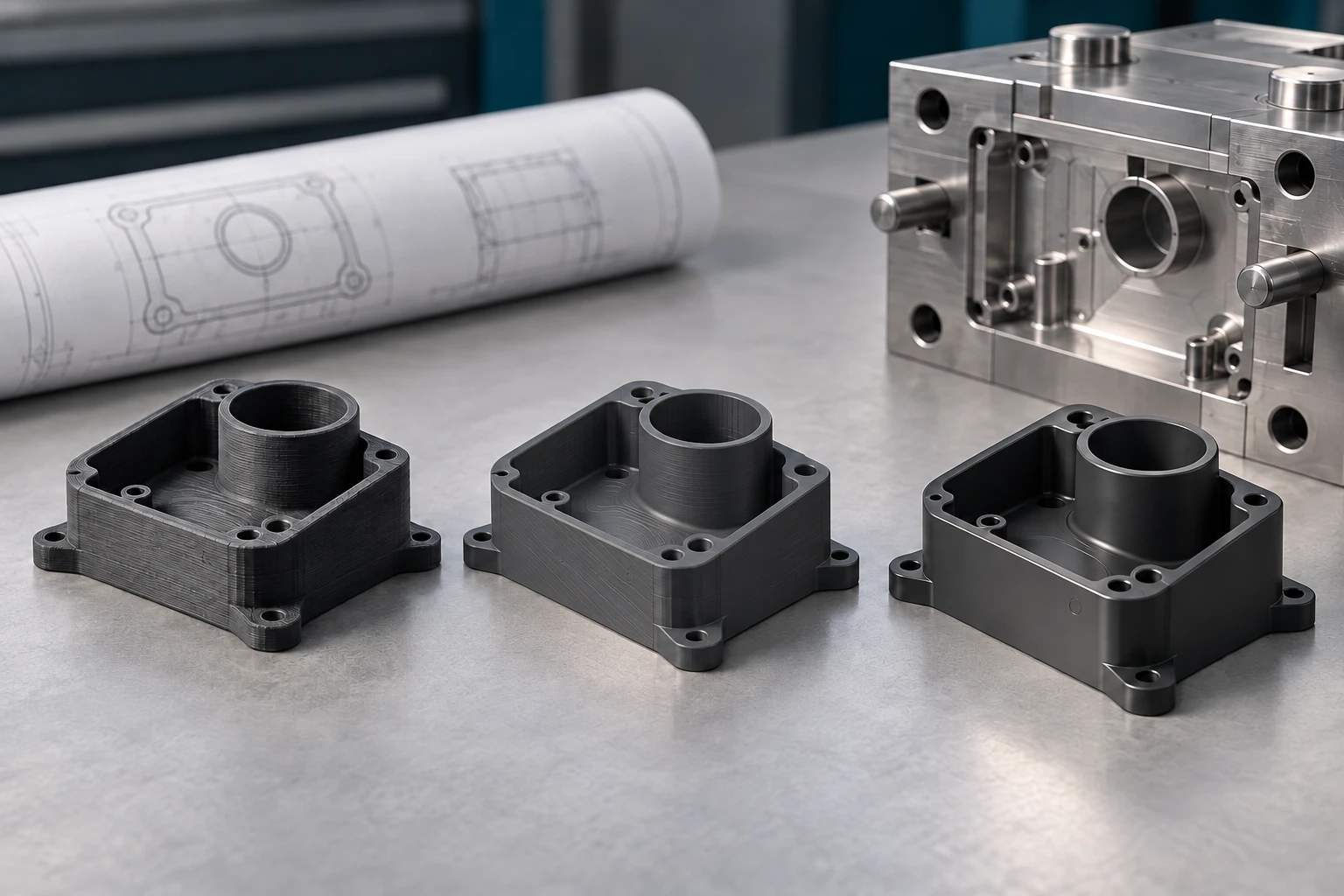
Moving a plastic part from prototype to production requires more than a working sample. A 3D-printed or CNC-machined prototype can confirm shape, fit or a specific function, but it does not automatically prove how the intended production resin will behave in a mold or whether dimensions will repeat. This guide follows the decisions from sample evidence through material and process review, tooling, molded trials and approval. Nylon Plastic can review these connected requirements from the drawing; the route is confirmed for the actual part.
What Does the Plastic Prototype Actually Prove?
Record the purpose and test result of the current sample before choosing the next manufacturing route. A working sample and a repeatable production part answer different questions:
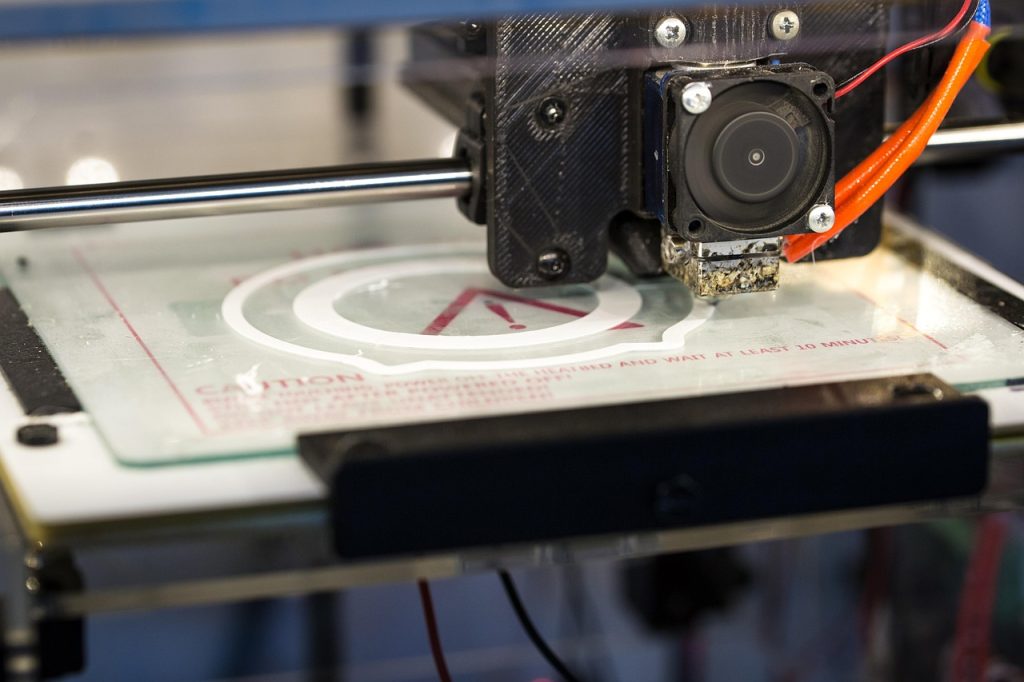
- Appearance or assembly-fit sample: a 3D-printed part can reveal shape, clearances and visual changes. It does not establish final-grade strength, molded surface quality or repeatable dimensions.
- Functional prototype: a CNC-machined or suitable printed plastic part can test a defined load, fit or mechanism. Record its material and test conditions so differences from the intended molding grade remain visible.
- Molded trial sample: a part made with the intended grade and tool can be checked against the controlled drawing. Agree the critical dimensions, function, appearance and acceptance method before repeat production.
If the sample material or process changes, repeat the tests that matter for the final application rather than treating the earlier result as production approval.
Choose the Next Manufacturing Route
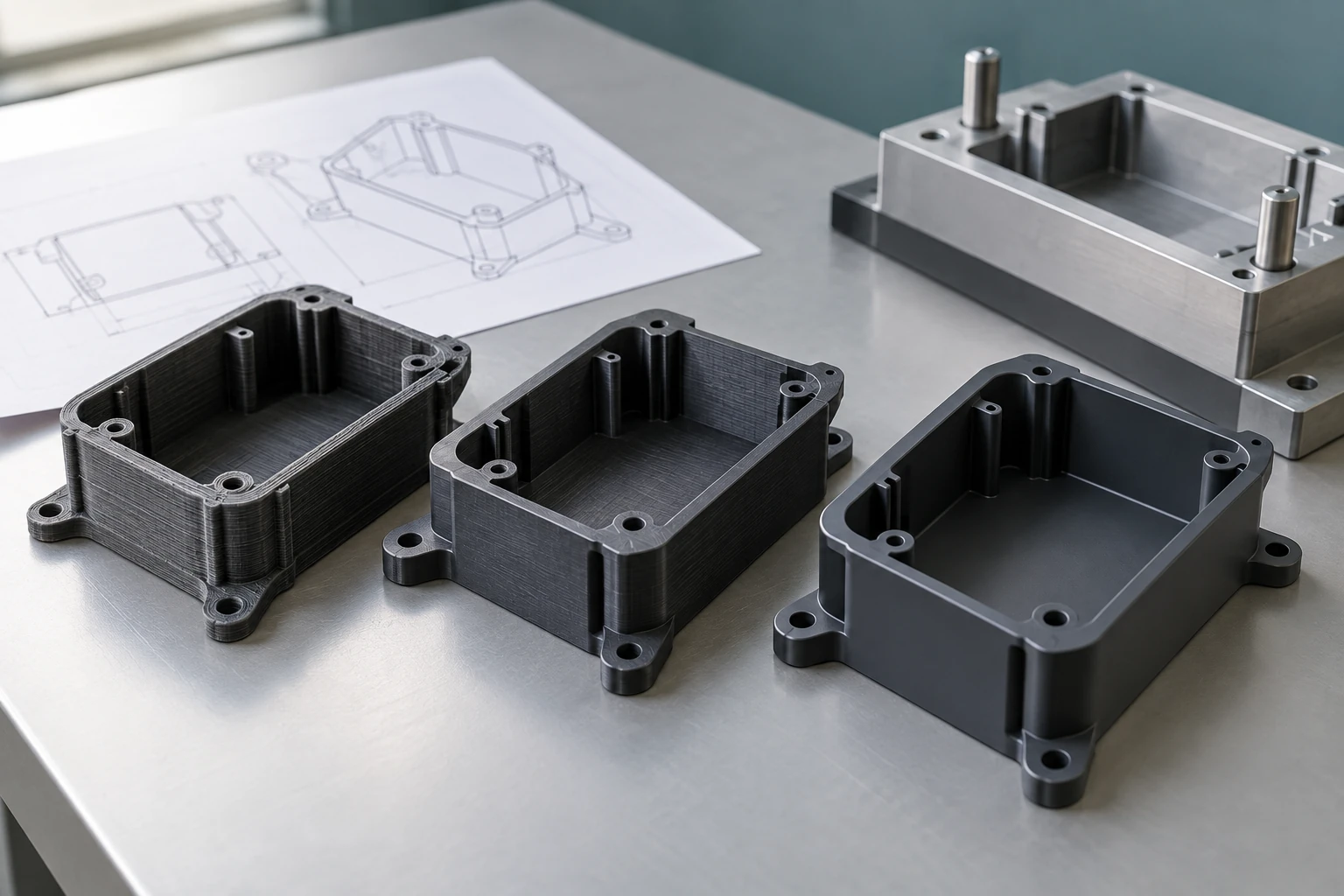
There is no universal order-volume cutoff that selects a process for every plastic part. Compare the sample’s purpose with the drawing, resin, geometry, tolerances, finish and planned quantities:
- 3Dプリント: evaluate when the next question is visual form, assembly fit or an iteration that does not require production-tool evidence. State what the print material can and cannot validate.
- CNC plastic machining: evaluate when a functional sample or lower-quantity part needs a selected stock material and defined inspection. Confirm the stock grade, accessible features and critical dimensions.
- 射出成形: evaluate when repeat molded parts and their geometry justify tooling. Review the production grade, draft, wall and rib design, gate and ejection, trial samples and release criteria before treating a prototype as a production specification.
A project may stay with machining or use different routes at different stages. For a connected material, prototype, tooling and production scope, see our integrated plastic manufacturing service. The detailed handoff checklist below lists what to include in a tooling or part RFQ.
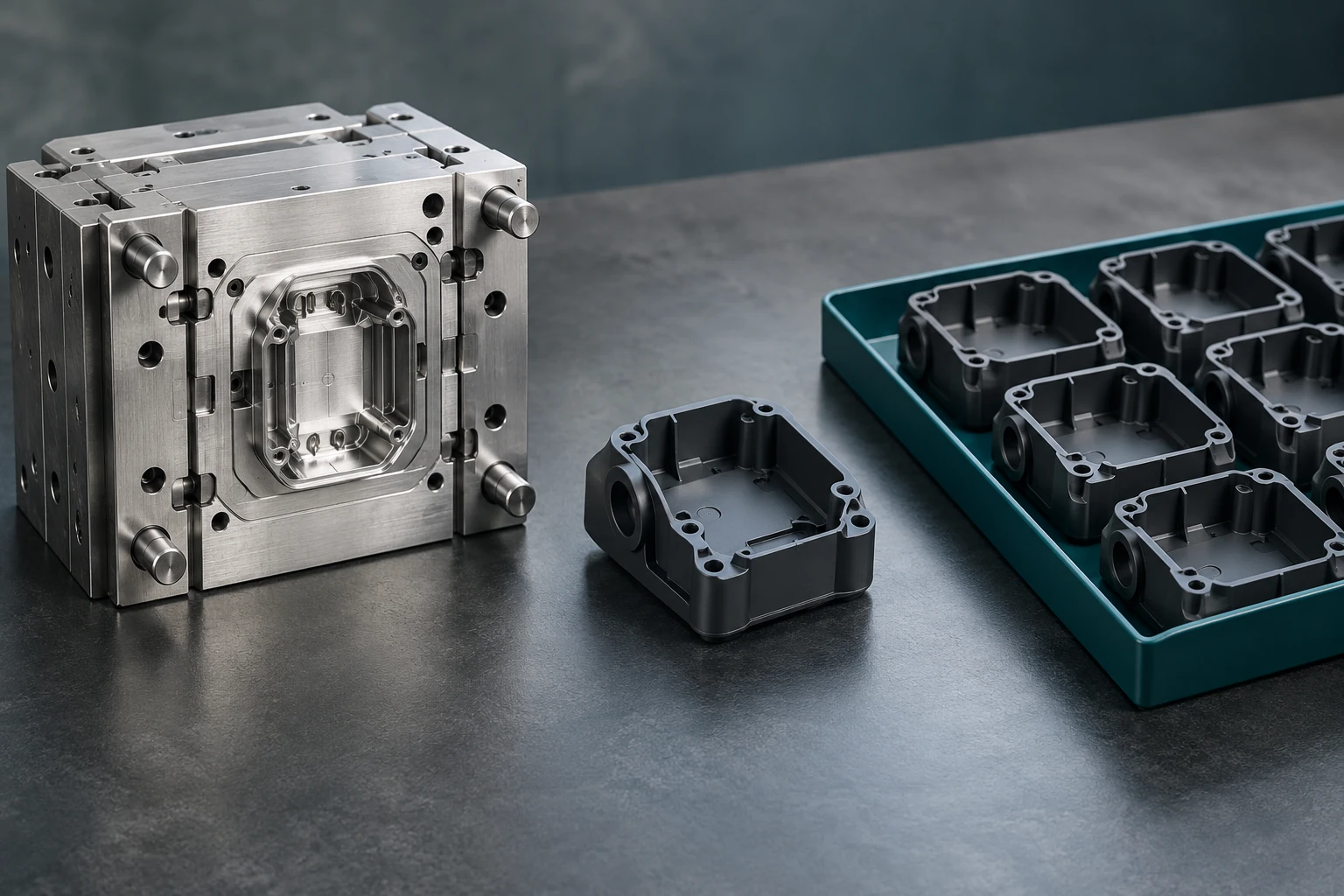
製造適性設計(DFM)
プロトタイプ作成に適した設計は、量産には最適ではない場合があります。主な考慮事項:
素材の選択
試作用の材料は、量産用の材料とは異なる場合があります。以下の点にご留意ください:
- 生産プロセスにおける材料の入手可能性
- 試作材料と量産材料のコストの違い
- 機能に影響を及ぼす可能性のあるプロパティの違い
- 最終材料に関する規制要件
公差と嵌合
入念な機械加工によって達成された試作段階の公差は、量産段階では経済的に実現できない場合があります。以下の項目の公差を見直してください:
- 厳しい公差は、果たして本当に必要なのでしょうか?
- 組み立て方法には、さらなるバリエーションに対応する余地はあるでしょうか?
- 指定された公差はコストにどのような影響を与えるのでしょうか?
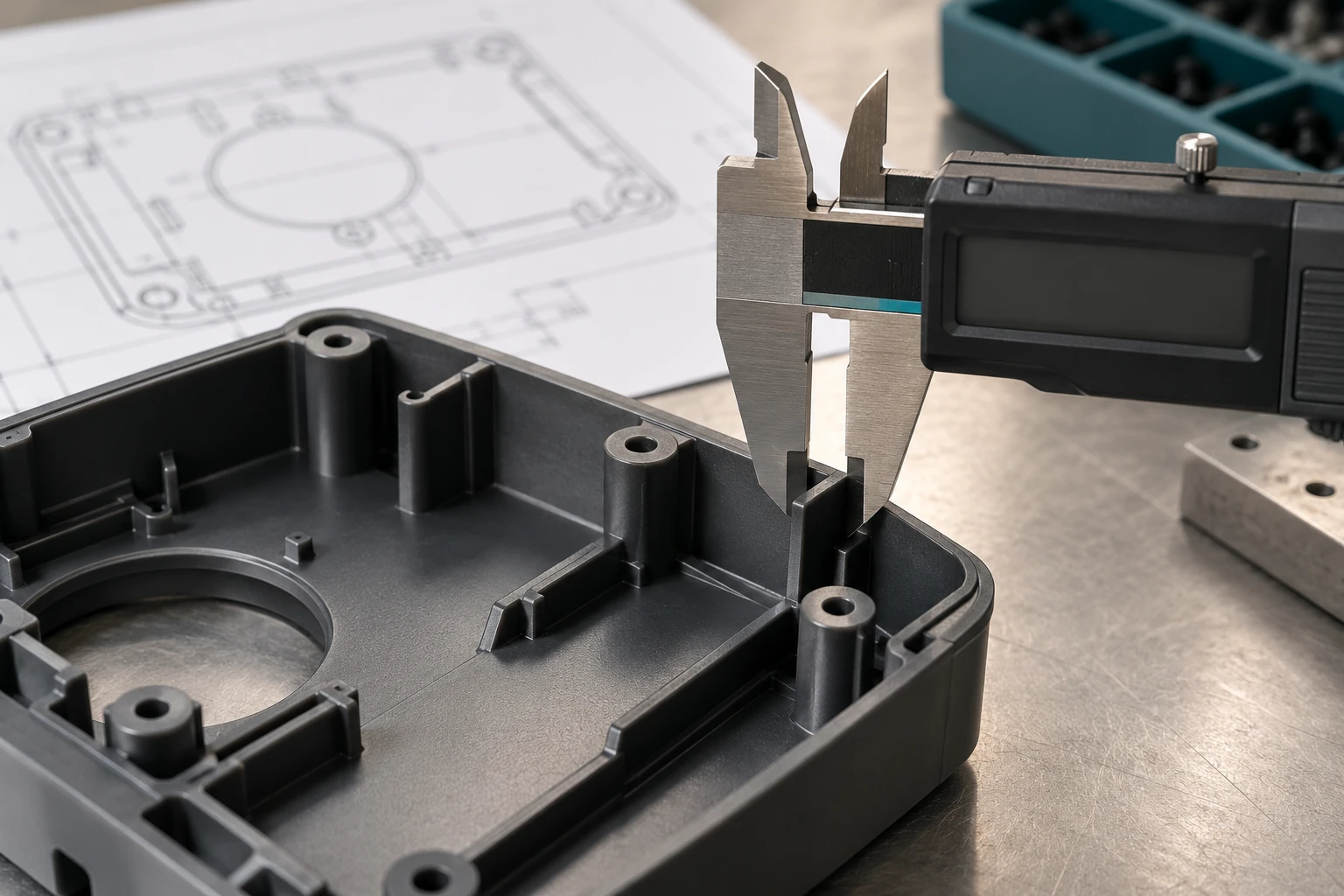
部品の統合と組立の比較
3Dプリントでは、複雑で一体成型の部品を製造できます。一方、従来の製造プロセスでは、より単純な部品を組み合わせて構成する方が適している場合があります。評価してください:
- 組立コストと部品集約の比較
- 整備性に関する要件
- 組み立て品と単体部品における品質への影響
CNC or 3D-Printed Prototype to Injection-Molded Part: Handoff Checklist
A prototype can establish fit or function without proving how the part will mold. Use this checklist to define the production route, the evidence still needed, and the scope of a tooling or part quotation.
- Production resin and grade. Identify the intended injection-molding grade, reinforcement, color and service conditions, or state which alternatives may be reviewed. Record how the CNC or printed prototype material differs; its test result is not a specification for the molded part.
- Controlled drawing revision. Send the CAD file and dated drawing revision, critical dimensions, datums and mating-part requirements. Mark any proposed draft, wall, rib or undercut changes so prototype results are compared with the geometry actually being tooled.
- Shrinkage and measurement condition. Use the selected grade’s supplier data to plan a mold allowance, then check dimensions on molded trial samples at an agreed time and conditioning state. Part geometry, fiber orientation, gate and process settings can change the result; a single generic shrinkage figure is not a final approval.
- Gate, parting and ejection review. Agree the proposed gate and ejector locations, acceptable witness marks, appearance surfaces and any weld-line or load-bearing restrictions before the mold design is frozen.
- Trial evidence and release. Define the sample stage, critical-dimension inspection, fit or functional tests, change log and named approval responsibility. If a customer requires PPAP or another formal submission, specify that requirement separately. See the T0, T1 and T2 mold-trial checklist for a more detailed trial review.
- RFQ inputs. Include the approved drawing or CAD revision, proposed production grade, first-order and annual quantities, target timing, destination, tooling versus part scope, finish and required records. The existing request form below can be used to ask for a route and quotation review.
Technical references: the processing section of the BASF Ultramid product brochure explains why shrinkage depends on grade, geometry, gate and processing; Autodesk Moldflow gate-design guidance covers orientation, warpage and gate placement. Actual part approval remains project-specific.
Production Quality Plan
Before moving an approved sample into repeat production, specify what will be controlled, checked and recorded for your part. Include these three decisions in your RFQ:
- Production basis: confirm the drawing revision, production material and process settings that need control.
- Acceptance checks: identify critical dimensions or functions, inspection points and acceptance criteria.
- Required records: specify any material-lot, inspection or batch records needed for this order.
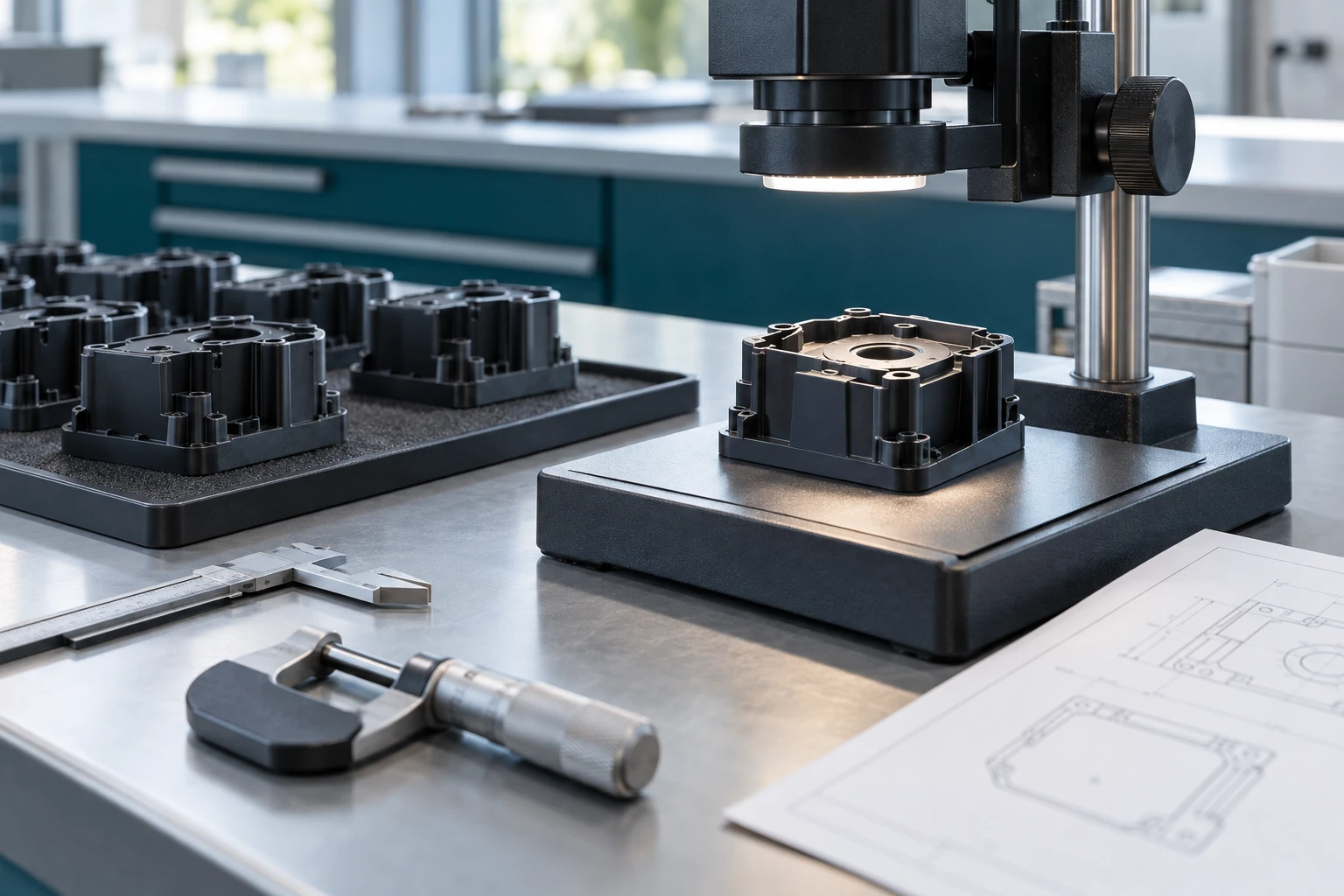
大規模なコスト管理
コスト要因を理解することは、生産の最適化に役立ちます:
固定費と変動費
- 工具: 固定費が高く、変動費が低い
- 3Dプリント: 固定費が低く、変動費が高い
- CNC: 固定費は中程度、変動費も中程度
規模の経済
生産量が増加するにつれて、以下の要因により単位当たりのコストは低下する:
- より多くの部品にわたり、金型の償却費を配分する
- セットアップ時間をより大きなバッチに分散させる
- 大量購入による割引
- プロセスの最適化と学習曲線の効果
リスク軽減戦略
規模の拡大にはリスクが伴います。以下の方法でリスクを軽減してください:
- 並行開発: 複数の製造手法を追求する
- 段階的な拡張: 品質を確認しながら、徐々に生産量を増やしていく
- サプライヤーの適格性審査: 重要部品について、複数のサプライヤーを評価する
- 在庫バッファ: 移行期間中は安全在庫を確保する
当社の能力
を超える。 300台のCNCマシン, を生産している。 毎日10,000個 という厳しい公差で ±0.005mm. .我々は受け入れる 1個からのMOQ, 納期は以下の通り。 24時間~15日間. .試作品1個から数千個の生産部品まで、当社には供給能力と専門知識があります。. 24時間以内にお見積もりいたします。.
よくあるご質問
Does a CNC or 3D-printed prototype prove an injection-molded part will perform the same way?
No. The prototype may verify fit or a defined function, but the stock or print material and its process can differ from the intended molding grade. Identify which tests need to be repeated on molded samples made with the production material.
When should a plastic part move from CNC machining to injection molding?
Review the drawing, material, geometry, tolerance, finish, order quantity and expected repeat demand together. Molding adds tooling and trial approval; there is no universal quantity at which it becomes the right route for every part.
What must be approved before repeat production?
Confirm the drawing revision and production grade, then agree the trial-sample checks for critical dimensions, fit, function, appearance and required records. Release criteria should match the part and the quoted scope.
What should I send for a prototype-to-production part review?
Send the CAD file or drawing revision, the current prototype and what it has proven, the application and service conditions, intended material or permitted alternatives, first-order and annual quantities, critical dimensions, finish, inspection needs, destination and target timing.
Need a route and quotation review? Use the existing form below to share your drawing and prototype context. Nylon Plastic can identify open material, tooling and sample-approval questions before confirming the quoted scope for your part.