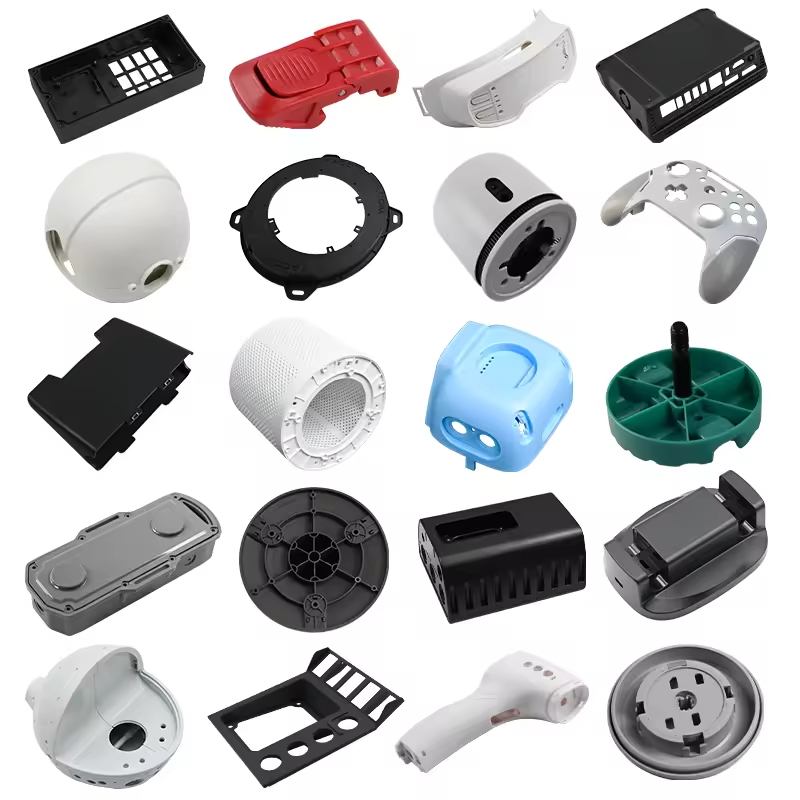
This PA66 GF15 vs GF30 vs GF60 guide helps engineers and buyers compare glass-filled nylon stiffness, molding behavior, warpage risk, and supplier selection before committing to tooling.
What Is the Difference Between PA66 GF15, GF30 and GF60?
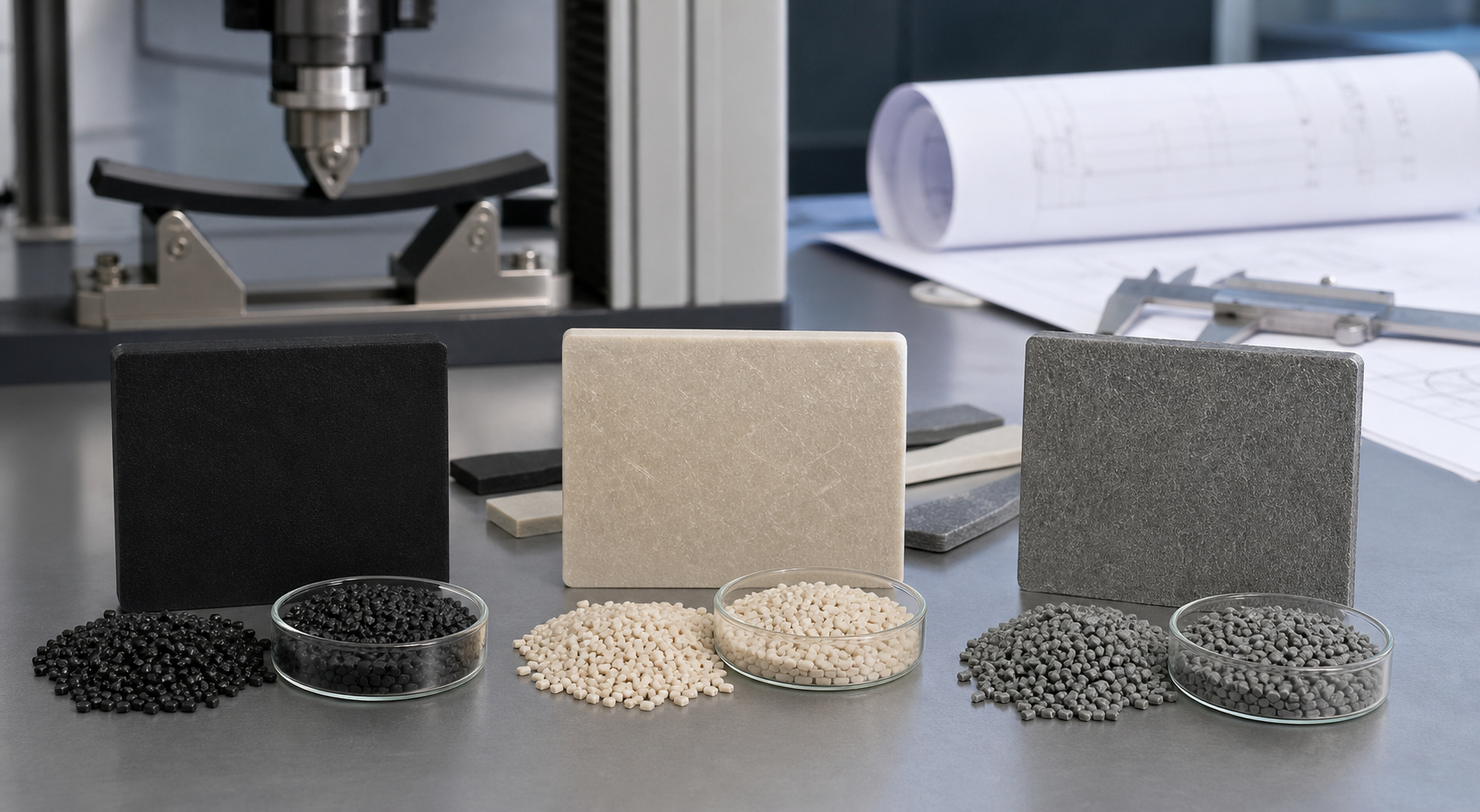
PA66 GF15, GF30 and GF60 are polyamide 66 grades reinforced with different glass-fiber levels. As glass content increases, stiffness, strength and heat resistance usually improve, but molding difficulty, tool wear, fiber-orientation effects and brittleness also increase.
The highest glass content is not automatically the best choice. PA66 GF15 is easier to mold and can keep better toughness. PA66 GF30 is the balanced engineering grade. PA66 GF60 is used when very high stiffness matters more than flexibility or easy processing.
PA66 GF15 vs GF30 vs GF60 at a Glance
| グレード | Glass content | Main advantage | 主なトレードオフ | 最適なサイズ |
|---|---|---|---|---|
| PA66 GF15 | 15% | Moderate stiffness with better toughness | Less rigid than GF30/GF60 | Clips, housings, medium-duty brackets |
| PA66 GF30 | 30% | Strong balance of stiffness, strength and processability | Warpage if design is poor | Automotive parts, electrical housings, structural components |
| PA66 GF60 | 60% | Very high stiffness and dimensional stability | More brittle, abrasive and difficult to mold | High-stiffness supports and metal-replacement parts |
PA66 GF15: Easier Molding With Moderate Reinforcement
PA66 GF15 is useful when a part needs more stiffness than unfilled PA66 but still needs some toughness and processing flexibility. It can work well for housings, clips and parts with moderate mechanical load.
Choose PA66 GF15 when the part has snap features, smaller ribs or geometry that would become too brittle with high glass content. It is not ideal for maximum load-bearing stiffness.
PA66 GF30: The Balanced Workhorse Grade
PA66 GF30 is widely used because it gives a practical balance between stiffness, heat resistance and moldability. For many structural plastic parts, it is the first grade worth evaluating.
This grade is common in automotive, industrial and electrical components. The main risk is directional shrinkage caused by glass fiber alignment. Gate location, rib design and wall thickness must be planned around the expected load direction.
PA66 GF60: High Stiffness With Higher Risk
PA66 GF60 is selected when stiffness and dimensional stability are the dominant requirements. It can support metal-replacement designs, rigid brackets and high-load components, but it is more abrasive and less forgiving than GF15 or GF30.
Avoid PA66 GF60 for designs with thin snap features, sharp corners or high impact requirements unless the part has been tested carefully. A lower glass grade may perform better in real assemblies.
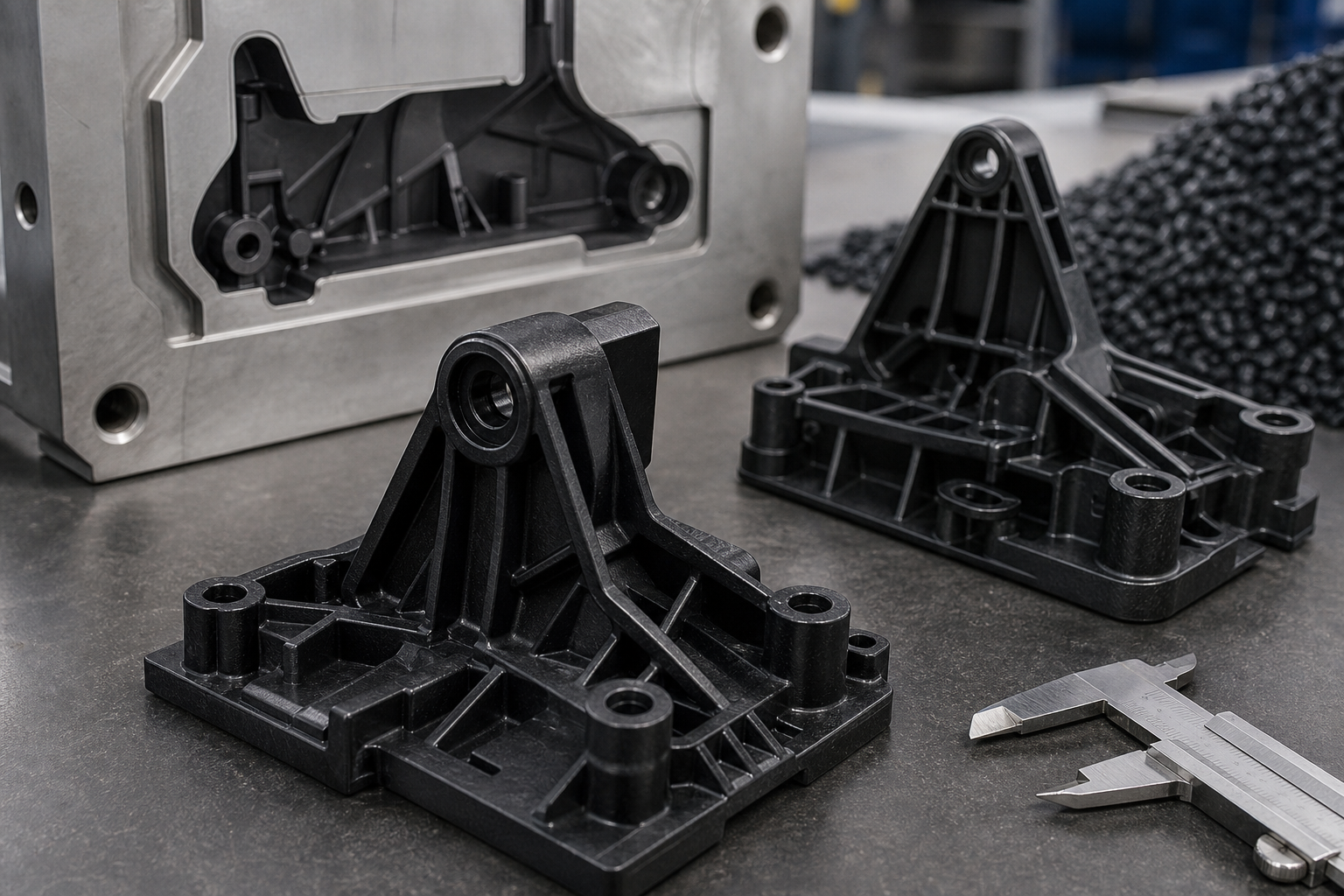
Molding and Design Comparison
| ファクター | GF15 | GF30 | GF60 |
|---|---|---|---|
| Moldability | もっと簡単 | 中程度 | More difficult |
| 工具の摩耗 | 中程度 | より高い | 高い |
| Warpage risk | より低い | ミディアム | Higher if design is poor |
| Snap-fit suitability | もっと良い | Case-dependent | Usually limited |
| Metal replacement potential | 数量限定 | グッド | Strong but design-sensitive |
よくある選考時のミス
Choosing GF60 Only Because It Looks Stronger
GF60 may be too brittle or too difficult to mold for some geometries. If the part needs impact resistance or flexible assembly features, GF30 or GF15 may be safer.
Ignoring Fiber Direction
Glass fibers align with melt flow. This changes shrinkage and strength by direction. A gate that looks convenient may place a weld line or weak direction exactly where the part carries load.
Copying Metal Geometry
Glass-filled nylon is often used for metal replacement, but the geometry should be redesigned for plastic. Ribs, radii, wall transitions and bosses matter.
How to Choose the Right PA66 GF Grade
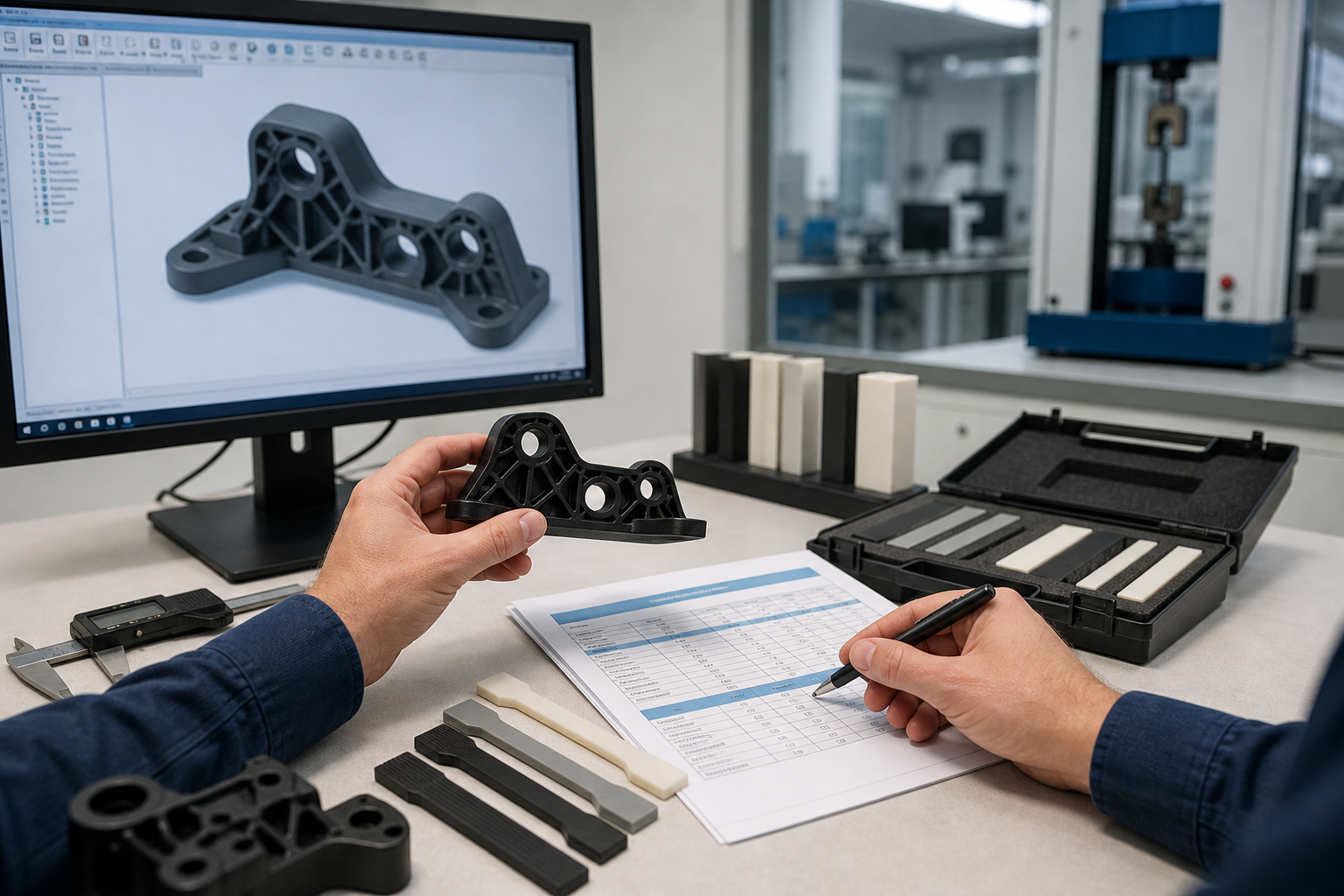
Start with the actual load case. Use PA66 GF15 for moderate stiffness and better toughness. Use PA66 GF30 as the baseline for many structural molded parts. Use PA66 GF60 only when the geometry, tooling and application justify the higher reinforcement level.
Before production, validate the selected grade with first-article inspection and functional testing under real temperature, humidity and assembly conditions.
Conclusion: GF30 Is Often the Starting Point
For many projects, PA66 GF30 is the most practical starting point. PA66 GF15 is better when toughness and moldability matter. PA66 GF60 is better for high-stiffness parts, but only when design and tooling can manage the added risk.
Nylon Plastic can help compare PA66 GF15, GF30 and GF60 based on drawings, working temperature, load direction and production volume.
関連記事
よくある質問
PA66 GF30はPA66 GF15よりも強度が高いですか?
PA66 GF30は通常、PA66 GF15に比べて曲げ荷重に対する剛性と強度が優れていますが、衝撃やスナップフィット部に関しては許容度が低い場合があります。どちらがより適しているかは、実際の部品の形状や荷重の方向によって異なります。.
PA66 GF60はどのような場合に使用すべきですか?
部品に極めて高い剛性と寸法安定性が求められ、かつ設計上、脆い形状を避けている場合には、PA66 GF60を使用してください。この材料は、柔軟なクリップではなく、剛性のある支持部材や構造部品に最適です。.
ガラス含有量を増やすと、収縮は抑えられるのでしょうか?
ガラス含有量を増やすと、通常は全体的な収縮は減少しますが、方向ごとの収縮差が大きくなる可能性があります。つまり、ゲートの位置や冷却を適切に管理しなければ、反りが依然として問題となる可能性があります。.
PA66 GF30は自動車部品に適していますか?
はい、PA66 GF30は、剛性、耐熱性、加工性のバランスが取れているため、自動車部品に広く使用されています。具体的なグレードは、温度、荷重、化学物質への曝露、および寸法要件に基づいて選択する必要があります。.
PA66 GF15、GF30、GF60は、同じ金型を使用できますか?
場合によっては同じ金型で成形できることもありますが、収縮、流動、充填、および摩耗の挙動は異なります。GF15用に最適化された金型では、GF60を使用した場合、同じ結果が得られない可能性があります。.
Can a supplier help recommend the right PA66 GF grade before sampling?
Yes. A practical supplier should review part geometry, temperature, load, creep, appearance and warpage risk before suggesting GF15, GF30 or GF60. That front-end review is often more useful than comparing tensile data alone.
What should buyers send when asking for a PA66 GF grade recommendation or quote?
Send the drawing or CAD model, operating temperature, load case, dimensional targets, environment, annual volume and any compliance or validation requirements. Those details help the supplier recommend a realistic grade and molding plan faster.
必要 PA6 GF30のデータシート記載値 引張強度、曲げ強度、HDT、収縮率、射出成形パラメータなどを含みますか? PA6 GF30の完全な物性および加工ガイドをご覧ください。.