エンジニアリング用途におけるナイロンとPOM(アセタール/デルリン)の直接比較 - 機械的、熱的、化学的、摩耗、加工の違い。.
エンジニアリングおよび調達チーム向け
Nylon or POM for a Production Part?
Choose POM when low friction and humidity-driven dimensional stability lead the decision. Choose nylon when toughness, fatigue resistance and broader structural use matter more.
- POM for gears, bushings and precision sliding parts
- Nylon for tougher structural parts and repeated load cycles
- Confirm moisture condition, tolerance and operating temperature before release
Request a nylon vs POM drawing review → View custom machined plastic parts
ナイロン対POM:エンジニアリング・プラスチックの2つの巨人
ナイロン(ポリアミド)とPOM(ポリオキシメチレン、アセタールまたはデルリンとも呼ばれる)は、機械部品に最も使用されている2つのエンジニアリング熱可塑性プラスチックです。どちらも優れた耐摩耗性、低摩擦性、優れた寸法安定性を備えていますが、分子構造が異なるため、精密用途では性能のトレードオフが非常に重要になります。.
ナイロンとPOMのどちらを選ぶかは些細なことではない。POMでは50,000サイクルもつベアリングが、ナイロンでは同じ負荷で8,000サイクルで破損することもある。逆に、自動車用流体にさらされるギヤ・ハウジングは、POMではひび割れますが、PA66では生き残ります。このガイドは、エンジニアが正しい選択をするために必要な、データに基づいた比較を提供します。.
機械的特性の比較
引張および曲げ特性:
| プロパティ | PA6 | PA66 | POM(ホモポリマー) | POM(共重合体) |
|---|---|---|---|---|
| 引張強さ (MPa) | 80 | 82 | 70 | 62 |
| 引張弾性率 (GPa) | 2.8 | 3.0 | 2.8 | 2.5 |
| 曲げ強さ (MPa) | 100 | 110 | 98 | 90 |
| 曲げ弾性率 (GPa) | 2.6 | 2.8 | 2.6 | 2.3 |
| 破断伸度(%) | 150 | 60 | 40 | 35 |
| ノッチ付きアイゾット(J/m) | 55 | 45 | 75 | 65 |
| クリープ弾性率(1000h、20MPa) | 1.2 GPa | 1.4 GPa | 2.3 GPa | 2.0 GPa |
重要な知見:クリープ耐性 — POMはナイロンに比べてクリープ抵抗性が格段に優れています。持続的な荷重がかかった状態でも、POMは時間の経過とともに剛性をより長く維持します。定常荷重がかかる部品(スプリングクリップ、止め輪、ファスナー用ブッシュなど)の場合、初期強度は同等であっても、POMの優れたクリープ抵抗性により、多くの場合、POMの方が適した材料となります。.
耐衝撃性 — ナイロンはノッチなしの衝撃耐性が高い。しかし、POMはノッチ付き衝撃試験ではしばしばナイロンを上回る性能を示す。これは、POMの延性破壊モードにより、亀裂先端でより多くのエネルギーが吸収されるためである。応力集中が生じる部品(キー溝、穴、ねじ山など)の場合、鋭いノッチに対するPOMの靭性は利点となる。.
耐疲労性 — ナイロンは、繰り返し荷重に対する優れた耐疲労性を備えています。繰返し荷重試験において、ナイロン製部品は、同等のPOM製部品に比べて、破損に至るまでのサイクル数が3~5倍長くなっています。これは、コンベヤベルトのガイド、ポンプのインペラ、ヒンジ機構などの部品にとって極めて重要です。.
熱性能と環境性能
熱的特性:
| プロパティ | PA6 | PA66 | POM |
|---|---|---|---|
| 融点 (°C) | 225 | 265 | 175 |
| 連続使用温度 (°C) | 100-115 | 130-150 | 90-100 |
| HDT @ 1.82 MPa (°C) | 65 | 90 | 95 |
| 0.45 MPa における HDT(°C) | 170 | 250 | 160 |
| 熱膨張率 (×10-⁵/°C) | 8-9 | 8-9 | 11-12 |
POMの耐熱性の弱さ — POMの融点は175°Cであり、これがその耐熱性の限界となります。100°Cを超えると、POMは機械的強度を急速に失います。PA66-GF30(HDT 250°C)は、POMが溶融してしまうような温度環境下でも使用可能です。.
吸湿性の比較:
| プロパティ | PA6 | PA66 | POM |
|---|---|---|---|
| 飽和水分(%) | 9.5% | 8.5% | 0.8% |
| 寸法変化(飽和) | 1.5-2.0% | 1.3-1.8% | 0.2% |
POMは水分対策において圧倒的な強みを発揮 — 最大吸湿率が0.8%であるPOMは、湿度の高い環境下でも実質的に寸法安定性を維持します。一方、ナイロンの吸湿率は8~9%であり、これによる目に見える膨張や物性の変化が生じます。カプセル化処理が施されていない水中や屋外での用途においては、POMが唯一の実用的な選択肢となる場合が多くあります。.
耐薬品性:各素材の優れた点
耐薬品性の比較:
| 化学 | ナイロン(PA66) | POM |
|---|---|---|
| ガソリン/燃料 | 素晴らしい | 素晴らしい |
| モーターオイル | 素晴らしい | 素晴らしい |
| ブレーキフルード | グッド | 悪い(うねり) |
| アルコール | 素晴らしい | グッド |
| ケトン類(アセトン) | グッド | 悪い(溶解) |
| 弱酸性 | フェア | グッド |
| 強酸 | 貧しい | 貧しい |
| エステル/可塑剤 | 素晴らしい | 貧しい |
| 熱湯(60°C以上) | 貧しい | グッド |
| 蒸気 | 貧しい | 貧しい |
重要な判断ポイント: – ブレーキフルードまたはグリコール系冷却液: POMは膨張・ひび割れを起こすため、PA66またはPA12を使用してください – 熱湯(60°C以上): ナイロンは加水分解されるため、POMまたはPVDFを使用してください – 可塑剤の移行 (フレキシブルケーブル、電線被覆):POMは可塑剤を吸収するため、PA12を使用してください – 自動車のボンネット内: PA66-GF30は、その耐熱性(180°C以上)と耐薬品性により―― 家庭用家電: 寸法安定性と表面仕上げの良さからPOMを採用
摩耗と摩擦性能
どちらの素材も低摩擦で耐摩耗性に優れているが、重要な違いがある:
| プロパティ | PA6 | PA66 | POM |
|---|---|---|---|
| 摩擦係数(対スチール、乾燥状態) | 0.25-0.40 | 0.20-0.35 | 0.15-0.35 |
| PV限界(MPa・m/min) | 80-120 | 90-130 | 80-100 |
| 摩耗係数(鋼材との比較、乾燥状態) | 15-40 | 10-30 | 1-3 |
| 加工性 | グッド | 素晴らしい | 素晴らしい |
決定的な違い:摩耗係数 — POMの摩耗係数(1~3)は、ナイロン(10~40)に比べて10~20倍低い。つまり、POM製の部品は、摺動接触時に発熱が少なく、摩耗も緩やかである。 高PV用途(ベアリング、摩耗ストリップ、摺動インサートなど)においては、POMが最適な選択肢となります。.
自己潤滑型: – POM + PTFE: 摩耗係数が0.5~1.0まで低下 — 境界潤滑に最適 – PA6/66 + PTFE またはシリコーン: 摩擦を大幅に低減しますが、PTFEが表面に移動して接着に影響を与える可能性があります – 炭素繊維強化: 両材料の耐摩耗性を向上させ、特に高温下での耐摩耗性が向上する
表面速度に関する考慮事項: ドライ滑り状態で表面速度が1 m/sを超えると、どちらの材料も熱軟化を引き起こすほどの熱を発生します。高速用途では、内部潤滑仕様のグレードや、油を含浸させた焼結青銅製の基材を検討してください。.
選び方決断の枠組み
次のような場合には、ナイロン(PA66-GF30)を選択してください: – 使用温度が100°Cを超える場合 – 繰り返しの衝撃や繰返し荷重が予想される場合 – ブレーキフルード、冷却液、可塑剤にさらされる場合 – 動的荷重下でより高い疲労寿命が必要な場合 – コストが主な決定要因である場合(PA66は一般的にPOMよりも安価である)
次のような場合にはPOMを選択してください: – 湿度の高い環境下での寸法安定性が極めて重要 – 低摩擦および低摩耗性が優先事項(摺動/回転接触) – 部品は熱水または蒸気にさらされる – アセトン、エステル、または可塑剤が存在する – 優れた表面仕上げと厳しい公差が求められる
ハイブリッドソリューション — 金属代替: 多くの金属代替用途において、選択の分かれ目はナイロンとPOMの間ではなく、これらとアルミニウムの間にある。ナイロンGFとPOMは、ハウジング、ブラケット、構造部品においていずれも優れた金属代替材であり、アルミニウムと比較して70~85%の軽量化を実現しつつ、十分な強度を備えている。 こうした用途においては、PA66-GF30が、その優れた耐熱性および耐薬品性から、標準的な選択肢となっています。.
CNC加工用半製品
射出成形用エンジニアリンググレードのナイロン原料
よくあるご質問
「ナイロン対POM(アセタール):エンジニアリングプラスチック比較ガイド」は、どのような場合に役立つのでしょうか?
「ナイロン対POM(アセタール):エンジニアリングプラスチック比較ガイド」は、成形品の単価よりも、迅速な反復設計、複雑な形状、低い金型コスト、あるいは少量生産が重視される場合に最適な選択肢です。.
「ナイロンとPOM(アセタール):エンジニアリングプラスチック比較ガイド」を選ぶ前に、どのような点を確認すべきでしょうか?
部品サイズ、材料特性、表面仕上げ、寸法公差、熱暴露、荷重方向、後処理が必要かどうかを確認する。.
『ナイロン対POM(アセタール):エンジニアリングプラスチック比較ガイド』は、CNC加工とどのように比較されるのでしょうか?
3Dプリンティングは複雑な形状を素早く作ることができるが、CNC機械加工は精密な表面、より厳しい公差、生産グレードの材料に強いことが多い。.
ナイロンとPOM(アセタール)のコストにどのような要因が影響するか:エンジニアリングプラスチック比較ガイド
コストは、材料、造形量、印刷時間、レイヤーの高さ、サポート除去、仕上げ、検査、造形物の部品数によって異なる。.
Nylon vs POM: Choose Around Motion, Moisture and Load
Nylon and POM acetal can both be used for gears, bushings, guides, rollers and precision plastic components, but they solve different problems. Nylon is often selected for toughness, fatigue resistance and load-bearing capability. POM is often selected for low moisture uptake, low friction, wear behavior and dimensional consistency. The correct choice depends on the mating material, motion, load, humidity, temperature, chemical exposure, tolerance and manufacturing route.
Do not compare only nominal tensile strength. A moving bushing may be limited by friction and wear, while a structural clip may be limited by fatigue and impact. A precision housing may be limited by moisture-driven dimensional change. State the failure mode your team must avoid before choosing the resin family.
| Decision factor | Nylon tendency | POM tendency | What to validate |
|---|---|---|---|
| 水分 | Absorbs moisture and changes stiffness and dimensions | Lower moisture uptake and generally more stable fit | Conditioned dimensions and service humidity |
| Friction and wear | Good in suitable grades; moisture and load affect behavior | Often favorable for low-friction sliding and gears | PV load, speed, counterface, lubrication and life |
| Impact and fatigue | Often strong toughness and fatigue performance | Good fatigue behavior but can be less forgiving in impact | Notched impact, cycle life and temperature |
| Creep | Can be significant with heat and moisture | Must still be checked under continuous load | Stress, time, temperature and dimensional drift |
| Processing | Requires moisture control and grade-specific drying | Requires controlled melt history and venting | Drying, mold temperature, cycle and defect record |
Gears, Bearings and Sliding Parts
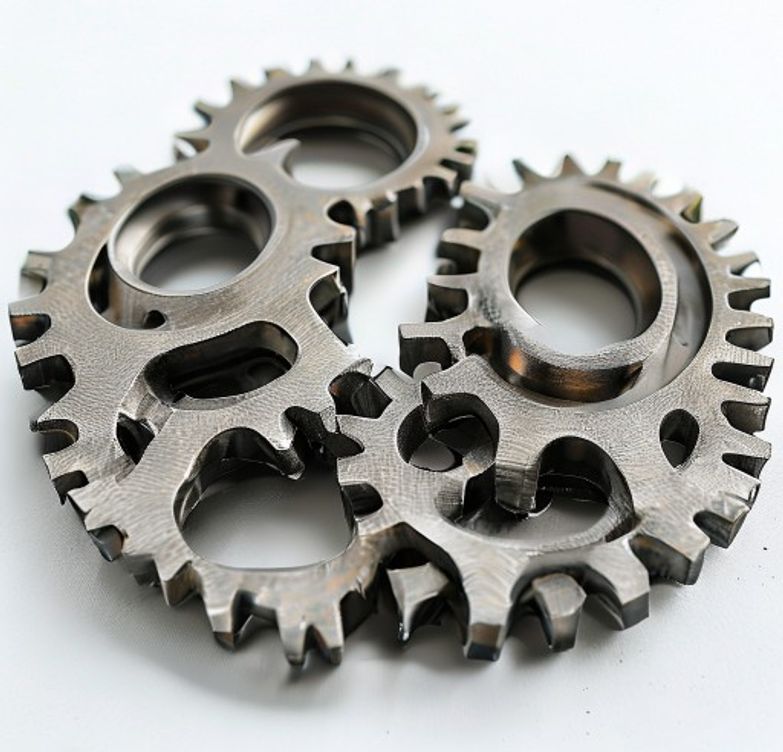
For gears and bearings, calculate load, speed, contact pressure, duty cycle, lubrication, counterface and allowable temperature. A POM gear may provide a stable tooth profile in humid service, while a nylon gear may offer toughness and quieter operation. Reinforcement, internal lubricant and fiber orientation can change wear and noise. The part should be tested in the actual mating pair, not only as a resin coupon.
For a bushing, define shaft material and finish, radial load, speed, clearance, lubrication and expected life. A material that performs well against steel may behave differently against aluminum, glass-filled polymer or a rough counterface. Include thermal expansion and moisture conditioning in the clearance calculation.
Strength, Creep and Dimensional Control
Nylon’s moisture response can be useful when toughness is important but challenging when the assembly needs a stable tolerance. POM usually offers lower moisture sensitivity, but the selected grade still needs temperature, creep and chemical validation. Glass or mineral reinforcement can change stiffness and shrinkage in either material family. A reinforced grade may solve deflection while creating anisotropy, surface change or counterface wear.
| 用途 | Likely starting point | Critical validation |
|---|---|---|
| Humid precision guide | POM may be a useful starting point | Clearance after humidity conditioning and thermal cycling |
| Impact-loaded clip | Nylon may offer a useful toughness balance | Assembly cycles, impact and stress concentration |
| Low-speed bushing | Compare nylon and POM against load and counterface | Wear, friction, temperature and dimensional change |
| Injection-molded gear | Choose by noise, wear, moisture and torque | Tooth accuracy, torque, speed and life testing |
Molding, CNC Machining and Sourcing
Both nylon and POM can be injection molded or CNC machined, but the process details differ. Nylon needs moisture control before molding and may require conditioning before final inspection. POM needs a controlled thermal history, correct venting and attention to degradation risk. During CNC machining, workholding, heat, tool sharpness, stock condition and stress relief influence the final tolerance. Request the process route before accepting a material comparison as complete.
For procurement, compare grade availability, color, reinforcement, internal lubricant, regulatory needs, lot traceability and supplier change control. “POM” can describe several grades, just as “nylon” can cover PA6, PA66, PA12 and reinforced variants. A usable quotation names the grade, tolerance, inspection condition, annual volume and expected service environment.
Nylon vs POM RFQ Checklist
- Load, motion, speed, counterface, lubrication and expected life.
- Humidity, temperature, chemicals, cleaning and outdoor exposure.
- Critical tolerance, datum, clearance, surface finish and conditioning state.
- Material family, exact grade, filler, lubricant, color and approval list.
- Injection molding, CNC machining or prototype route and quantity.
- Wear, friction, torque, dimensional, leak or assembly test requirements.
Send the load, motion, environment, tolerance, process and volume with the drawing. We can compare nylon and POM against the failure mode that matters to your assembly and recommend a production validation plan.
関連記事
- ナイロン対POM(アセタール):エンジニアリングプラスチック比較ガイド
- ナイロン材料の特性:完全な技術リファレンス
- ガラス繊維と炭素繊維強化ナイロンの比較:性能ガイド
- Engineering Plastic Material Database
概要
| 決断の分かれ目 | ナイロン | POM/アセタール | 購入者への注意事項 |
|---|---|---|---|
| Friction | Good with grade selection | 非常に低い | POM is often the easier sliding-material choice |
| 水分 | Higher absorption | Lower absorption | Use POM when humidity makes fit unstable |
| Wear | Tough and resilient | 素晴らしい | Check lubrication and cycle load before choosing |
| 最適な用途 | General engineering parts | Gears, bushings and precision motion parts | Match the material to motion and stability need |
なぜナイロンプラスチックを選ぶのか
Nylon Plastic supports nylon-versus-acetal decisions when the part must balance wear, motion and moisture rather than rely on a generic plastic chart.