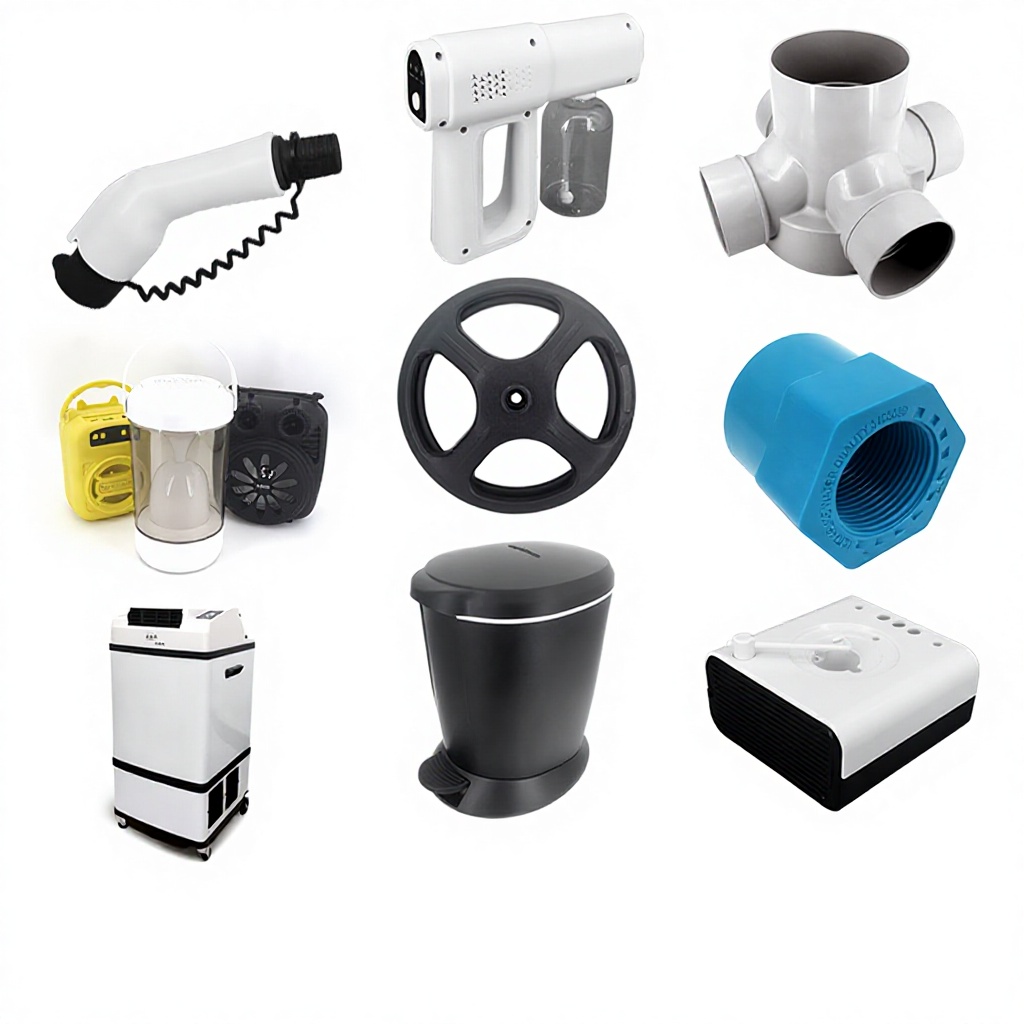
Custom machined plastic parts are cut from engineering plastic stock using CNC milling, turning or related machining operations. They can suit functional prototypes, replacement components and repeat batches when the material is available in a suitable stock form and the geometry is accessible to cutting tools.
Need a CNC Plastic Machining Quote?
Send the part drawing or CAD, required material or service conditions, quantity and critical dimensions. Nylon Plastic can review material availability, machining feasibility, finish and inspection needs, then define the quoted scope. If tooling or 3D printing better fits the project, the review can compare those routes before you commit.
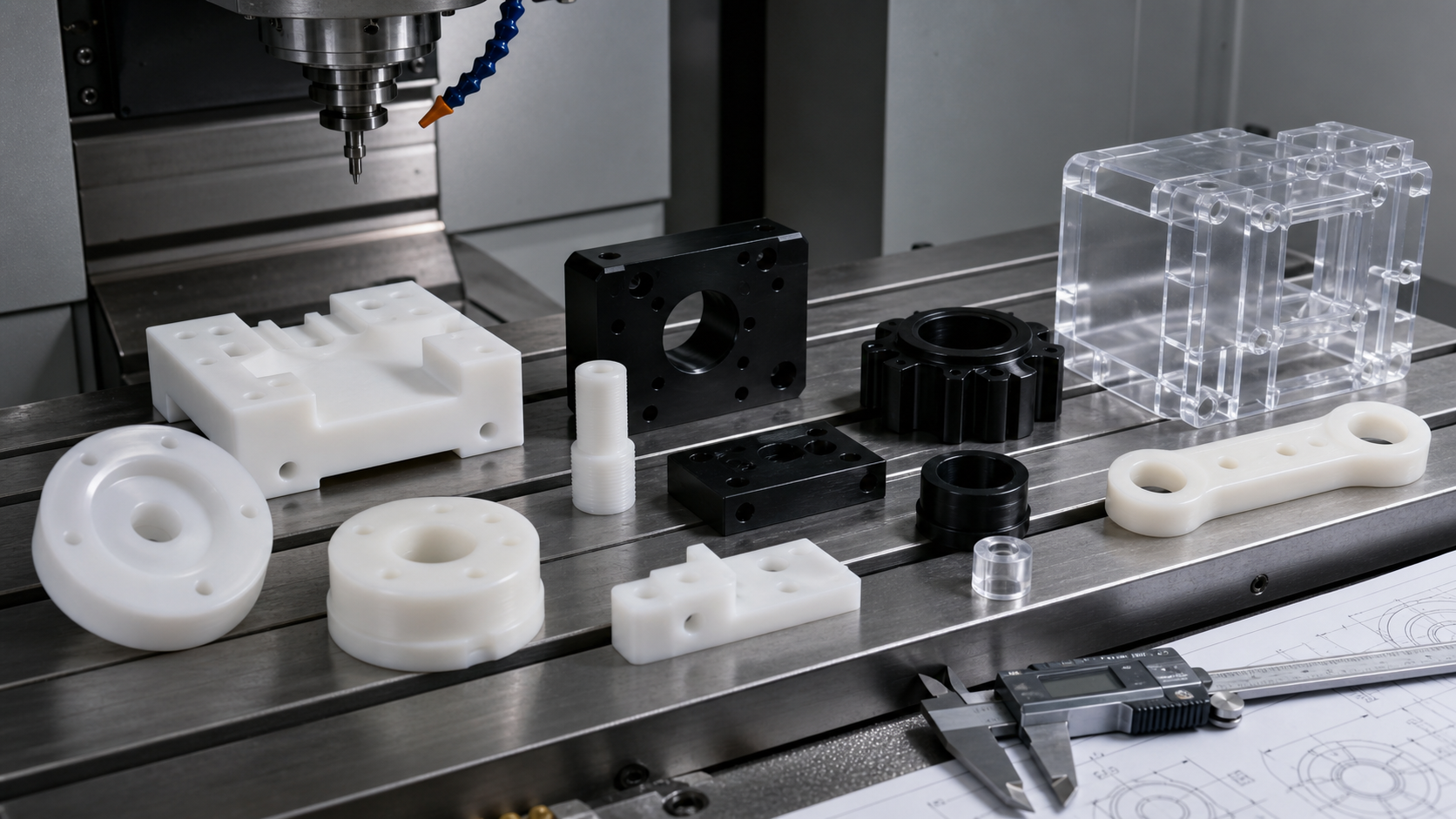
When CNC Machining Fits a Plastic-Part Project
CNC machining avoids a dedicated injection mold, but it still needs programming, workholding, suitable stock and inspection. Select it around the test or production requirement rather than a universal order quantity.
| Project task | Why CNC may fit | 確認すべき事項 |
|---|---|---|
| Functional prototype | Test a part made from a suitable engineering plastic stock grade | Whether stock properties represent the final molded grade and process |
| Replacement component | Reproduce a controlled geometry without making a new mold | Drawing or measured sample, service conditions and mating features |
| Repeat small batch | Reuse approved programming and workholding for stable demand | Stock supply, inspection plan and repeat-order economics |
| Jig, fixture or wear part | Machine accessible features around assembly or motion requirements | Loads, friction, conditioning and replacement interval requirements |
A machined prototype does not automatically reproduce a molded part’s fiber orientation, weld lines, shrinkage or surface. If those affect approval, plan a molded sample stage as well. Compare the next stage in our low-volume injection molding guide.
Engineering Plastics for Custom Machined Parts
Material selection starts with service temperature, load, moisture, chemicals, wear and the drawing. Confirm the exact stock grade and its documentation: a resin sold as molding pellets is not automatically available as a machinable rod, plate or tube.
| 素材ファミリー | Common selection reason | Machining and approval check |
|---|---|---|
| PA6 / PA66 nylon | Wear, toughness and mechanically loaded components | Moisture state, stock grade, stress and dimensional changes |
| POM/アセタール | Moving parts, bushings and precision functional components | Exact grade, fit, chemical exposure and critical dimensions |
| PC / PMMA | Transparent covers or visual components where appropriate | Stress, cracking risk, surface finish and clarity requirement |
| PTFE | Chemical resistance and low-friction applications | Softness, creep, workholding and service-load limits |
| UHMWPE | Wear strips, guides and impact-related applications | Stock movement, clamping and achievable feature definition |
| PEEK / PEI / PPS | Demanding thermal or chemical applications where the grade qualifies | Stock availability, grade data, cost and part-specific validation |
For nylon parts, define whether dimensions will be accepted dry, conditioned or in another agreed state. Moisture exposure can change both dimensions and mechanical behavior. A general resin-family datasheet does not establish the acceptance limits of the finished component.
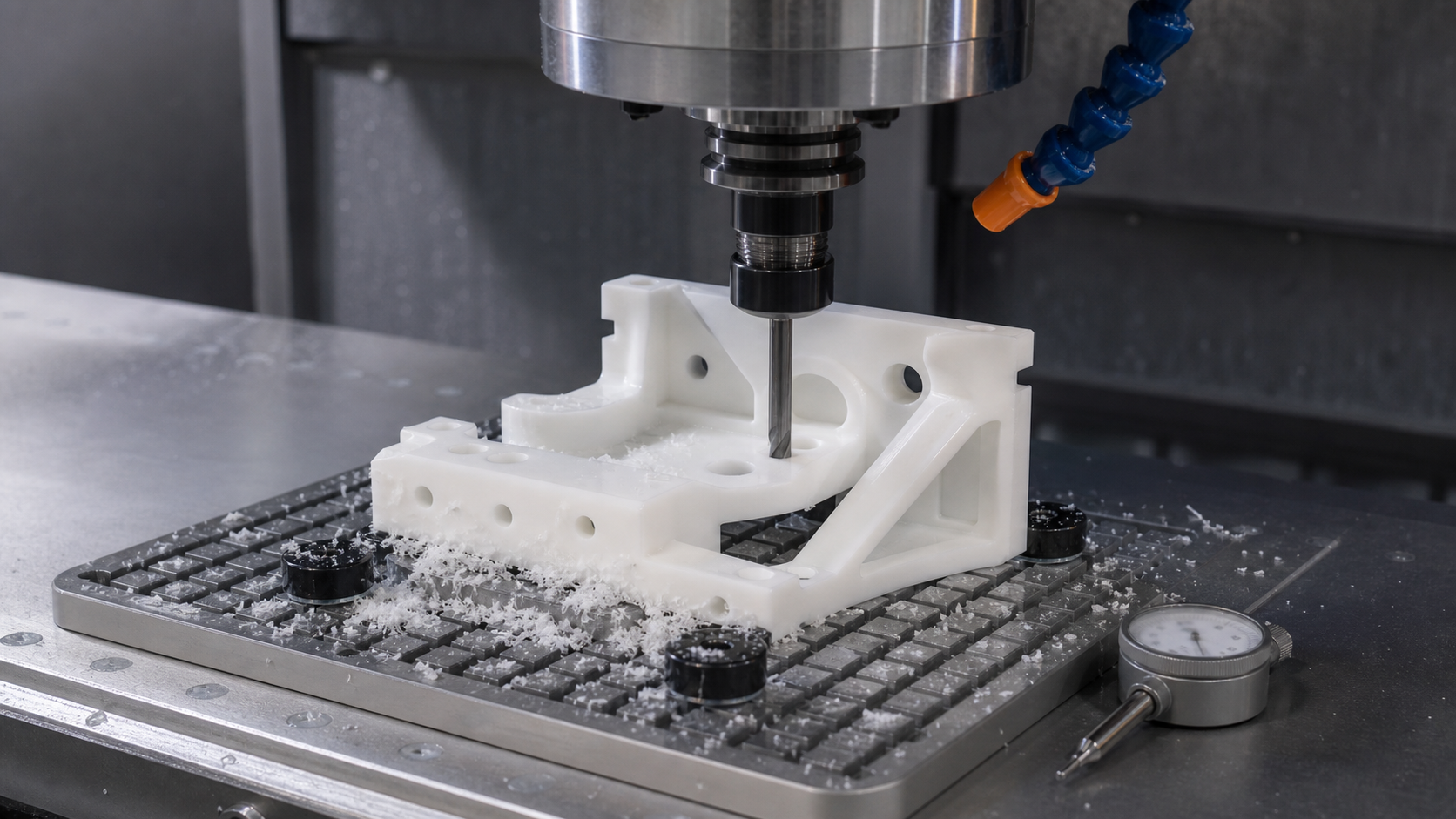
Design Review Before CNC Plastic Machining
A useful drawing separates functional dimensions from general dimensions. Mark datums, mating fits, threads, sealing surfaces, cosmetic faces and any features that must remain free of tool marks. Include the drawing revision and units with the CAD file.
| 特集 | Question before machining | Potential consequence |
|---|---|---|
| Deep pocket or small internal corner | Can the cutter reach it with a suitable radius? | Additional operations or an approved geometry change |
| Thin wall or long slender feature | Can the feature be supported without distorting it? | Movement during cutting or inspection |
| Tight bore, fit or datum relationship | Is the tolerance tied to function and a measurement condition? | Unclear acceptance or an unnecessarily complex setup |
| Threads and inserts | What engagement, torque and installation method are needed? | Stripping, cracking or assembly failure |
| Transparent or cosmetic surface | Which faces need polishing or a controlled visual reference? | A machined finish may not meet the appearance requirement |
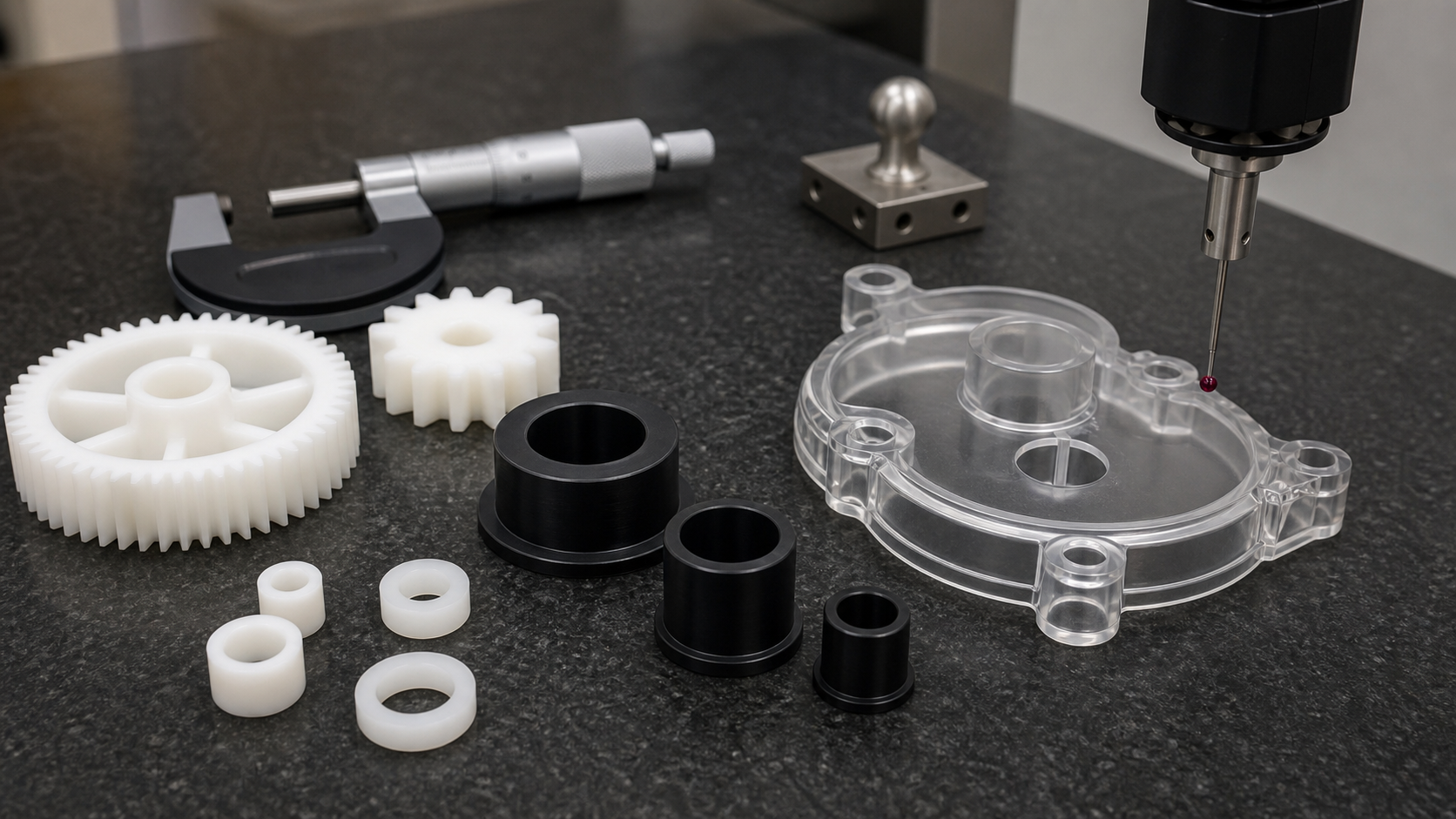
Discuss tolerance and inspection together. Define how the part is supported during measurement, the inspection temperature, conditioning and sample plan. A machine-positioning specification alone is not a guarantee that every plastic feature will meet the same tolerance. See plastic machining tolerances for the supporting review.
What Changes a Plastic Machining Quote?
Material stock, removed volume, tool access, setups, thin-wall handling, finish, inspection and quantity all affect the quote. Comparing only the unit price can hide different assumptions about the same drawing.
| Quote item | Make the scope comparable |
|---|---|
| 素材と在庫 | Manufacturer or grade, stock form, color, conditioning and permitted alternatives |
| Programming and setup | Separate nonrecurring preparation from recurring part cost where relevant |
| Machined geometry | Same CAD revision, tolerances, threads and secondary operations |
| Finish and inspection | Named surfaces, visual reference, dimensional report and agreed sampling |
| 数量と配送 | Same batch sizes, packaging, destination, delivery terms and quoted timing |
Ask for design alternatives only where your function permits them: a larger internal radius, fewer setups, a relaxed noncritical tolerance or a different stock size may simplify production. Any substitution must be approved against the operating conditions and drawing; the least expensive resin is not necessarily the lowest-risk option.
Samples, Inspection and Repeat Production
Before a repeat order, agree which sample validates fit, load, appearance or sealing, and which dimensions require a report. Record the approved material, stock form, drawing revision, conditioning and sample acceptance. If the next order moves to injection molding, recheck the design for draft, gates, wall transitions and molded material behavior.
関連するエンジニアリングガイド
よくある質問
Is CNC machining always cheaper than injection molding?
No. Avoiding a mold can favor prototypes and limited demand, while machining time and stock waste remain recurring costs. Compare total delivered cost and validation needs for your actual quantities.
Can you machine my specified engineering plastic grade?
The exact material must be available in a suitable machinable stock form. Send the mandatory grade or datasheet; the team can review availability and any proposed alternative before quotation.
What tolerance can a machined plastic part achieve?
It depends on the grade, stock, geometry, workholding, temperature, conditioning and inspection method. Identify the critical features so achievable limits can be reviewed individually.
What files are needed for plastic machining quotes?
Send 3D CAD and a 2D drawing with revision, units, tolerances, material and finish. Include quantities, service conditions, required documents and destination.
Request Custom Machined Plastic Parts
Nylon Plastic connects engineering material selection and supply with prototype, CNC, tooling and molded-part requirements. For a machining project, send the information below so the team can review the part rather than estimate from a photograph alone.
- Files: 3D CAD and a revision-controlled 2D drawing, with units and critical dimensions.
- 素材: exact grade if mandatory, or temperature, load, moisture, chemical and wear conditions if selection is open.
- Order: sample quantity, first batch, expected repeat demand, destination and target timing.
- Approval: finish, conditioning, inspection records, material documents and functional tests required.
The review can identify feasibility questions, material or stock constraints and the scope needed for quotation. Stock availability, delivery timing, documents and acceptance limits are confirmed for the specific project.