This precision nylon injection molding guide explains practical material, design, manufacturing, and sourcing considerations for Nylon Plastic readers.
In manufacturing, precision isn’t just a technical specification—it’s the difference between parts that perform reliably and those that cause assembly headaches, field failures, and customer complaints. For nylon injection molding, achieving and maintaining precision requires expertise at every stage, from mold design through process control.
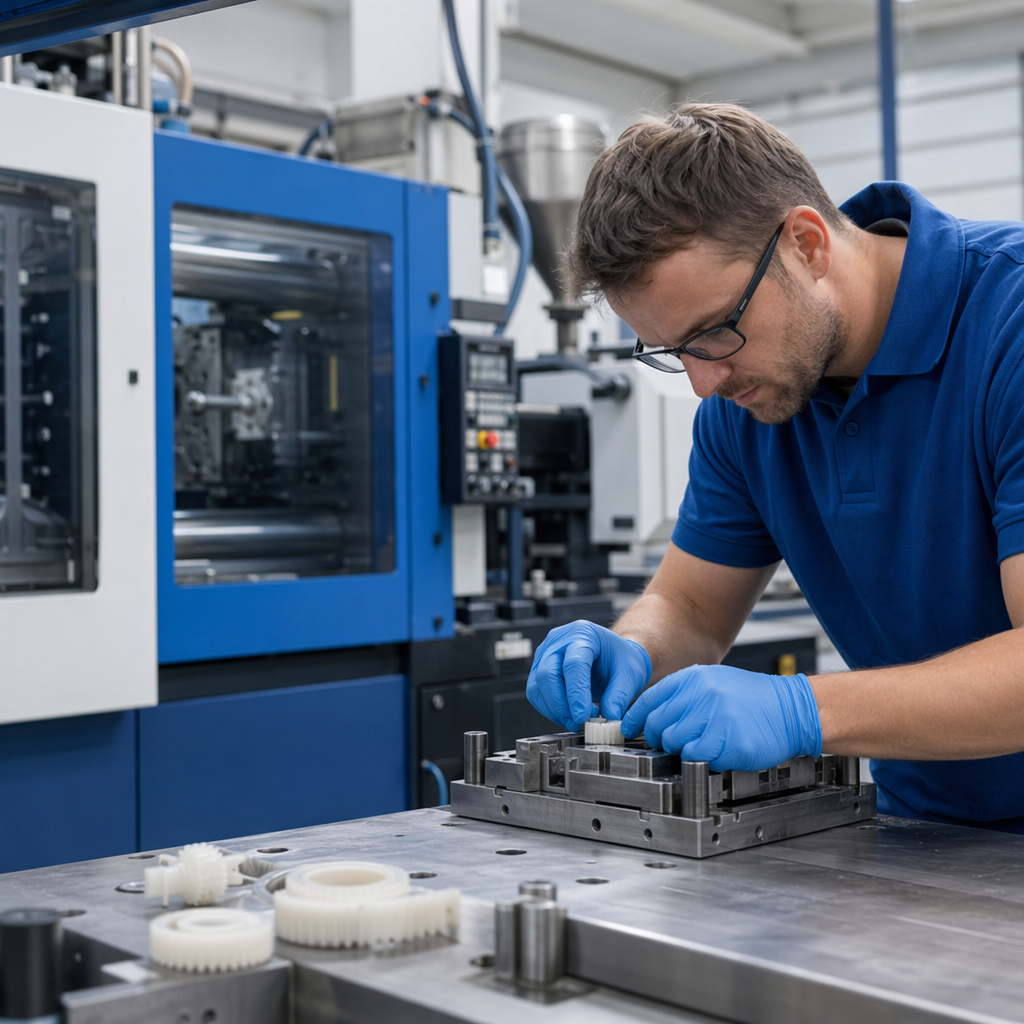
Defining Precision in Injection Molding
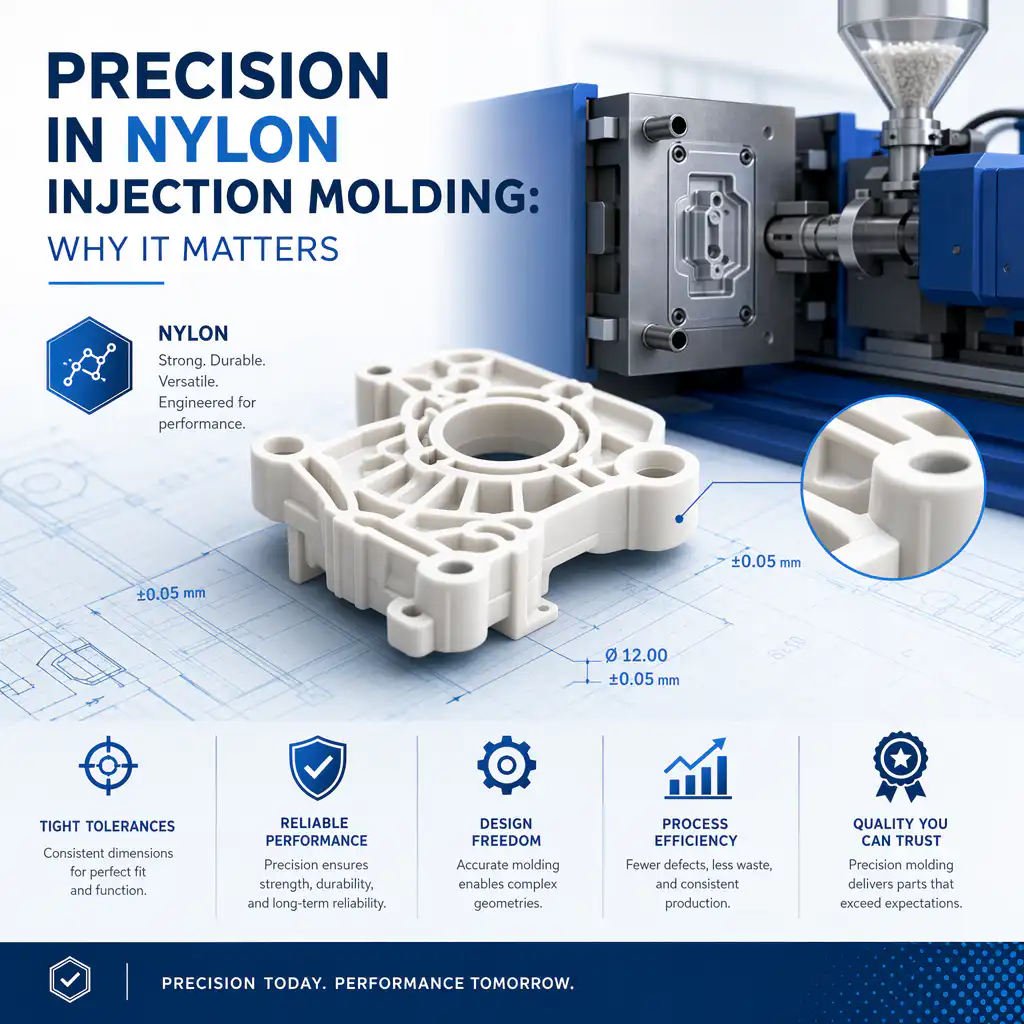
Precision in molded parts means consistently meeting dimensional specifications across thousands or millions of cycles. It’s measured through:
- Dimensional accuracy: Actual vs. nominal dimensions
- Repeatability: Variation between shots
- Stability: Consistency over mold life
- Predictability: Cpk values demonstrating statistical control
Factors Affecting Precision
Material-Related Factors
Nylon presents unique precision challenges:
| ファクター | Impact on Precision | Mitigation |
|---|---|---|
| 収縮 | 1.2-2.0% dimensional change | Mold compensation, process control |
| 吸湿性 | 0.3-0.7% dimensional growth | Material selection, design allowance |
| Crystallinity | Varies with cooling rate | Consistent mold temperature |
| 反り | Non-uniform shrinkage | Cooling optimization, design balance |
Process-Related Factors
Process parameters directly affect dimensional outcomes:
- 溶融温度: Affects viscosity, flow, and shrinkage
- 射出速度: Influences orientation and fiber alignment
- Packing pressure: Controls shrinkage compensation
- Cooling time: Affects crystallinity development
- 金型温度: Critical for nylon crystallinity control
Tooling Factors
Mold precision enables part precision:
- Cavity accuracy: Mold dimensions must account for shrinkage
- Cooling uniformity: Even temperature distribution prevents warpage
- Wear compensation: Cavities enlarge over time with filled materials
- Maintenance consistency: Cleaning and repair maintain tolerances
Precision Applications for Nylon
Automotive Components
Gears, bushings, and structural components require precise fits and consistent mechanical properties. A 0.1mm deviation can cause noise, vibration, or assembly failure.
医療機器
Housings and components for medical applications often require tight tolerances for proper function, sterilization compatibility, and regulatory compliance.
エレクトロニクス
Connectors and enclosures must fit precisely with mating components. Poor fits can cause connection failures, EMI leakage, or inadequate sealing.
Achieving Precision: Our Approach
Our precision molding process includes:
- Design optimization: DFM analysis identifies precision-critical features
- 成形流動シミュレーション: Predicts shrinkage and warpage patterns
- Scientific molding: Data-driven process development
- Statistical process control: Real-time monitoring and adjustment
- Capability studies: Cpk validation on critical dimensions
With over 20 years in engineering plastics, we understand how to achieve and maintain the precision your application requires.
よくあるご質問
When does Precision in Nylon Injection Molding: Why It Matters make sense?
Precision in Nylon Injection Molding: Why It Matters makes sense when the part volume, material choice, geometry, and repeatability needs justify mold design and tooling investment.
What design factors matter most for Precision in Nylon Injection Molding: Why It Matters?
肉厚、リブ、ボス、抜き勾配、ゲート位置、収縮、パーティングライン、およびエジェクションは、いずれも成形品の品質に影響を与えます。.
金型製作の前に、どのような情報が必要ですか?
サプライヤーは、3Dモデル、材質、予想年間生産数量、外観要件、公差要件、および組み立てや機能試験に関する要件を確認する必要があります。.
What is the biggest risk in Precision in Nylon Injection Molding: Why It Matters?
最大のリスクは、実際の用途において、材料の挙動、収縮、流動性、および部品の機能が十分に確認される前に、金型を承認してしまうことです。.