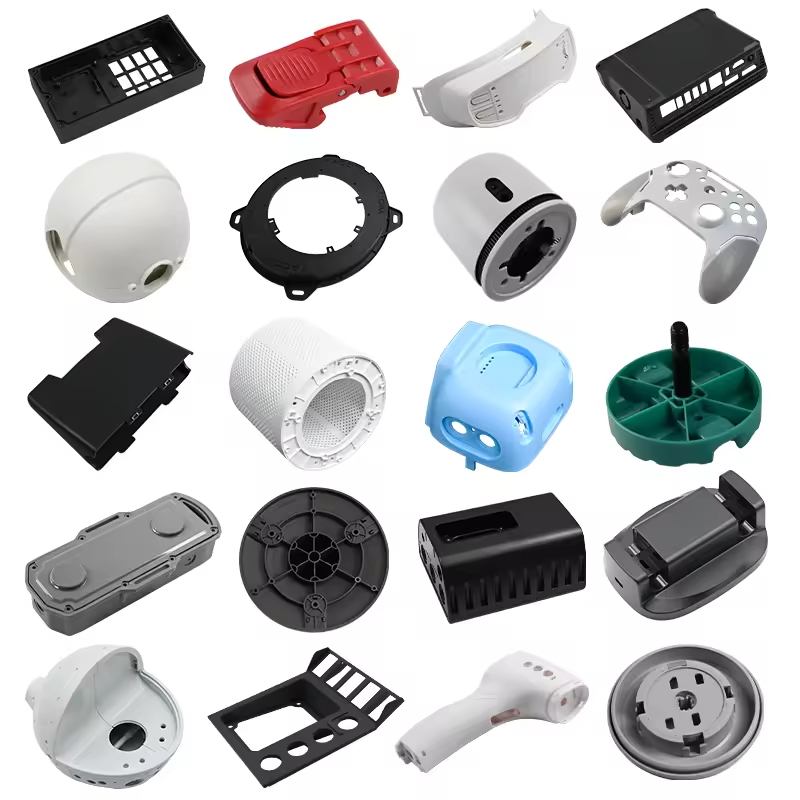
成功するナイロン射出成形プロジェクトは、すべてどこからか始まります。多くの場合、最初は小規模な生産量から始まり、市場での受け入れが進むにつれて生産量が増えていきます。最初から規模拡大を見据えた計画を立てることで、コストのかかる移行作業を回避し、ビジネスニーズに合わせて製造ソリューションを円滑に進化させることができます。.
ボリュームカテゴリの理解


| カテゴリー | 年間発行部数 | 代表的な金型ソリューション |
|---|---|---|
| プロトタイプ | 50~1,000個 | アルミニウム製または3Dプリント製の工具 |
| 少量 | 1,000~10,000個 | 103/104型鋼製金型 |
| 中程度の量 | 10,000~100,000個 | 102/103型金型 |
| 大量 | 10万~100万個以上 | クラス101金型 |
スケーリングの道のり
フェーズ1:プロトタイプ作成と検証
初期生産では、設計の検証と市場での受容性の確認に重点を置きます。 選択肢としては、10~100個の部品には3Dプリントによるナイロン製、100~5,000個の部品にはアルミニウム製の試作金型、そして量産用金型の製作期間中は1,000~20,000個の部品にはブリッジ金型などが挙げられます。この段階では、柔軟性を高く保ちつつ、投資額を低く抑えることが重要です。.
フェーズ2:市場参入
需要の拡大に伴い、手動操作の単キャビティ鋼製金型への移行を行う。部品の生産量は通常、週500~2,000個程度である。品質の安定性と工程検証に重点を置く。生産量が急速に増加した場合は、キャビティの増設に投資する前に、2交替制の導入を検討する。.
フェーズ3:量産
需要がより高い水準で安定したら、キャビティ数を増やすか、多キャビティ生産用金型への投資を行い、部品の取り扱いと梱包の自動化を導入し、材料の節約のためにホットランナーシステムの導入を検討し、サイエンティフィック・モールディングを通じてサイクルタイムを最適化します。.
初日からスケールを見据えた計画
拡張性を考慮した設計
多キャビティ構成に適したパーティングラインとゲートの位置を選択してください。各キャビティ間で共通して使用できる冷却回路を設計してください。可能な限り部品を標準化し、予備部品の在庫管理を簡素化してください。.
プロセス・ドキュメンテーション
試作段階から量産に至るまで、プロセスパラメータを徹底的に文書化してください。この文書化により、生産能力の増強時の立ち上げを迅速化できるほか、複数の金型や機械にわたって一貫した品質を確保し、問題が発生した際のトラブルシューティングの参考資料としても役立ちます。.
Scaling nylon injection molding requires a controlled handoff from prototype evidence to production tooling, material control and repeatable inspection.
Scale-Up Risks That Should Be Closed Before Volume Release
- A prototype mold is treated as production proof without comparing resin, shrinkage, gate, cycle, tool life, and inspection conditions.
- The annual forecast changes but cavitation, automation, packaging, material supply, and quality staffing are not revisited.
- Process settings are transferred without confirming the machine, mold, dryer, resin lot, conditioning state, and measurement method.
- A design is scaled before critical dimensions, assembly fit, cosmetic standards, traceability, and change-control responsibilities are frozen.
How Nylon Plastic Supports the Project
Nylon Plastic supports the route from 3D printed or CNC prototypes to tooling and molded production. The review can connect modified nylon grade selection, DFM, mold strategy, sampling, inspection, and repeat-order requirements so a scale-up decision is based on evidence.
- Review the drawing, material, quantity, critical features, and service environment before quotation.
- Connect samples, dimensional reports, material documents, traceability, and acceptance criteria to the same revision.
- Use custom compounding, injection molding, CNC machining, or 3D printing when the application requires a different route.
関連記事
よくある質問
When should a nylon molding project move from prototype to production tooling?
Move when the geometry, material, critical dimensions, validation plan, and demand are stable enough that production repeatability and lifecycle cost justify the tooling commitment.
Can a prototype mold prove production capability?
It can reveal useful flow, shrinkage, fit, and appearance information, but production capability still depends on tool life, cavitation, machine, process control, inspection, automation, and the approved resin.
What should be frozen before a volume launch?
Freeze the drawing, grade and color, mold specification, critical dimensions, appearance standard, process window, inspection plan, packaging, traceability, and engineering-change process.
How should scale-up cost be compared?
Compare qualified part cost, tooling, sampling, inspection, secondary work, packaging, inventory, maintenance, scrap, freight, and expected change cost at each demand phase.
Request a Nylon Molding Scale-Up Review
Send prototype data, CAD, drawing, material, demand by phase, critical dimensions, and validation requirements for a route-to-production review.