小ロット射出成形:エンジニアリングの解決策
小ロット射出成形とは、需要がプロトタイプ生産を行うには多すぎる一方で、完全に最適化された生産用金型を導入するには需要が少なすぎる、不確実である、あるいは納期が厳しいといった場合に、プラスチック成形部品を製造するための生産手法です。. 代表的なプログラムとしては、パイロット生産、量産前の検証、ブリッジ生産、交換用部品、規制対応の検証用試作、および年間需要は安定しているものの限定的である特殊製品などが挙げられます。.
生産量だけで製造プロセスを決定すべきではありません。エンジニアは、年間需要、樹脂の研磨性、部品の形状、公差の安定性、要求される金型寿命、市場投入時期、設計変更のリスク、および市場投入の遅延によるコストなどを評価する必要があります。 2,000個の非充填ABS製ハウジングであればアルミニウム金型で対応可能ですが、同じ数量のガラス繊維強化PA66の場合、プログラム完了前に繊維による摩耗がより軟らかいキャビティを損傷する恐れがあるため、P20鋼の使用が妥当となる可能性があります。.
| プログラムの条件 | 想定される製造工程 | 工学的な理由 |
|---|---|---|
| 機能部品が複数ある、あるいは設計変更が頻繁に行われる | 3DプリントまたはCNC加工 | 金型への投資が不要で、製造ごとに形状を変更できる。. |
| 数百個から数千個の成形部品 | アルミニウム、軟鋼、またはモジュラー式インサート金型 | 量産用樹脂と成形形状が必要ですが、本格的な量産用金型への投資は不要です。. |
| 生産用金型が完成する前に必要な立ち上げ用在庫 | 生産用金型の製作と並行して、ブリッジ金型の製作を行う | 初期の需要には、硬化処理を施した多キャビティ金型の製造および認定が行われている間、対応しています。. |
| 安定した需要見通しと、長期にわたる需要が見込まれる | 生産用鋼製金型 | 金型コストの高さは、寿命の延長、キャビティ数の増加、自動化、およびランニングコストの削減によって回収することができます。. |
これらの範囲は、購入仕様ではなく、選定の目安としてご利用ください。最終的な選定は、DFM、金型寿命の想定、文書化された品質計画、およびプログラム総コストの比較を通じて確認する必要があります。.
小ロット射出成形とは何か?
小ロット射出成形とは、通常1回の生産当たり100個から10,000個の範囲の数量でプラスチック部品を製造することを指します。数十万回や数百万回のサイクルを想定して設計された量産用金型とは異なり、小ロット成形では、試作と本格的な量産との間のギャップを埋めるために、特殊な手法が採用されます。 この生産戦略は、製品の検証試験、設計の反復過程における暫定金型、市場へのパイロット投入、旧式機器の交換用部品、および年間需要が大量生産用金型への投資を正当化できないニッチな産業用途において、特に有効です。.
小ロット射出成形の最大の特徴は、低コストの金型材料の使用と、製造プロセスの合理化にあります。 焼入れ工具鋼で作られた量産用金型のコストは$50,000~$150,000以上になる場合がありますが、少量生産用の金型を選択することで、金型費用を50%~70%削減できます。 その代償となるのが金型の寿命です。量産用金型が100万サイクル以上に対応するのに対し、少量生産用金型では100~100,000ショットの安定した生産が可能となります。適切な用途において、このトレードオフは極めて魅力的な経済性をもたらします。.
少量生産向けの金型技術
少量生産の射出成形において、適切な金型技術を選択することは、何よりも重要な決定事項です。以下の選択肢は主な手法を示しており、それぞれにコスト、リードタイム、品質面での特徴があります。.

アルミニウム製試作金型
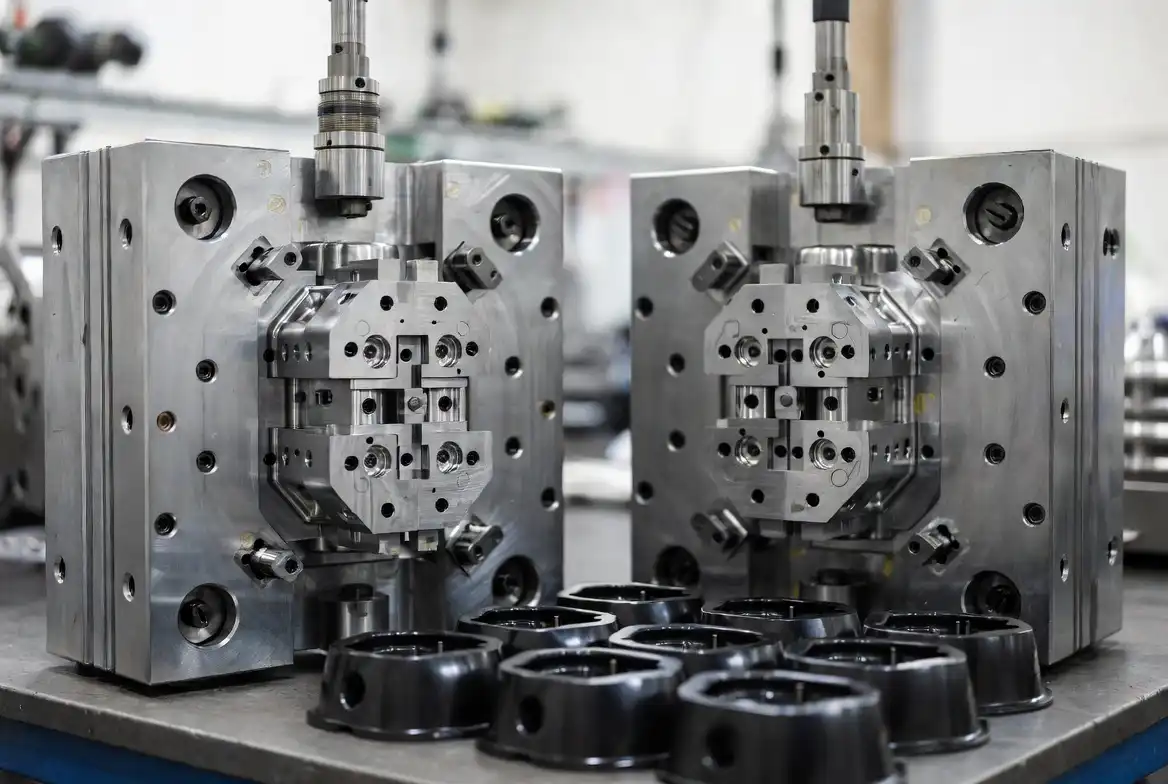
アルミニウム製金型は、小ロットの射出成形において主力となっています。7075-T6やQC-10などの金型用アルミニウム合金は、優れた加工性を備えており、鋼材と比較して金型製作時間を30%~50%短縮します。 アルミニウムの優れた熱伝導率(工具鋼の約4倍)により、サイクルタイムの短縮とより均一な冷却が可能となり、反りや沈み跡を低減することで部品の品質を向上させることができます。 一般的なアルミニウム製金型の耐用回数は、樹脂、部品の形状、およびメンテナンス状況に応じて、1,000~100,000ショットとされています。これらは、充填剤を含まない熱可塑性樹脂に最も適しています。ガラス繊維強化樹脂は、研磨性のある繊維が含まれているため、アルミニウム製キャビティの摩耗を加速させます。.
複雑度が中程度の部品用の標準的なアルミニウム金型は、2~4週間で製作可能であり、その費用は$3,000から$15,000の範囲です。短納期と手頃なコストが相まって、アルミニウムはほとんどの少量生産の射出成形プロジェクトにおいて、デフォルトの選択肢となっています。.
鋼製試作金型(P20/H13)
生産量が50,000個を超える場合や、ガラス繊維強化ナイロン(PA66-GF30)などの研磨性材料、あるいはPEEKのような耐熱性樹脂を加工する場合は、あらかじめ焼入れ処理された鋼製金型が必要となります。 約 28~32 HRC に焼入れされた P20 鋼は、その中間の選択肢となります。アルミニウムよりも耐久性が大幅に向上している一方で、完全焼入れされた量産用金型よりもコストが低く抑えられます。 P20 プロトタイプ金型の一般的なリードタイムは 4~8 週間で、中程度の複雑さの部品の場合、コストは $8,000~$30,000 です。.
また、鋼製の試作金型は、より高い射出圧力に対応できるほか、アルミニウム製では実用的でない、あるいは不可能なホットランナーシステムを含め、より複雑なゲート配置にも対応可能です。 生産全工程にわたって厳しい公差が求められる部品の場合、鋼の寸法安定性は、熱膨張が大きく、研磨性材料による数千サイクルの成形後に測定可能な摩耗が生じることがあるアルミニウムに比べて、大きな利点となります。.
MUD(マスター・ユニット・ダイ)フレームシステム
MUD金型フレームシステムは、少量生産において魅力的な中間的な選択肢となります。 MUDシステムでは、標準化された再利用可能なスチール製フレームに、実際のキャビティおよびコアの形状を持つ交換可能なインサートセットが収められています。このフレーム($10,000~$25,000という多額の設備投資が必要)は、一度購入すれば済みます。 新しい部品を設計するたびに必要なのは、新しいインサートセットの製作のみであり、その費用は通常1セットあたり$1,500~$8,000で、1~3週間で製造可能です。.
小ロットの部品を複数生産するメーカーにとって、MUDシステムの経済性は画期的なものです。1つのMUDフレームを10セットのインサートで分担して使用することで、設計ごとに完全な金型を製作する場合と比較して、部品1個あたりの金型コストを40%から60%削減できます。 MUDシステムは、頻繁な設計変更と中程度の生産量が一般的である自動車および医療機器業界で特に人気があります。主な制約は部品のサイズであり、MUDフレームには最大外形寸法が定められており、通常、キャビティ面積は200 mm × 250 mm程度です。.
費用分担のための家族別型
ファミリー金型とは、1つの金型ベース内に、複数の異なる部品用のキャビティを組み合わせたものです。この手法は、部品の肉厚、材質、投影面積が類似しており、充填が均一に行われる場合に最も効果的です。ファミリー金型を使用することで、部品ごとに個別の金型を製作する場合と比較して、金型総コストを30%から50%削減できます。 しかし、製造上の複雑さも生じます。あるキャビティのメンテナンスが必要になると金型全体が生産から外れてしまいます。また、部品の体積に大きな差がある場合、あるキャビティが不要に稼働することになります。さらに、異なるキャビティ間で充填バランスを保つには、高度なランナー設計や、場合によっては異なるゲートサイズの採用が必要となります。.
ファミリー金型は、組み合わされる部品が常に同じ比率で必要とされる場合に最も効果を発揮します。例えば、左右一対のハウジングや、アセンブリとしてセットで出荷される底面と蓋などが挙げられます。.
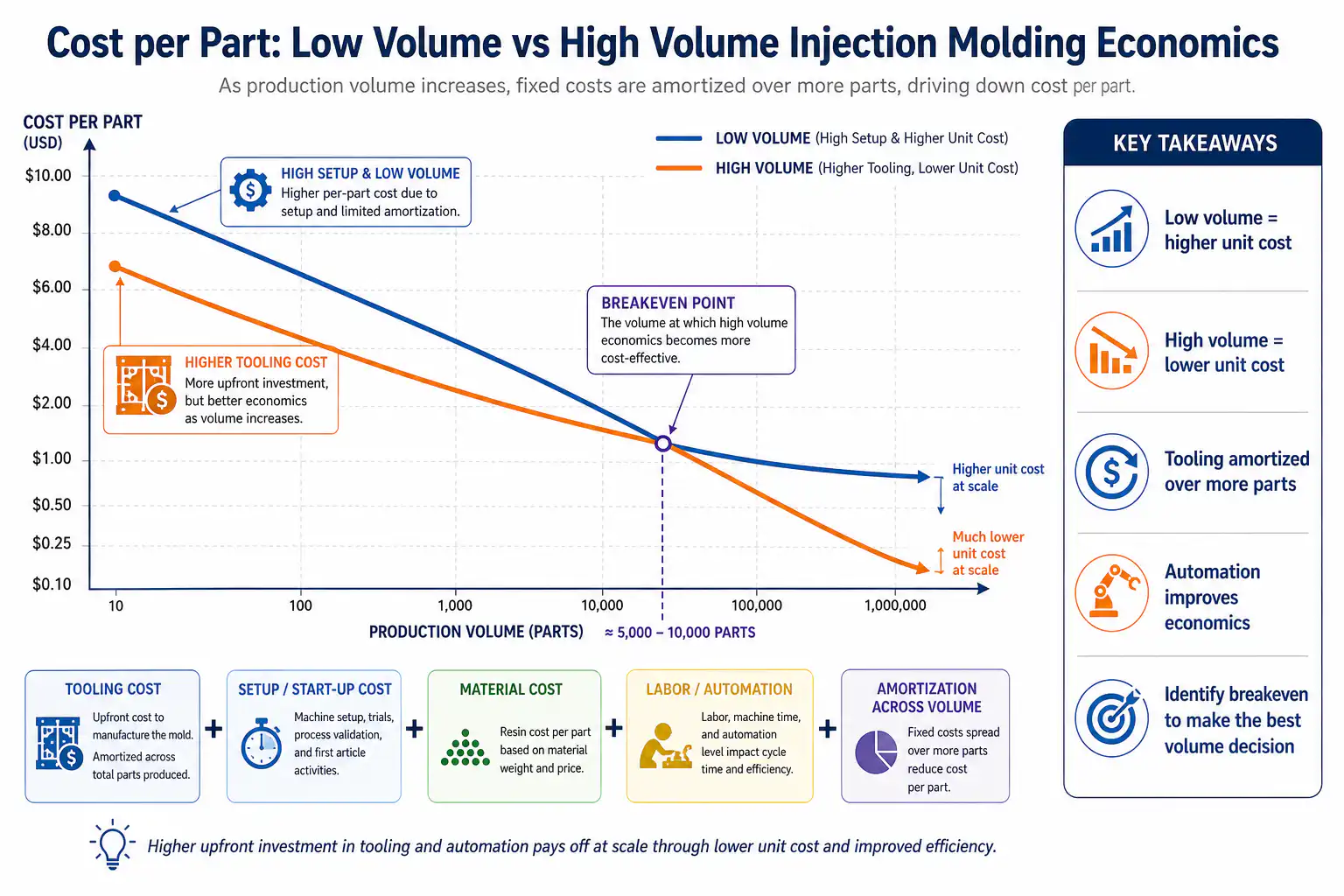
コストの内訳:少量生産と大量生産の射出成形
| コスト要因 | 少量生産(アルミ金型、5,000個) | 大量生産(焼入れ鋼、50万個) |
|---|---|---|
| 金型製作 | $5,000 – $15,000 | $50,000 – $150,000 |
| 金型のリードタイム | 2~4週間 | 8~16週間 |
| 部品単価 | $2.50 – $8.00 | $0.30 – $1.50 |
| 部品あたりの償却済み金型費用 | $1.00 – $3.00 | $0.10 – $0.30 |
| 部品あたりの総コスト(金型費+製造費) | $3.50 – $11.00 | $0.40 – $1.80 |
| 最適 | 試作品、試験生産、ニッチ製品、暫定金型 | 消費財、自動車生産、大量生産型産業 |
この比較は、射出成形における基本的な経済原理を示しています。すなわち、生産数量が少ない場合は金型費の償却が単位当たりの経済性を左右しますが、生産数量が多い場合は部品単価が支配的な要因となります。 大量生産向けの金型投資が経済的に正当化される転換点は、部品の複雑さや材料によって異なりますが、通常は20,000個から100,000個の間となります。この閾値を下回る場合、少量生産戦略の方が総所有コストの面で優位となります。.
リードタイムの見込みとプロジェクト計画
リードタイムは、小ロットの射出成形を採用する主な要因となることがよくあります。製品の発売期限が迫っている場合や、設計の反復作業により迅速な対応が求められる場合、試作金型の短納期は戦略的な強みとなります。以下に、小ロットの射出成形プロジェクトにおける一般的なリードタイムの範囲を示します。
| プロジェクトのフェーズ | アルミ金型 | P20鋼製金型 | MUDインサートセット |
|---|---|---|---|
| DFMレビューおよび金型設計 | 3~5日 | 5~10日 | 3~5日 |
| 金型製作 | 10~20日 | 20~40日 | 7~14日 |
| カビ試験(T0サンプリング) | 1~2日 | 1~3日 | 1~2日 |
| 金型の調整とT1 | 3~7日 | 5~10日 | 2~5日 |
| 生産ロット(5,000台) | 2~5日 | 3~7日 | 3~5日 |
| 推定所要期間(合計) | 4~6週間 | 7~12週間 | 3~5週間 |
これらの工程表は、部品の複雑度が標準的であり、金型ベースの部品が入手可能であることを前提としています。サイドアクション、コア抜き機構、または複雑な冷却路を備えた複雑な部品の場合、各工程の所要時間が長くなります。 追加費用を支払うことで、納期を短縮することも可能です。金型製作の急ぎ手数料は、通常、金型価格に30%から50%が加算されますが、これにより金型製作フェーズを30%から40%短縮することができます。.
代替手段を活用すべき場面:3DプリントとCNC加工
小ロットの射出成形が、必ずしも最適な解決策とは限りません。100個未満の数量の場合、積層造形(3Dプリント)やCNC加工の方が、経済性が高く、納期も短いことがよくあります。決定の枠組みでは、以下の要素を考慮する必要があります。.
3Dプリンティングは、生産数が50~100個未満の場合、形状の複雑さが金型成形の限界を超える場合、設計の反復が継続中で金型への投資がまだ正当化できない場合、あるいはリードタイムを数週間ではなく数日に短縮しなければならない場合に適しています。 ナイロン部品向けの選択的レーザー焼結(SLS)、量産グレードのPA12向けのマルチジェットフュージョン(MJF)、高精細な視覚的プロトタイプ向けのステレオリソグラフィー(SLA)といった技術が、機能性のある少量生産において最も一般的な選択肢となっています。.
材料特性が製造意図に正確に合致しなければならない場合(3Dプリント部品が射出成形品と同等の機械的特性を備えることはめったにない)、 ±0.05 mm以下の厳しい公差が要求される場合、部品が主に直方体形状で加工アクセスが容易な場合、あるいは生産数量が50~500個の範囲にあり、加工サイクルタイムが依然として競争力を持つ場合です。 CNC加工では金型費用は一切かかりませんが、単価は大幅に高くなります(複雑さに応じて、通常$15~$150/個)し、生産数量が増えても単価は下がりません。.
| 決定要因 | 3Dプリンティング | CNC加工 | 小ロット成形 |
|---|---|---|---|
| 最適な数量範囲 | 1 ~ 100 単位 | 10~500個 | 100~10,000単位 |
| 必要な工具 | なし | なし(試合日程のみ) | はい($3,000 ~ $30,000) |
| 材料特性 | 異方性があり、印刷可能な樹脂に限定される | 等方性、加工可能なあらゆるプラスチック | 等方性、フルレジン製 |
| 表面仕上げ | 層状の質感、後処理が必要 | 機械加工仕上げ、研磨可能 | 金型仕上げの転写、テクスチャの選択肢 |
| リードタイム(初回納品分) | 1~5日 | 3~10日 | 14~30日 |
ブリッジ・ツーリング戦略
ブリッジ金型とは、本格的な生産用金型の製作がまだ進行中の段階で、少量生産用の金型を用いて生産を開始する戦略的なアプローチです。 この戦略は、市場投入までの時間が厳しく求められ、生産用金型のリードタイムが12~20週間にも及ぶことで製品発売スケジュールが危ぶまれる可能性がある、自動車、医療機器、民生用電子機器業界において特に有用です。.
一般的なブリッジ金型プログラムは、次のように進められます。まず、アルミニウム製またはP20製のブリッジ金型を設計・製作し、これには3~6週間を要します。 金型の認定が完了次第、直ちに市場向け初期在庫の生産が開始され、売上を生み出し、市場での存在感を高めていく一方で、10~16週間かけて硬化処理済みの量産用金型が製作されます。量産用金型の認定が完了すると、ブリッジ用金型は廃棄されるか、生産量の急増や交換部品の生産に備えて予備として保管されます。.
ブリッジ金型の経済的なメリットは明白です。追加の金型投資額(通常、$5,000~$20,000)と、製品発売を8~12週間遅らせることによる売上損失および市場シェアの低下とを天秤にかけるのです。 ほとんどの市販製品において、この計算結果からブリッジアプローチが圧倒的に有利となります。移行期間中に5,000~20,000ユニットを生産するブリッジ金型は、売上獲得の加速により、通常、投資額の数倍の利益をもたらします。.
少量成形における品質上の考慮事項
少量生産だからといって品質が低いわけではありません。アルミニウム製の試作金型で製造された部品は、金型が適切に設計・維持管理されていれば、量産用金型で製造された部品と同等の寸法精度および外観基準を満たすことができます。 品質を確保するための重要な要素としては、反りを最小限に抑えるための均一な冷却路の設計、焼け跡やショートショットを防ぐための適切な排気、引き跡のないスムーズな離型を保証するための1~3度の適切な抜き勾配、そしてニットラインの位置を制御し、目に見える流れ跡を最小限に抑えるためのゲート位置の最適化などが挙げられます。.
少量生産におけるプロセスバリデーションには、AS9102または同等の規格に基づく初回製品検査(FAI)、品質上重要な寸法に関する能力調査(Cp/Cpk)、およびメルトフローインデックスの検証や、該当する場合はUL 94難燃性等級の確認を含む材料認証を含める必要があります。 これらのバリデーション手順により、少量生産プロセスで規格に適合した部品が製造されることが確認され、将来的な大量生産への移行に向けた基準データが提供される。.
事例:自動車用センサーハウジング
あるティア1自動車部品サプライヤーは、試作車の検証プログラム向けに、ガラス繊維強化PA66製の射出成形センサーハウジング8,000個を必要としていた。 量産用金型(ホットランナーシステムを備えた焼入れ処理済みのS136鋼製金型)の見積もりは、$85,000で、リードタイムは14週間と提示された。 ブリッジ戦略では、リードタイム4週間のアルミニウム製金型($12,000)を採用し、10日間の成形工程で必要な8,000個をすべて生産した。金型製作費と生産費を含む総コストは約$38,000であった。 これに対し、プログラムを10週間遅らせて直接量産用金型に移行するという代替案を採用した場合、$100,000を超えるプログラム遅延違約金が発生し、サプライヤーとの関係も危うくなっていたでしょう。このブリッジ金型は、仕様通りに必要な部品をすべて順調に生産することに成功し、サービスパーツの生産にも引き続き採用されました。.
少量生産用金型から量産用金型へ切り替えるタイミング
移行の判断は、一律の注文数量ではなく、プログラム全体の経済性とプロセスリスクに基づいて行うべきです。低コストの金型は、寸法、外観、納期に関する要件を満たし続けられる限り、有用であり続けます。生産用金型への切り替えがより適切な選択肢となるのは、生産量の増加、単位コストの低減、無人運転時間の延長、プロセス能力の向上、あるいは耐用年数の延長といったメリットが、金型への追加投資を上回る場合です。.
損益分岐点を算出する
まず、次のような実用的な計算を行ってみましょう:
損益分岐点数量 =(量産用金型費 - 小ロット用金型費) ÷ (小ロット単価 - 量産単価)。.
アルミニウム製の金型のコストが$10,000で、1個あたりの部品生産コストが$2.40であるのに対し、多キャビティの鋼製金型のコストは$35,000で、1個あたりの部品生産コストは$1.10であると仮定する。 追加の金型投資額は$25,000であり、継続的なコスト削減額は部品1個あたり$1.30である。 単純化した損益分岐点は、約19,231個となります。調達決定にあたっては、さらに認定、メンテナンス、樹脂廃棄、運賃、在庫保有コスト、およびリードタイムによる財務的影響を考慮する必要があります。その生産量に達する前に設計変更が行われる可能性が高い場合、投資額の少ない金型を使い続けることが、依然としてリスクの低い決定となる可能性があります。.
生産・金型関連のトリガー
- 予測の信頼度: 受注済み案件および確実な年間需要が、現行の金型の残存耐用年数を上回っている。.
- 許容圧力: 単一の金型や手動式の工具では、残業や過剰在庫、納期のリスクなしに、週単位の需要を満たすことはできません。.
- 摩耗か、それともドリフトか: フラッシュ、ゲートの摩耗、テクスチャの喪失、寸法変動、あるいはメンテナンス頻度の増加といった現象が見られる場合は、ブリッジツールが実用上の限界に近づいていることを示しています。.
- 品質要件: このプログラムでは現在、キャビティ間の整合性の強化、自動検査、能力の文書化、PPAP、あるいはより厳密に制御された熱管理システムが求められています。.
- 単位コスト・レバレッジ: 多キャビティ、ホットランナー、自動化、あるいはサイクルタイムの短縮により、金型コストの高さを相殺できるだけの継続的なコスト削減効果が生まれます。.
- 供給の継続性: 量産用金型が通常の需要に対応している間、ブリッジ金型は予備として機能しなければならない。.
ブリッジツールが摩耗限界に達する前に、量産用金型の計画を開始してください。承認済みのCAD改訂版、材料グレード、寸法報告書、工程設定、欠陥履歴、保守記録、および承認済みサンプルを引き継いでください。これらの記録は、量産用金型製作者に検証済みの基準を提供し、ゲート、冷却、ベント、収縮、または反りに関する修正作業が繰り返される可能性を低減します。.
少量生産の成形部品に関する見積依頼(RFQ)チェックリスト
有用な小ロット見積もりでは、金型に関する前提条件と部品の継続的なコストを明確に区別する必要があります。すべてのサプライヤーに同じ基準に基づいた情報を提供し、除外項目については書面での明記を求めましょう。.
- デザインファイル: 現在のSTEPまたはParasolidモデルに加え、バージョン管理された2D図面。.
- 需要: 一次注文、年間数量、月間ピーク需要、プログラム期間、および想定される設計変更期間。.
- 素材: 必要に応じて、具体的な樹脂メーカーおよびグレード、色、充填剤、難燃等級、UV対応仕様、コンプライアンス要件、および再生材の使用制限。.
- 必須要件: 基準系、CTQ寸法、公差、外観ゾーン、表面仕上げ、インサート、ねじ、組立インターフェース、および漏れ試験または負荷試験。.
- ツールへの期待: 金型の目標寿命、キャビティ数、アルミニウムまたはスチールの使用の可否、交換可能なインサート、金型の所有権、メンテナンス、保管、および移管条件。.
- 承認書類一式: T0/T1サンプル数量、FAI報告書、材料証明書、能力調査、PPAPレベル、ゲージプラン、および承認済みマスターサンプルの管理。.
- 納入範囲: 脱型、インサートの装填、組み立て、マーキング、洗浄、梱包、運賃、関税、および引渡条件。.
金型の固定価格を依頼する前に、ゲートの位置、抜き勾配、肉厚の変化、アンダーカット、収縮余裕、および公差の割り当てを確認してください。その ゲート設計ガイド, 工具鋼の選定ガイド, 許容差の累積に関するガイド, そして ラピッドツーリングと量産用金型の比較ガイド 技術的な判断の根拠を示す。標準化された金型および部品価格の比較を行うには、 射出成形のコストガイド.
小ロット射出成形の検討依頼
CADモデル、図面、樹脂グレード、初回発注数量、年間見込み数量、重要寸法、および希望納期をお送りください。Nylon Plasticでは、機械加工、アルミニウム製金型、P20インサート、ブリッジ金型、あるいは量産用金型のうち、どの方法が認定部品を最も確実に製造できるか検討いたします。.
よくある質問
小ロットの射出成形における最小注文数量はどれくらいですか?
小ロットの射出成形業者では、部品のサイズや複雑さに応じて、通常100~500個を最低発注数量として設定しています。100個未満の数量の場合、一般的に3DプリントやCNC加工の方が費用対効果が高くなります。 実用的な下限は、金型のセットアップコスト、材料の最低使用量、および初期射出時の工程安定化に要する時間によって決まります。一部の専門的なラピッド射出成形サービスでは、50個という少量の注文も受け付けていますが、この数量での単価には、極めて小ロット生産に伴う非効率性が反映されています。.
少量生産において、アルミニウム金型の寿命は鋼製金型と比べてどうでしょうか?
アルミニウム製金型の寿命は、樹脂、充填剤、および部品の形状に応じて、通常1,000~100,000ショットです。ABS、ポリプロピレン、無充填ナイロンなどの無充填樹脂は摩耗が最小限に抑えられるため、アルミニウム製金型はこの範囲の上限まで使用することができます。 ガラス繊維強化樹脂、特にPA66-GF30やPPS-GF40は研磨性が高く、キャビティの摩耗を加速させるため、アルミニウム金型の寿命は1,000~10,000ショットの範囲に短縮されます。 予備焼入れ済みのP20鋼製金型は、研磨性の高い材料であっても10万~50万ショットを確実に生産できるため、生産量がアルミニウム金型の能力を超える場合や、研磨性の高い充填剤が指定される場合に、最適な選択肢となります。.
少量生産用の金型にも、表面の質感や仕上げを施すことは可能ですか?
はい。アルミニウム製金型は、Mold-TechやYick Sangのテクスチャ規格を含む、深さ約MT-11000までの幅広い表面仕上げに対応しています。ただし、アルミニウムの表面は鋼に比べて柔らかいため、テクスチャの耐久性は鋼に比べて限られています。 微細なテクスチャ(VDI 12~24またはMT-11010以下)の場合、アルミニウムは金型の定格寿命にわたって良好な性能を発揮します。 深いテクスチャ(VDI 33以上またはMT-11300以上)の場合、5,000~10,000サイクル以内に目に見える劣化が生じる可能性があります。スチール製金型は、あらゆるテクスチャに対応し、優れた耐久性を発揮します。 高光沢の研磨仕上げ(SPI A-1~A-3)は、アルミニウムとスチールの両方で実現可能ですが、アルミニウムの場合は、表面品質を維持するために、より頻繁な再研磨が必要となります。.
中国で金型を製作する場合と、国内で製作する場合とでは、コストにどのような違いがありますか?
中国での金型製造は、通常、北米や西ヨーロッパで製造される同等の金型に比べて30%~50%安く、リードタイムも20%~30%短いことがよくあります。 このコスト面での優位性は、アルミニウム、P20鋼、焼入れ加工済みの量産用金型など、あらゆる種類の金型に及んでいます。国内で$25,000と見積もられた金型でも、実績のある中国の金型メーカーからは$12,000から$17,000の価格で提供される可能性があります。 ただし、購入者は国際輸送費(金型の輸送費は通常$500~$2,000)、輸入関税、およびエンジニアリング面での直接的なコミュニケーションの価値を算入する必要があります。 英語を話すプロジェクトエンジニアを擁し、ISO 9001認証を維持している、実績のある輸出志向のメーカーと提携することで、海外での金型製作に伴うコミュニケーションや品質に関するリスクを大幅に低減することができます。.
少量生産から大量生産へどのように移行すればよいでしょうか?
移行の進め方は、当初の少量生産用金型戦略によって異なります。アルミニウム製のブリッジ金型が使用された場合、通常、量産用の鋼製金型は並行して発注されます。つまり、量産用金型の製作期間中、ブリッジ金型を用いて初期生産を行います。 量産用金型は、ブリッジ金型が使用終了となる前に、同様の認定プロセス(T0サンプル、寸法検査、T1調整、プロセスバリデーション)を経ます。小ロット生産のアプローチでMUDインサートが使用されていた場合、移行には単に追加のインサートセットを製造するか、同じMUDフレーム内でアルミニウム製インサートから鋼製インサートへアップグレードするだけで済む場合があります。 円滑な移行の鍵となるのは、少量生産プロセスの徹底的な文書化(金型温度プロファイル、射出パラメータ、寸法データ、および発生した加工上の問題など)です。これにより、量産用金型をゼロから始めるのではなく、既知の良好なベースラインに対してバリデーションを行うことが可能になります。.
関連記事
For broader DFM, material, tooling and production support, review our plastic injection molding services and send the part drawing, material requirements and expected quantity with the RFQ.