PEEK(ポリエーテルエーテルケトン)は、射出成形可能な熱可塑性樹脂の中で群を抜いて最高峰に位置しています。連続使用温度260°C、フッ素樹脂に匹敵する耐薬品性、そしてアルミニウムに匹敵する機械的特性を備えたPEEKは、他の材料では対応できない場合に最適な素材です。 しかし、その成形はまったく別の話であり、標準的な射出成形装置やパラメータでは到底対応できません。このガイドでは、PEEKの射出成形プロセスについて知っておくべきすべてを解説します。.
PEEK材料の概要
PEEKは、半結晶性の芳香族ポリエーテルケトンであり、ガラス転移温度(Tg)143°C、結晶融点(Tm)343°C、連続使用温度260°Cという、独自の特性の組み合わせを備えています。 その加工には360~400°Cの温度が必要であり、これは標準的な射出成形機の能力をはるかに超えています。.
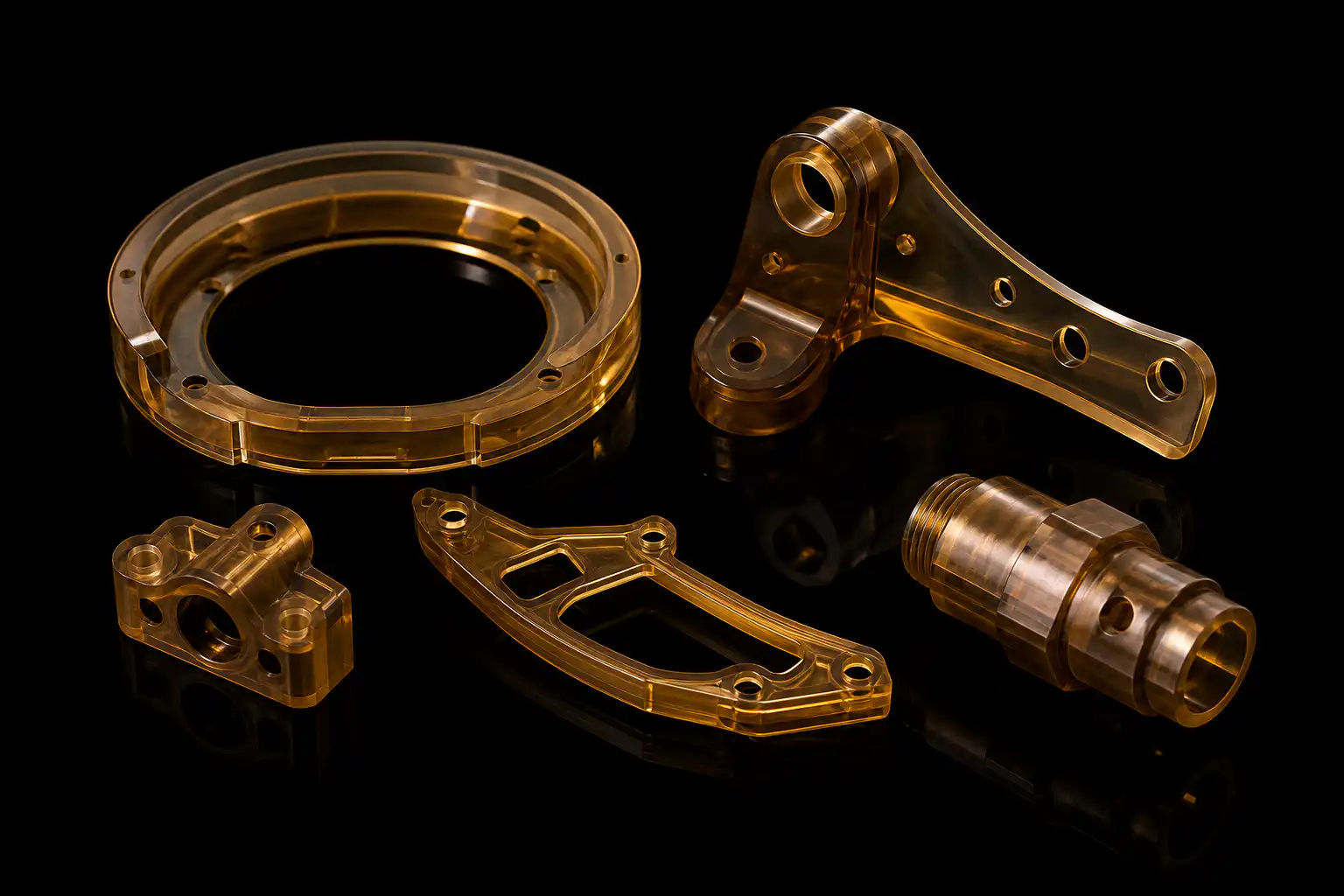
PEEKの結晶性は、その加工における最大の課題です。PEEKは冷却速度に応じて非晶質状態または半結晶質状態をとることがあり、これら2つの状態の物性には著しい違いがあります。非晶質のPEEKは、耐薬品性が低く、Tg以上の弾性率が低く、耐摩耗性も劣ります。 適切な結晶度を得るには、160~200°Cでの金型温度の精密な制御が必要となります。.
| プロパティ | 非晶質PEEK | 半結晶性PEEK |
|---|---|---|
| 引張強さ (MPa) | 90 | 100 |
| 弾性率(GPa) | 3.6 | 4.0 |
| 耐薬品性 | 中程度 | 素晴らしい |
| 耐摩耗性 | フェア | 素晴らしい |
| 外観 | 透明な琥珀色 | 不透明なベージュ/タン |
重要な加工パラメータ
PEEKの成形には、あらゆるパラメータにわたる精密な制御が必要です。以下は、充填剤を含まないPEEK(Victrex 450Gまたは同等品)の推奨成形プロファイルです:
| パラメータ | 推奨値 | 備考 |
|---|---|---|
| バレル後部エリア | 350°C | フィードゾーン — Tg以上で、かつ過度な劣化が生じない範囲でなければならない |
| バレル中間帯 | 360~370°C | 圧縮ゾーン — 溶融と均質化 |
| バレル・フロント・ゾーン | 370~380°C | 計量ゾーン — 最終温度の安定化 |
| ノズル温度 | 380~390°C | コールドスラグを防止し、スムーズな射出を確保する |
| 金型温度 | 160~200°C | 結晶性に極めて重要 — オイル加熱を推奨 |
| 射出速度 | 中程度から速い | 薄い壁での早期凍結を防ぐ |
| 加圧状態の維持 | 70~100 MPa | 収縮分を補うのに十分である |
| 背圧 | 低(2~5 bar) | 過度な背圧は劣化の原因となる |
| ねじの回転速度 | 50~100 rpm | せん断発熱を最小限に抑える |
| 材料の乾燥 | 150°Cで3~4時間 | 目標水分率 <0.02% |

なぜ鋳型温度が最も重要なのか
PEEKにとって、金型温度は最も重要なパラメータです。金型表面温度は冷却速度を直接左右し、それが結晶化度を決定します。 金型温度が150°C未満の場合、PEEKは冷却が速すぎて完全に結晶化できず、耐薬品性の低い非晶質の表層が形成されます。160~200°Cでは、冷却速度がスフェルール(球晶)の成長に十分な時間を確保し、最適な特性を持つ半結晶性PEEKが生成されます。.
金型の温度を維持する必要があります 空洞の表面全体に均一に. ±5°Cを超える温度変動が生じると、結晶度の異なる領域が形成され、それが反り、物性のばらつき、および目に見える色の変化として現れます(非晶質部分は透明な琥珀色に見えるのに対し、結晶質部分は不透明な黄褐色になります)。.
必要な機材
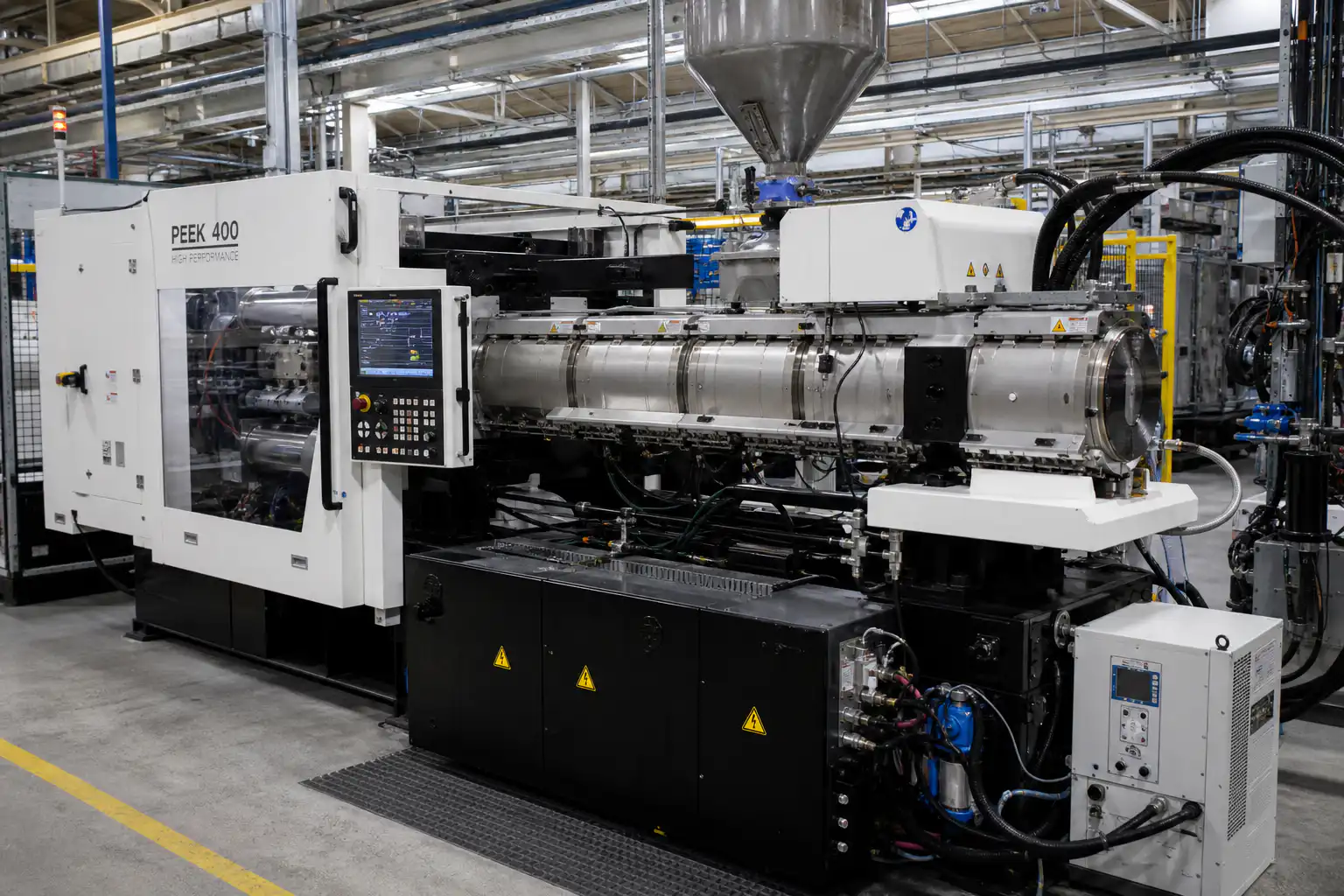
PEEKの成形には、標準的な射出成形機は適していません。最低限必要な要件は以下の通りです:
- バレルとスクリュー: 最低450°Cでの連続運転に対応したセラミックバンドヒーターを備えた高温用バレル。加工温度下でのPEEKによる摩耗に耐えるよう、先端が焼入れ処理されたバイメタルスクリュー(Colmonoy 56または同等品)を採用。.
- 圧縮比: 2.0:1~2.5:1のスクリュー圧縮比。圧縮比が高すぎると、過度のせん断熱が発生し、劣化を招く恐れがあります。.
- 金型の加熱: Oil-circulating mold temperature controllers capable of 200°C minimum. Electric cartridge heaters are an alternative but require careful multi-zone control for uniformity. Standard water-based mold temperature controllers are useless — they max out at 95–120°C.
- Insulation Plates: Thermal insulation plates (typically 10–15mm thick phenolic or ceramic composite) between the mold and machine platens are essential. Without insulation, heat from the 180°C mold conducts into the machine platens, causing thermal expansion of the tie bars and inconsistent clamp force.
- 乾燥させる: Desiccant dryer capable of 150°C with dew point below -40°C. PEEK moisture target is <0.02% — hydrolytic degradation at processing temperature is extremely rapid if moisture is present.

Mold Design for PEEK
Gate Types: Direct sprue gates and edge gates work well. Submarine gates and tunnel gates are problematic because PEEK’s high viscosity at normal processing temperature makes it difficult to shear through small gates. Hot runner systems must be rated for 400°C and use externally heated manifolds — internally heated hot runners create cold spots.
愚痴: Vent depth must not exceed 0.01–0.02mm (PEEK has low melt viscosity at processing temperature and will flash through larger vents). Vent land length should be 0.5–1.0mm before the vent channel opens to full depth.
Runner Sizing: Full-round runners of 6–8mm diameter are recommended. PEEK solidifies quickly, and undersized runners freeze off before packing is complete.
Draft Angles: Minimum 1° draft, preferably 2° or more. PEEK adheres strongly to mold steel at elevated temperatures, and brittle at room temperature — insufficient draft leads to ejection cracking.
Mold Steel: H13 (SKD61) hardened to 52–56 HRC. P20 is acceptable for prototype molds but will wear more quickly. Stainless steel (S136/420SS) is recommended for medical applications due to corrosion resistance during steam sterilization of the mold between runs.
Common Defects and Fixes
| 欠陥 | 外観 | 根本原因 | 修正 |
|---|---|---|---|
| Black Specks | Dark spots in translucent parts | Thermal degradation in barrel | Reduce barrel temperature, residence time, or screw speed. Purge thoroughly. |
| 反り | Part distortion after ejection | Uneven crystallinity from mold temperature variation | Improve mold temperature uniformity. Increase mold temp to 180–200°C. |
| シンク跡 | Depressions at thick sections | Insufficient holding pressure or premature gate freeze | Increase holding pressure and time. Enlarge gate. |
| Burn Marks | Brown/black discoloration at flow end | Trapped air compression (diesel effect) | Improve venting. Reduce injection speed. |
| Incomplete Fill | Short shot, missing features | Premature solidification in thin walls | Increase injection speed and mold temperature. Add flow leaders. |

PEEK vs Other High-Temperature Thermoplastics
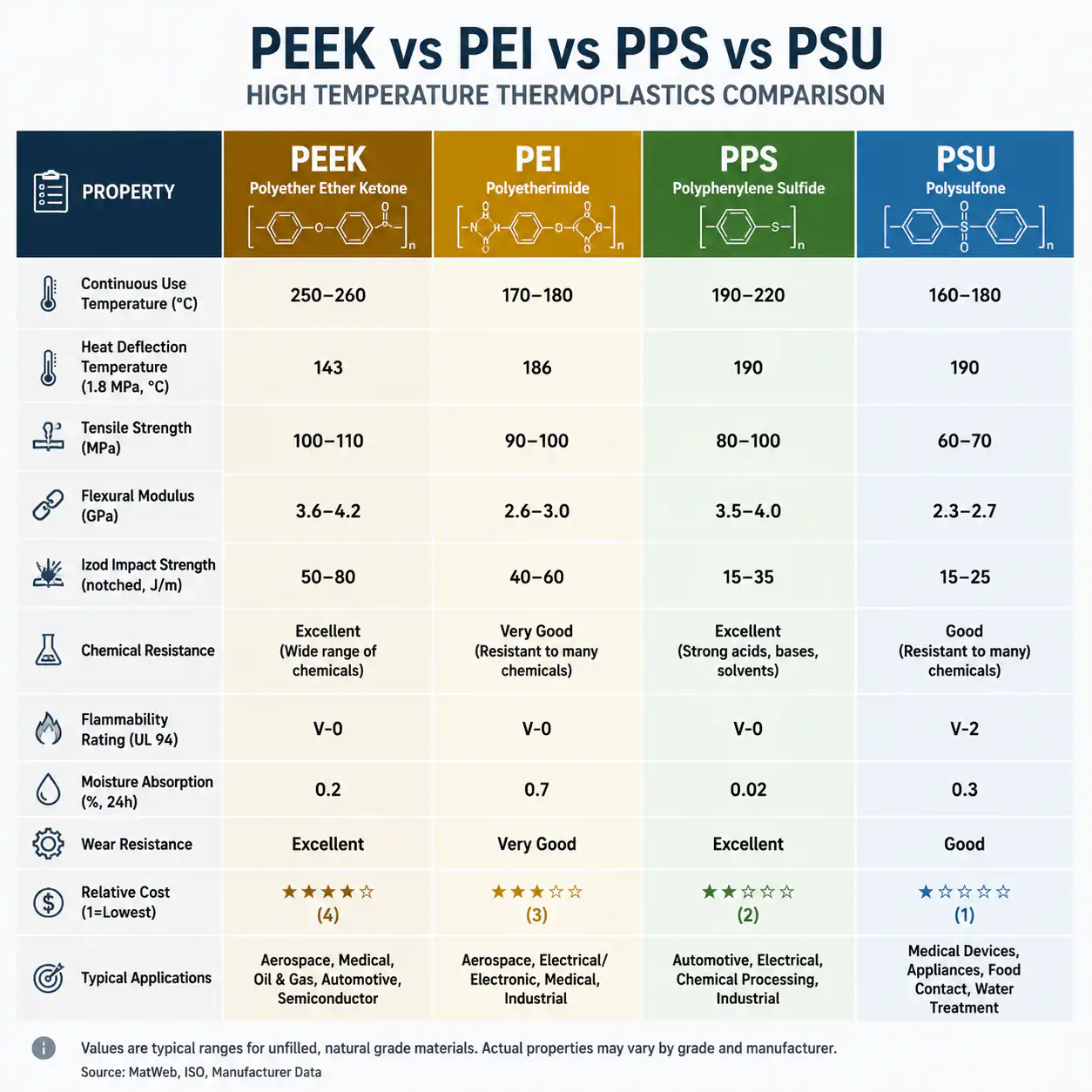
| パラメータ | 覗き見 | PEI(ウルテム) | PPS | PSU |
|---|---|---|---|---|
| Tg (°C) | 143 | 217 | 88 | 187 |
| Tm (°C) | 343 | 非晶質 | 280 | 非晶質 |
| Processing Temp (°C) | 360–400 | 350–400 | 300–340 | 330–380 |
| 金型温度(°C) | 160–200 | 135–165 | 135–150 | 120–160 |
| 連続使用温度 (°C) | 260 | 170 | 220 | 160 |
| 耐薬品性 | 素晴らしい | Moderate — stress cracks in solvents | 素晴らしい | Moderate — attacks by ketones |
| Material Cost ($/kg) | 80–120 | 25–40 | 15–25 | 20–30 |
Applications for PEEK Injection Molded Parts
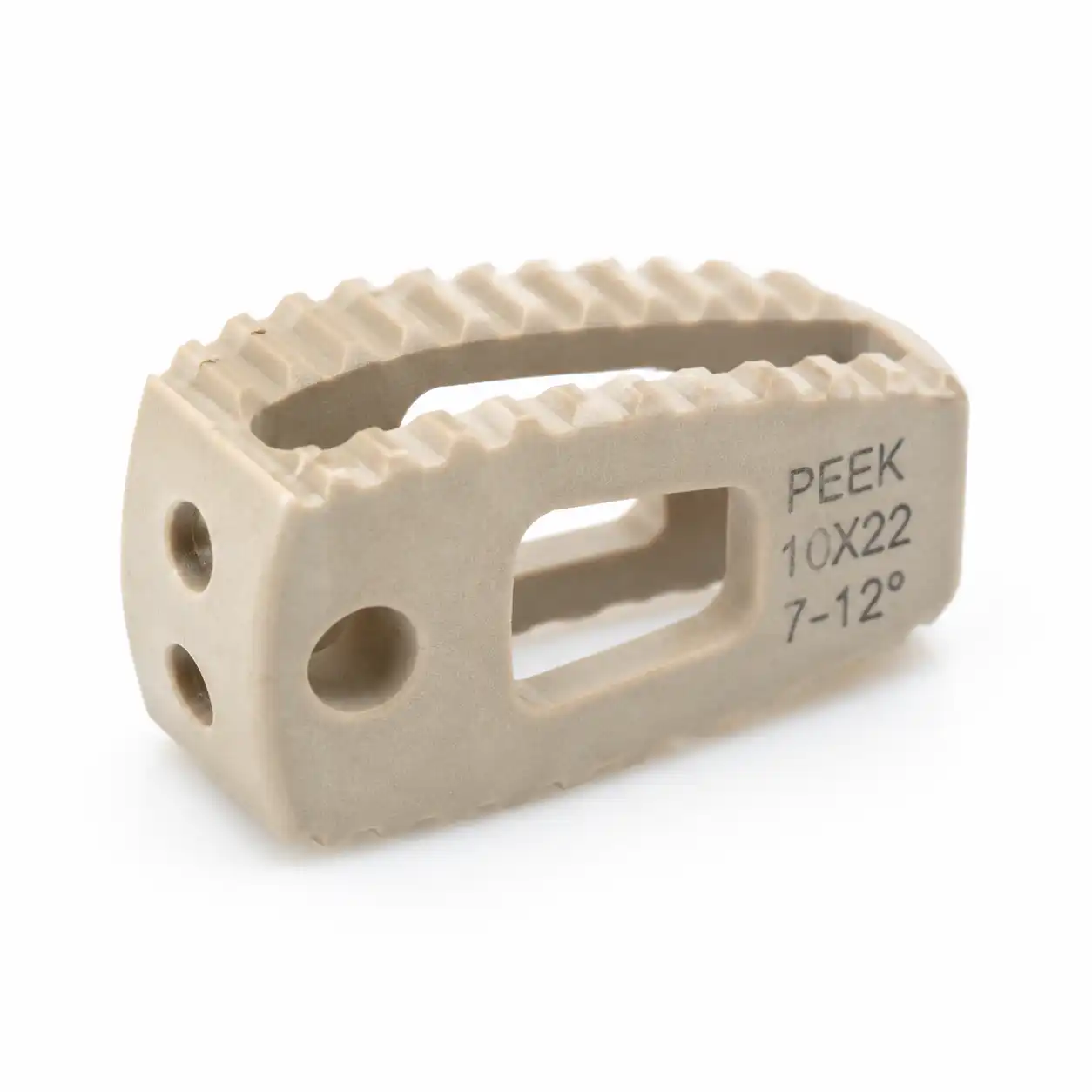
- 医療: Spinal fusion cages, dental implants, surgical instrument handles. PEEK’s radiolucency (invisible on X-ray) and biocompatibility (ISO 10993 certified grades available) make it the dominant material for implantable devices.
- 航空宇宙: Brackets, bushings, seals, and wire management components. PEEK replaces aluminum in weight-critical applications, saving 70% weight with comparable mechanical performance below 260°C.
- Semiconductor: Wafer handling components, CMP rings, etch chamber fixtures. PEEK’s combination of high purity, chemical resistance, and ESD-safe grades makes it essential for semiconductor manufacturing environments.
- Oil and Gas: Seals, backup rings, valve seats. PEEK’s resistance to H₂S, CO₂, and high-pressure steam at temperatures up to 200°C is unmatched by other thermoplastics.
Cost Breakdown
PEEK parts cost 5–10 times more than equivalent PA66 parts due to three compounding factors:
- 材料費: PEEK resin at $80–120/kg vs PA66 at $3–5/kg — a 20–40× material cost multiplier.
- Mold investment: Hot-oil heated molds with H13 hardened steel cost 2–3× more than standard P20 water-cooled molds.
- サイクルタイム: PEEK cooling in a 180°C mold takes significantly longer than nylon cooling in a 60°C mold. Cycle times of 60–120 seconds are typical for PEEK parts weighing 20–50g, compared to 15–30 seconds for equivalent nylon parts.

結論
PEEK injection molding is a specialized discipline that requires investment in high-temperature equipment and deep processing expertise. It is not a material you can run on a standard molding machine with a few parameter tweaks. But for applications that demand the highest combination of temperature resistance, chemical resistance, and mechanical properties available in a thermoplastic, PEEK is simply unmatched. The key to success is treating mold temperature control as your primary quality parameter, investing in proper drying, and working with a molder who has verified PEEK processing capability — not just a claim on a website.
よくある質問
PEEKは、標準的な射出成形機で成形できますか?
いいえ。標準的な成形機の場合、通常、バレル温度の上限は300~350°Cであり、最大95°Cまでの水冷式金型が使用されます。PEEKの成形には、360~400°Cのバレル温度と160~200°Cの金型温度が必要です。 少なくとも、この成形機には定格温度450°Cのセラミックバンドヒーター、バイメタルスクリュー、および油循環式金型温度コントローラーが必要です。標準的な成形機の改造は可能ですが、多くの場合、その費用は成形機本体よりも高くなります。.
PEEKの金型温度の最低値はどれくらいですか?
無充填PEEKの実用上の最低温度は160°Cです。この温度を下回ると、冷却速度が速すぎて完全な結晶化が得られず、Tg以上で耐薬品性が低く、機械的特性も低下する非晶質構造となってしまいます。 薄肉部品(1mm未満)の場合、早期の凝固を防ぐために最低温度は180°Cに引き上げられます。炭素繊維強化PEEKについては、180~200°Cが推奨されます。.
成形中にPEEKの劣化を防ぐにはどうすればよいですか?
劣化防止には、以下の4つの要素が重要です。(1) 材料の水分含有量を0.02%未満まで乾燥させる(150°C、乾燥剤乾燥機で3~4時間)。(2) 滞留時間を最小限に抑える — 380°Cでの滞留時間を5分未満に保つ。 (3) せん断加熱を抑えるため、低い背圧(2~5 bar)を使用する。 (4) PEEKの成形工程の合間に、高温用パージコンパウンドまたは熱安定性の高いポリマー(PPSなど)を用いてバレルをパージする。黒い斑点は劣化の最初の目に見える兆候です。これが見られた場合は、直ちに温度と滞留時間を下げてください。.
PEEKの射出成形は、PEEKのCNC加工よりもコストが高いのでしょうか?
年間生産量が500~1,000個を超える場合、PEEKの既製形状材を用いたCNC加工に比べ、射出成形の方が一般的にコスト効率に優れています。 射出成形金型の投資額(PEEK対応金型の場合、$20,000~$80,000)は生産数量に応じて償却されますが、CNC機械加工のコストは生産数量に関係なく一定です。 しかし、試作や500個未満の生産量の場合、PEEKの棒材や板材を用いたCNC機械加工の方が、ほとんどの場合、安価です。多くのプロジェクトでは、CNCによる試作から始め、量産段階では射出成形に移行します。.