
Understanding the Nylon Family
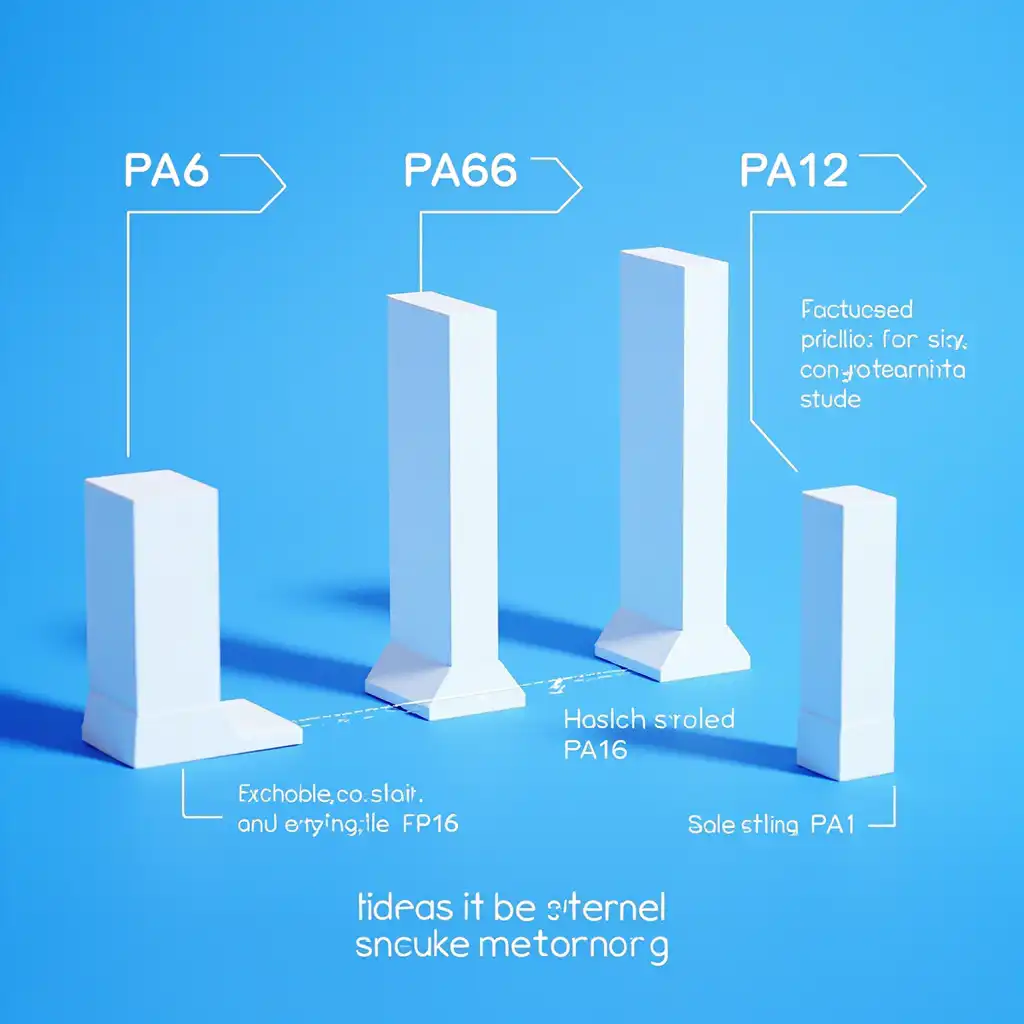
Polyamide (nylon) materials differ in molecular structure, affecting properties and applications.
PA6 — Polyamide 6
- 融点: 220°C
- メリット: Better impact resistance, lower cost, easier processing
- こんな方に最適: General mechanical parts, 3D printing, consumer products
PA66 — Polyamide 66
- 融点: 265°C
- メリット: Higher heat resistance, superior mechanical strength
- こんな方に最適: Automotive engine parts, high-temperature applications
PA12 — Polyamide 12
- 融点: 180°C
- メリット: Lowest moisture absorption, best chemical resistance
- こんな方に最適: Fuel lines, outdoor applications, moisture-sensitive environments
選定ガイド
Choose PA66 for heat, PA6 for cost/impact, PA12 for moisture/chemical resistance.
よくあるご質問
How do you know whether PA6 vs PA66 vs PA12 — Complete Nylon Material Family Comparison Guide fits a part?
PA6 vs PA66 vs PA12 — Complete Nylon Material Family Comparison Guide fits a part when its load capacity, temperature range, moisture exposure, wear behavior, and processing method match the real service conditions.
What properties should be checked for PA6 vs PA66 vs PA12 — Complete Nylon Material Family Comparison Guide?
強度、剛性、耐衝撃性、耐熱性、吸湿性、寸法安定性、摩擦、摩耗、および化学的適合性を確認する。.
What is the biggest selection risk for PA6 vs PA66 vs PA12 — Complete Nylon Material Family Comparison Guide?
最大のリスクは、実際の使用環境、加工方法、部品の形状、および長期使用を考慮せずに、データシートの数値だけで選定してしまうことです。.
When should PA6 vs PA66 vs PA12 — Complete Nylon Material Family Comparison Guide be tested before production?
部品が荷重、熱、化学物質、湿気、厳しい公差、規制要件、あるいは新たな動作環境にさらされる場合は、試験を行うことをお勧めします。.