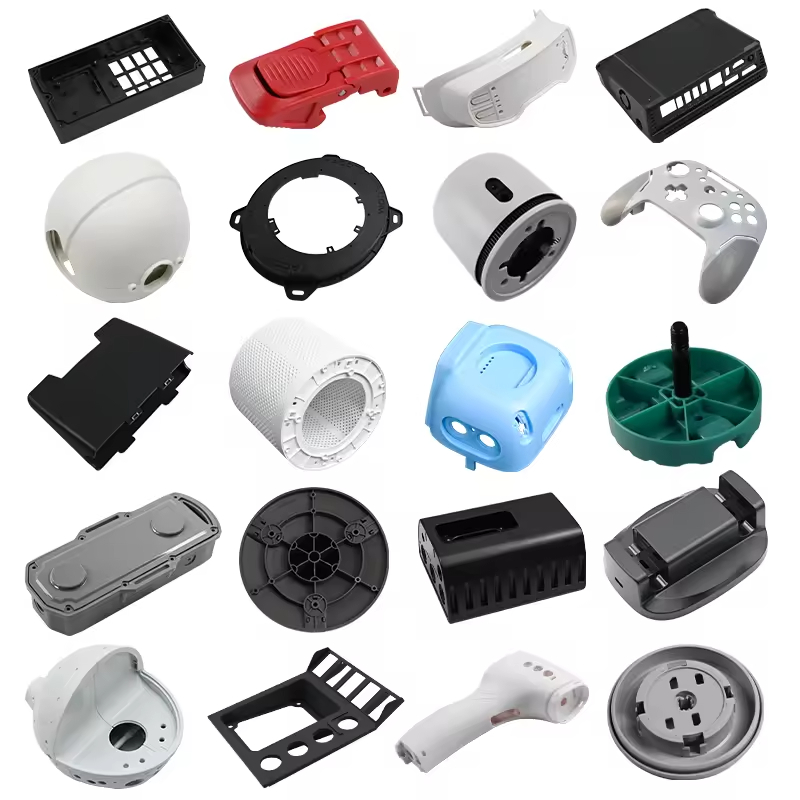
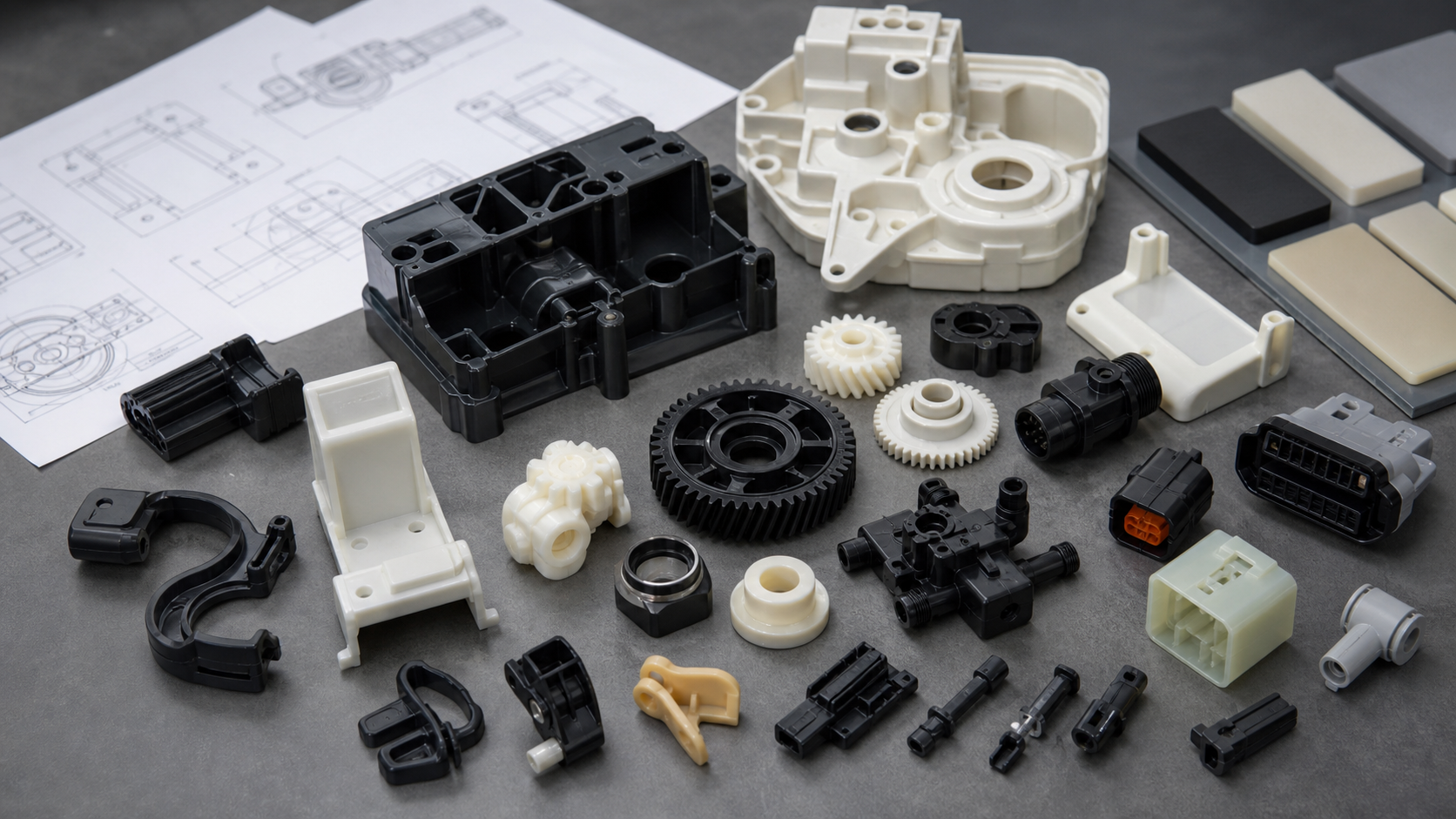
Custom plastic components should be designed around function first: load, temperature, chemical exposure, assembly method, tolerance and production volume determine the best plastic and manufacturing route.
Many buyers start with a material name, but the stronger path is to define the component’s job. A connector, gear, housing, clip, bushing and bracket may all be plastic parts, yet they need different resin families, wall sections, tooling choices and inspection methods.
Manufacturing Routes for Custom Plastic Components
The right route depends on design maturity, quantity, mechanical requirements and whether molded material behavior must be tested.
| ルート | 最適な用途 | 購入者への注意事項 |
|---|---|---|
| 射出成形 | Repeatable production components | Best for stable designs and scalable volume |
| CNCによるプラスチック加工 | Low-volume functional parts | Avoids tooling cost and supports tight features |
| 3Dプリンティング | Early prototypes and design iteration | Useful before committing to tooling |
Common Materials for Functional Components
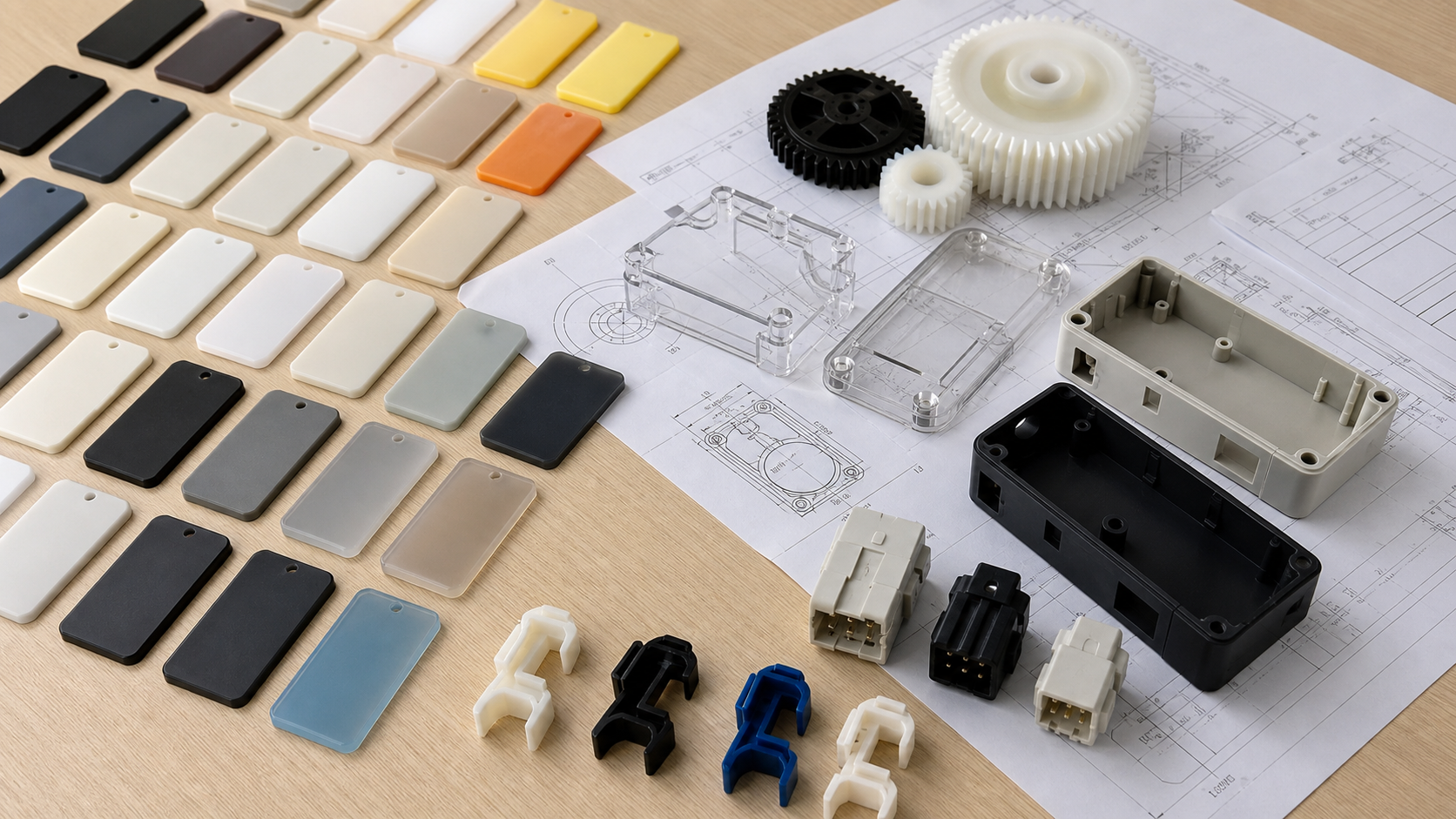
Engineering plastics should be selected by performance and manufacturability together.
| 素材 | こんな方に最適 | 選定に関する注記 |
|---|---|---|
| PA6 / PA66 / GF nylon | Loaded brackets, gears and structural parts | Check moisture absorption and glass fiber orientation |
| PC / PC-ABS | Impact-resistant housings | Useful for tough covers and enclosures |
| PBT / POM | Electrical and sliding components | Good for precision or connector applications |
| PP / TPE | Lightweight, flexible or soft-touch parts | Review bonding, stiffness and chemical needs |
Component Design Checks
Good plastic component design balances strength, molding flow, assembly clearance and cost.
- Define application environment before selecting resin.
- Separate critical dimensions from general tolerances.
- Review assembly features such as clips, screws, inserts and hinges.
- Check whether the part should be machined first and molded later.
- Confirm surface finish and color requirements early.
RFQ Checklist for Custom Components
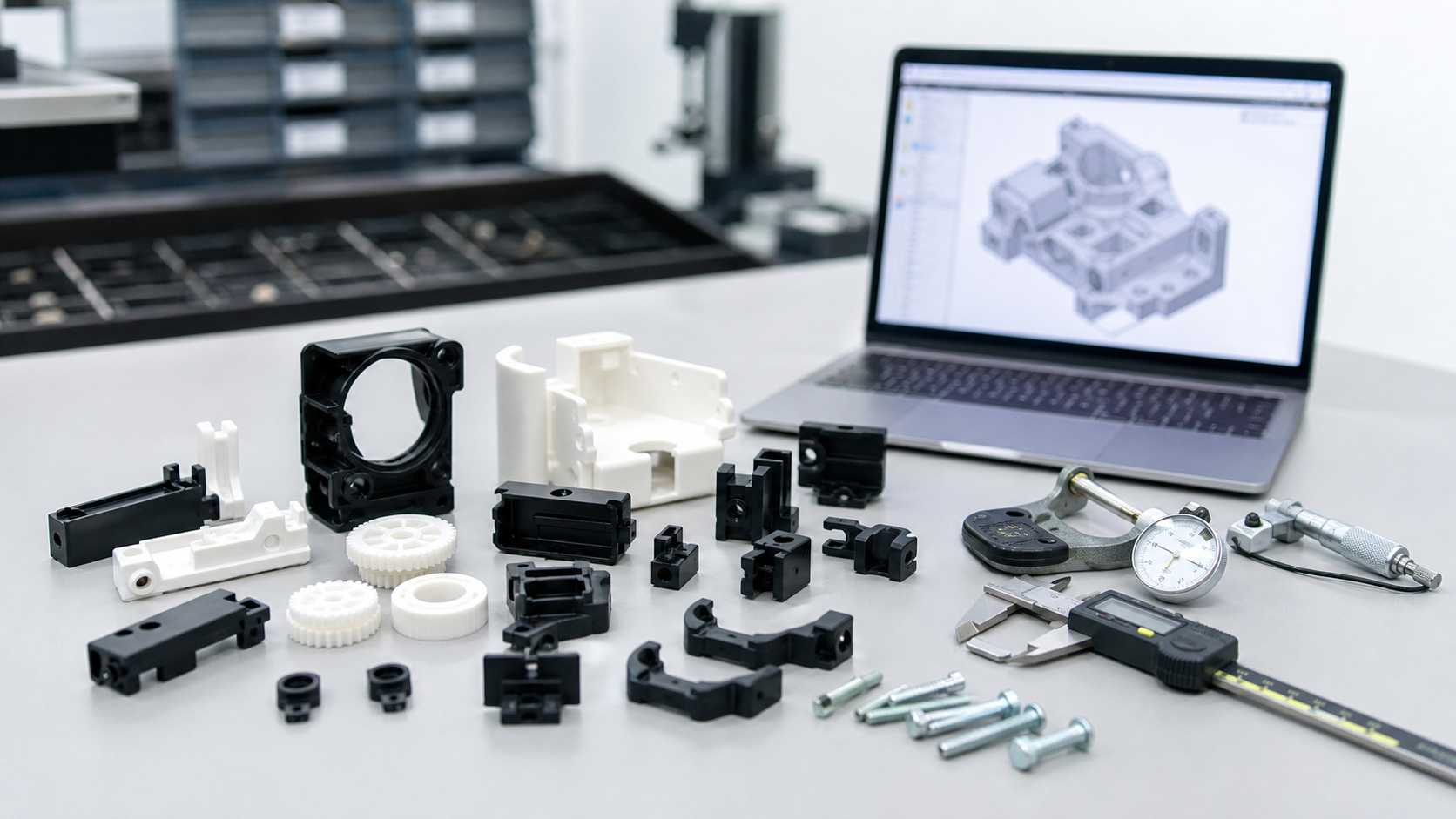
A component RFQ should explain the part’s function, not only its dimensions.
具体的な見積もりをご希望の場合は、2D図面または3D CADモデル、対象材料、予想数量、公差要件、表面仕上げ、使用環境、年間需要、および準拠すべき要件(ある場合)をお送りください。Nylon Plasticでは、プロジェクトが製造段階に入る前に、部品の材料選定、DFM(製造適性設計)、試作方法、金型製作のリスク、リードタイム、および製造コストについて検討いたします。.
関連するエンジニアリングガイド
- プラスチック部品の受注生産メーカー – main page for custom part sourcing
- Material selection hub – supports resin selection decisions
- CNC machining vs injection molding – helps choose process route
ナイロンプラスチックが本プロジェクトをどのように支えているか
Nylon Plastic helps buyers compare materials and processes for custom plastic components used in automotive, electronics, industrial equipment, robotics and consumer products.
ナイロンプラスチックへのお問い合わせ お客様のプラスチック部品の図面を確認したり、製造方法を比較したり、材料や金型の提案をご依頼いただく場合。.
よくあるご質問
How are custom plastic components manufactured?
Custom plastic components can be made by injection molding, CNC plastic machining, 3D printing or rapid tooling depending on design maturity, quantity, material and tolerance needs.
How do I choose a material for custom plastic components?
Start with the part’s load, heat, chemical exposure, assembly method, tolerance, surface finish and production volume, then compare suitable resin families.
Can a 3D printed prototype become an injection molded part?
Yes, but the design should be reviewed for molded wall thickness, draft, ribs, bosses, shrinkage and final production material behavior.
What makes a plastic component difficult to quote?
Missing CAD data, unclear material requirements, unrealistic tolerances, undefined cosmetic surfaces and unknown production volume can make quoting less reliable.