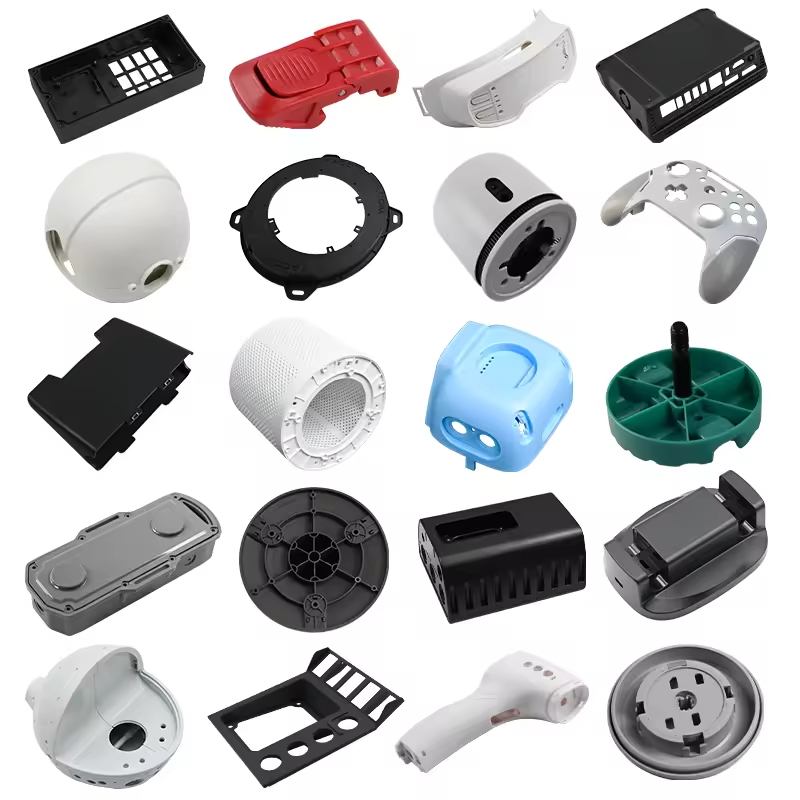
The manufacturing landscape offers multiple paths from design to physical part. For nylon components, the two dominant methods—3D printing and injection molding—serve different needs. Choosing correctly means faster time to market, lower costs, and better end-use performance.
3D Printing: The Prototype Champion
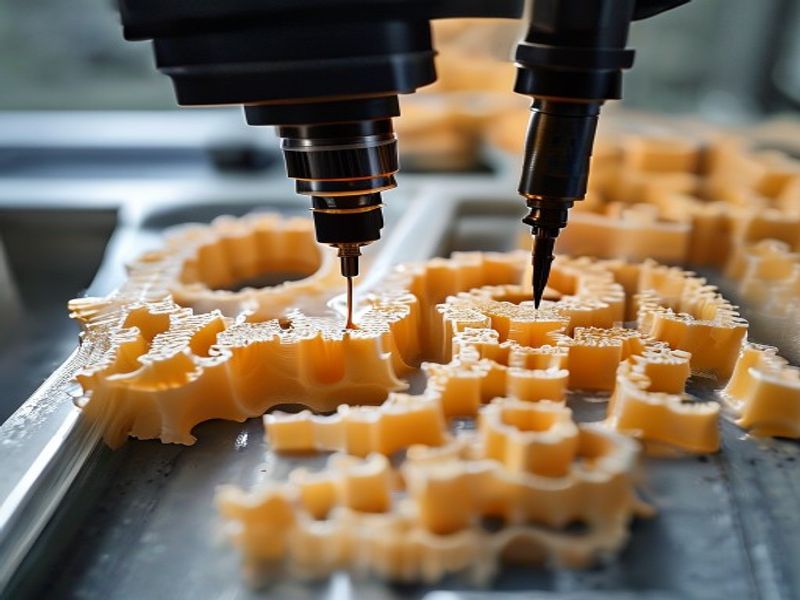
Strengths
- No tooling required: Go from CAD to part in hours or days, not weeks
- Design freedom: Create geometries impossible to mold—undercuts, internal channels, complex lattice structures
- Low volume efficiency: Produce 1-100 parts without tooling investment
- Design iteration: Modify designs between builds at no cost
Limitations for Nylon
- Reduced mechanical properties: 3D printed nylon typically has 30-50% lower strength than molded nylon
- 表面仕上げ: Layer lines require post-processing for smooth surfaces
- Anisotropic properties: Strength varies with print orientation
- Slower production: Each part requires the full build time regardless of quantity
Injection Molding: The Production Powerhouse
Strengths
- Optimal material properties: Molded parts achieve full material potential
- High-volume efficiency: Cycle times measured in seconds enable thousands of parts per day
- Consistent quality: Every part is identical to the first
- Excellent surface finish: Molded surfaces can achieve mirror polish, texture, or any desired finish
制限事項
- Tooling investment: Production molds cost $15,000-100,000+ depending on complexity
- Lead time: 6-12 weeks from design to first articles
- Design changes are expensive: Mold modifications can cost thousands
意思決定フレームワーク
| Your Situation | Recommended Method |
|---|---|
| 1-50 parts, design validation | 3D printing (SLS or MJF) |
| 50-500 parts, pre-production testing | 3D printing or prototype mold |
| 500-5,000 parts annually | Prototype mold or bridge tooling |
| 5,000+ parts annually | Production injection molding |
| Complex internal geometry | 3D printing (verify feasibility) |
| Critical mechanical performance | 射出成形 |
The Hybrid Approach
Smart development programs use both methods strategically: concept phase uses 3D printing for initial designs; design refinement iterates quickly with printed prototypes; functional testing uses 3D printed nylon for initial testing; pre-production uses prototype mold for 50-500 parts at production-intent quality; production uses full production mold with validated design.
よくある質問
Can 3D printed nylon parts be used for final production?
For non-critical applications with low volumes and moderate mechanical requirements, 3D printed nylon can serve as production parts. However, expect 30-50% lower strength than molded equivalents and plan for surface finishing requirements.
How do 3D printing and molding costs compare?
3D printing has lower per-part costs at low volumes (under 100 parts) but becomes expensive at scale. Injection molding has high upfront tooling cost but lower per-part cost. The break-even point typically falls between 200-500 parts depending on complexity.
Which 3D printing technology is best for nylon?
SLS (Selective Laser Sintering) and MJF (Multi Jet Fusion) produce the best nylon parts with good mechanical properties and no support structures. FDM with nylon filament is possible but delivers lower quality and requires support removal.
Should I prototype with 3D printing before molding?
Yes, 3D printing is valuable for design validation even when molding is the production method. Just remember that mechanical properties differ significantly—molded parts will be stronger and more consistent than printed versions.