Durometer hardness testing represents one of the most fundamental yet frequently misunderstood aspects of polymer material characterization. For engineers and procurement professionals selecting materials for precision manufacturing applications, understanding the nuances of durometer measurements — from the physics behind different Shore scales to the practical implications for CNC machining parameters — can mean the difference between components that perform reliably for years and those that fail prematurely. This comprehensive guide explores durometer testing from both theoretical and practical manufacturing perspectives, drawing on our facility’s experience processing materials across the full hardness spectrum.
Origins and Principles of Durometer Testing
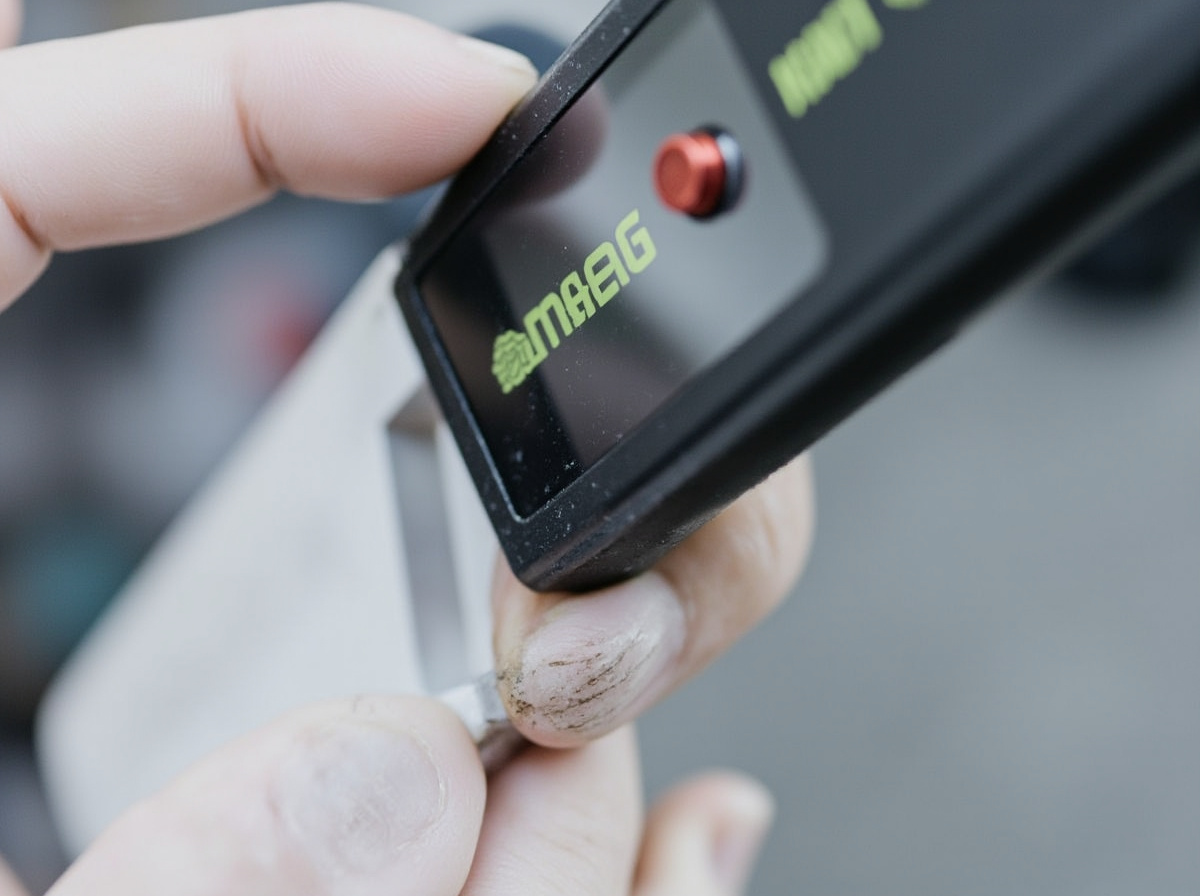
The durometer measurement method was developed by Albert Ferdinand Shore in the 1920s, building on earlier indentation hardness concepts. The fundamental principle is elegantly simple: a calibrated spring applies a known force through an indenter of standardized geometry into the test material, and the depth of penetration — inversely related to hardness — is measured and displayed on a scale from 0 to 100. A reading of 0 represents the maximum penetration depth (the softest measurable material), while 100 represents zero penetration at the maximum spring force (the hardest measurable material).
Importantly, the durometer scale is non-linear and dimensionless — a Shore A 90 material is NOT twice as hard as a Shore A 45 material. The logarith
mic nature of the scale means that differences at the extremes (both soft and hard ends) represent larger actual changes in material stiffness than differences in the middle range. This non-linearity must be accounted for when interpreting durometer specifications for quality control and material selection.
Shore A and Shore D Scales: The Engineering Distinction
Shore A Scale: Soft to Medium-Hard Elastomers
The Shore A scale employs a truncated 35° cone indenter with a tip diameter of 0.79mm and a spring force of 822 grams at full scale. This geometry is optimized for materials that exhibit significant elastic recovery — the indenter must produce measurable penetration without permanent deformation of the test specimen. Shore A is the primary scale for natural rubber, silicone rubber, neoprene, flexible PVC, and soft TPE/TPU grades. Materials measuring below Shore A 10 or above Shore A 95 should be tested on alternative scales for reliable results.
Shore D Scale: Hard Plastics and Rigid Materials
The Shore D scale uses a sharp 30° cone indenter with a tip radius of 0.1mm and higher spring force than Shore A. This more aggressive indenter geometry is designed to penetrate harder materials without reaching the end of its travel range. Shore D is the standard scale for rigid thermoplastics including nylon, polypropylene, HDPE, POM (acetal), and rigid PVC. Materials measuring below Shore D 20 should be tested on the Shore A scale for better resolution.
Scale Selection Decision Matrix
| Shore A Reading | Shore D Reading | Recommended Scale | 代表的な用途 |
|---|---|---|---|
| < 10 | - | Shore AO or OO | Gel materials, soft foam |
| 10-90 | - | Shore A | 
;”>Rubber, elastomers, soft PVC |
| 90-95 | 20-55 | Either (report both) | Hard rubber, soft plastics |
| > 95 | 15-100 | Shore D | Engineering plastics |
Comparative Hardness of Engineering Materials
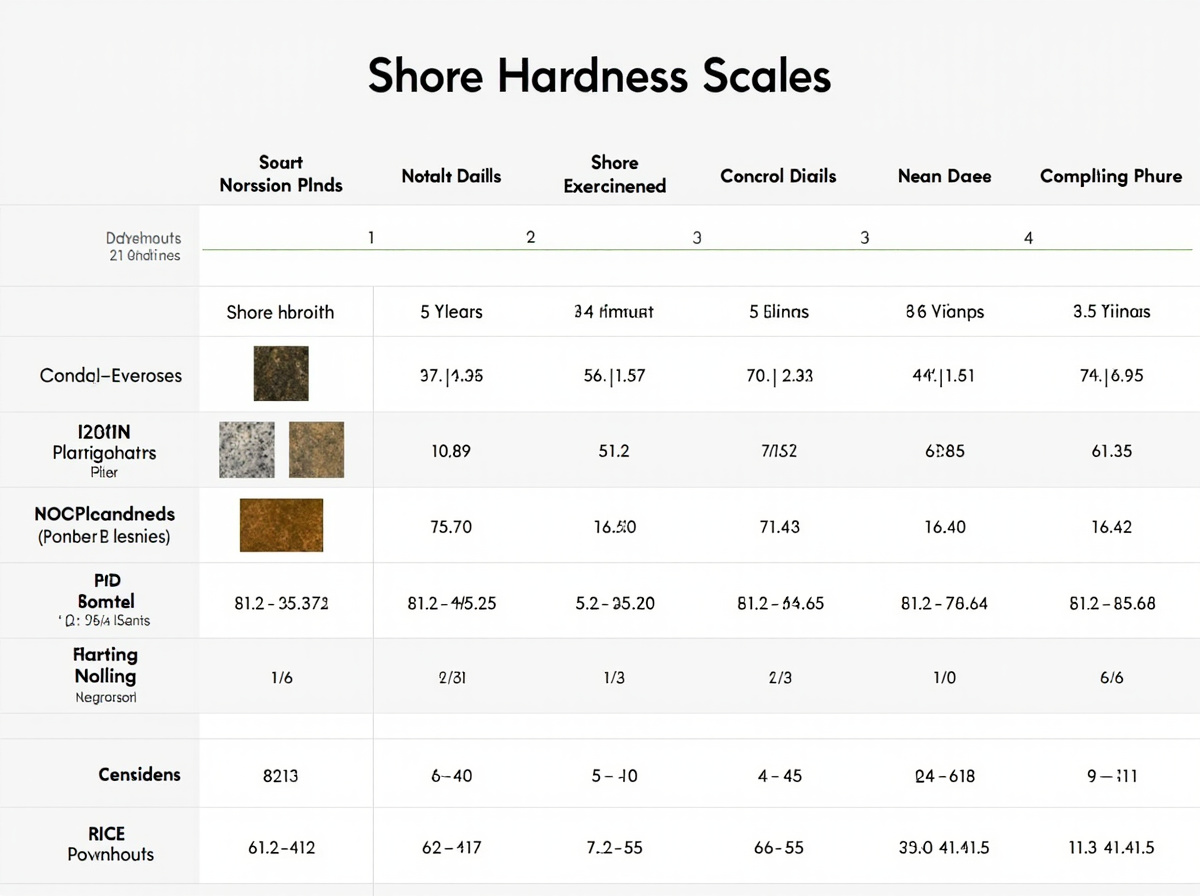
The following table provides reference durometer values for common materials encountered in precision manufacturing. These values should be treated as typical ranges rather than absolute specifications, as variations in grade, filler content, and conditioning state can significantly affect hardness measurements.
| 素材 | Shore Scale | Typical Hardness | Machining Behavior |
|---|---|---|---|
| Silicone Rubber | A | 20-80 | Cryogenic milling required |
| Nitrile Rubber (NBR) | A | 40-90 | Not typically machined |
| TPU(熱可塑性ポリウレタン) | A/D | 60A-80D | Sharp tooling, moderate speeds |
| LDPE | D | 40-50 | Requires sharp tooling to avoid smearing |
| HDPE | D | 60-70 | Good machinability with proper chip evacuation |
| ポリプロピレン(PP) | D | 70-80 | Excellent machinability, clean cuts |
| Nylon 6 (Dry) | D | 75-82 | Good; rigid grade machines cleanly |
| Nylon 66 (Dry) | D | 80-85 | Excellent; harder = cleaner surface finish |
| POM/アセタール | D | 80-85 | Superior machinabili
 ty, tight tolerances |
| PVC Rigid | D | 75-85 | Good; requires corrosion-resistant tooling |
| PMMA / Acrylic | D | 85-90 | Brittle; requires careful feed rates |
| ガラス繊維強化ナイロン | D | 85-95 | Diamond tooling required; abrasive |
Testing Standards and Protocols
Standardized testing procedures are essential for obtaining reproducible durometer measurements. The primary international standards governing durometer testing include ASTM D2240 (Standard Test Method for Rubber Property — Durometer Hardness) and ISO 868 (Plastics and Ebonite — Determination of Indentation Hardness by Means of a Durometer).
Key testing requirements common to both standards include: specimen thickness of at least 6mm (thinner specimens may be stacked if individual layers exceed 1.5mm); lateral dimensions sufficient to support the presser foot at least 12mm from any edge; flat and parallel specimen surfaces free from contamination; conditioning at 23 ±2°C and 50 ±5% relative humidity for at least 1 hour (longer for hygroscopic materials like nylon); and taking the reading at a specified time interval, typically 1 second for Shore A and instantaneous or 15 seconds for Shore D.
For quality-critical applications, the ASTM D2240 standard requires reporting the mean of at least five measurements taken at different positions on the specimen, along with the standard deviation and the specific time interval at which readings were taken.
Practical Implications for CNC Machining
Durometer hardness directly influences CNC machining strategy, tool selection, and achievable tolerances. Understanding these relationships is essential for achieving consistent quality in manufactured components.
Material Hardness and Cutting Parameters
Softer materials (Shore D 40-60, including LDPE and unfilled PTFE) present unique machining challenges due to their tendency to deform rather than cut cleanly. These materials require extremely sharp tooling with high positive rake angles and relatively high cutting speeds to generate clean chip formation. Feed rates must be carefully controlled to avoid material deflection that compromises dimensional accuracy.
Medium-hardness materials (Shore D 60-80, including unfilled nylons, polypropylene, and acetal) represent the most forgiving category for CNC machining. Their stiffness is sufficient to resist cutting forces without excessive deflection, while their ductility prevents brittle fracture. Standard carbide tooling with moderate rake angles and conventional cutting speeds typically yield excellent results.
Hard materials (Shore D 80-95, including glass-filled nylons and rigid filled thermoplastics) require specialized tooling to resist abrasive wear. Diamond-coated or polycrystalline diamond (PCD) tools are recommended for production volumes. Cutting speeds must be reduced by 30-50% compared to unfilled grades, and chip evacuation systems must prevent abrasive particle recirculation that accelerates tool wear.
Temperature and Environmental Effects on Hardness
Polymer hardness is significantly temperature-dependent, and this relationship has important implications for design and quality control. As temperature increases, polymer chain mobility increases, reducing both elastic modulus and hardness. This thermal softening effect varies considerably between material families.
Amorphous polymers like polycarbonate and acrylic exhibit gradual softening as temperature approaches their glass transition temperature (Tg). Semi-crystalline polymers like nylon and acetal maintain hardness relatively well until reaching their crystalline melting temperature, though the amorphous phase does soften at Tg. For nylon 6, operating at 80°C versus 23°C can reduce effective Shore D hardness by 10-15 points, depending on moisture conditioning state.
Moisture conditioning has a particularly pronounced effect on nylon hardness. PA 6 conditioned to equilibrium at 50% RH typically measures 5-8 points lower on the Shore D scale compared to dry-as-molded material, due to the plasticizing effect of absorbed water molecules disrupting hydrogen bonds between polymer chains.
Conclusion: Selecting Materials Based on Hardness Requirements
Durometer hardness testing provides an accessible, reproducible method for characterizing the mechanical response of polymer materials. However, hardness alone should never be the sole criterion for material selection. Engineers must consider the full suite of mechanical, thermal, and chemical properties relevant to the application, with durometer serving as a valuable screening and quality control tool rather than a definitive performance predictor.
For precision manufacturing applications, specifying durometer hardness within appropriate ranges (typically ±3-5 points for production QC) ensures consistent processing behavior and end-use performance. When hardness is critical to function, engaging with material suppliers to develop application-specific hardness specifications that account for temperature, humidity, and processing effects is the most reliable path to component quality and reliability.
よくあるご質問
Why does Durometer Hardness Scale: Complete Testing Guide matter?
Durometer Hardness Scale: Complete Testing Guide matters because it converts material behavior into measurable evidence that can guide design, sourcing, and production decisions.
How is Durometer Hardness Scale: Complete Testing Guide used in material selection?
エンジニアはこの結果を、候補となる材料を比較し、安全マージンを確認し、一般的なデータシートの謳い文句だけに頼らないようにするために使用する。.
What can affect the result of Durometer Hardness Scale: Complete Testing Guide?
試料の前処理、試験方法、温度、負荷方向、材料の状態、標準の選択などはすべて、結果に影響を与える可能性がある。.
What mistake should buyers avoid with Durometer Hardness Scale: Complete Testing Guide?
同じ規格、試験片の状態、試験環境を使用しない限り、値を比較しないこと。.