Electrical Discharge Machining (EDM) is a precision subtractive process that removes material using controlled electrical sparks between an electrode and the workpiece, submerged in dielectric fluid. Unlike conventional cutting tools that rely on mechanical force, EDM erodes material through thermal energy, enabling it to cut any electrically conductive material regardless of hardness. This makes EDM indispensable for machining hardened tool steels, titanium alloys, tungsten carbide, and Inconel that would rapidly destroy conventional cutting tools.
How EDM Machining Works
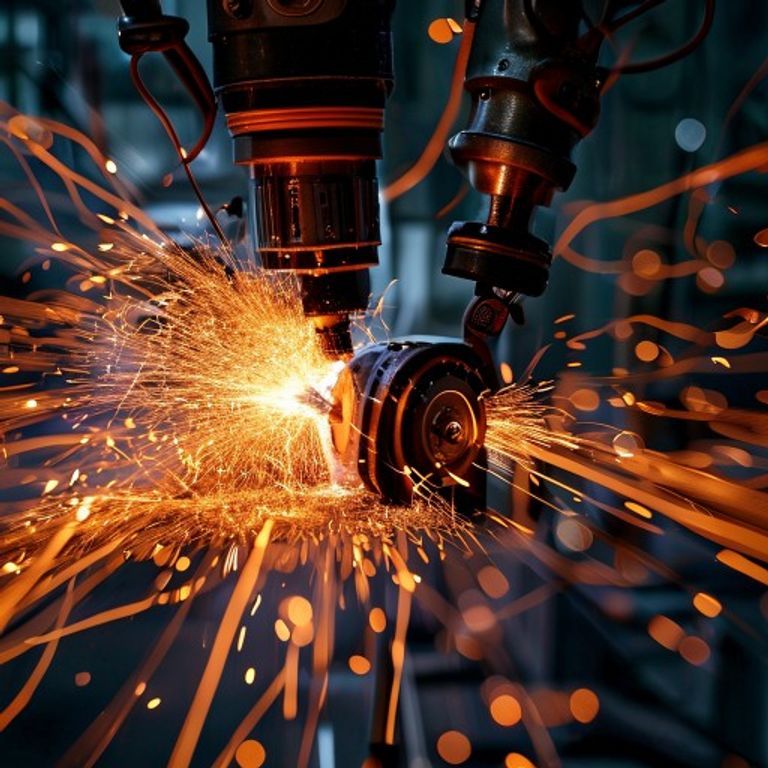
EDM operates by generating a series of rapid, controlled electrical discharges (sparks) between an electrode and the workpiece immersed in dielectric fluid (typically deionized water or oil). Each spark creates a localized temperature exceeding 8,000°C that vaporizes a microscopic amount of material from both the electrode and workpiece. The dielectric fluid flushes away the eroded particles, cools the gap, and restores insulation between discharges. The CNC controller precisely manages spark gap, pulse duration, current amplitude, and electrode path to achieve the desired shape, accuracy, and surface finish.

Wire EDM vs Sinker EDM
| 特集 | ワイヤ放電加工 | シンカー放電加工 |
|---|---|---|
| Electrode | Thin wire (0.02-0.3mm diameter) | Custom-shaped copper or graphite electrode |
| 幾何学 | 2D profiles, through-cuts, tapers (4-axis) | 3D cavities, blind pockets, internal features |
| 寛容 | ±0.003mm achievable | ±0.01mm typical, ±0.005mm precision |
| 表面仕上げ | Ra 0.2 microns (mirror-like) achievable | Ra 0.8 microns standard, 0.4 precision |
| 最適 | Sharp corners, thin slots, precision profiles, stamping dies | Mold cavities, blind holes, complex 3D internal shapes |
| Material Limit | Any conductive material, any hardness | Same conductive-material requirement, regardless of hardness |
Key Advantages of EDM Machining
No Mechanical Force
EDM produces no cutting force, no tool pressure, and no mechanical stress on the workpiece. This eliminates distortion, vibration, and workpiece deflection that plague conventional machining of thin, delicate, or fragile structures. Thin ribs, delicate lattice structures, and micro-features can be produced without risk of bending or breaking.
Hardened Material Machining
EDM cuts any electrically conductive material regardless of hardness. Hardened tool steels (HRC 60+), tungsten carbide, titanium alloys, Inconel, and even diamond-sintered materials are all machinable by EDM. This eliminates the need to machine soft then heat-treat, which introduces distortion and dimensional changes that require secondary finishing operations.
Ultra-Precision Feature Capability
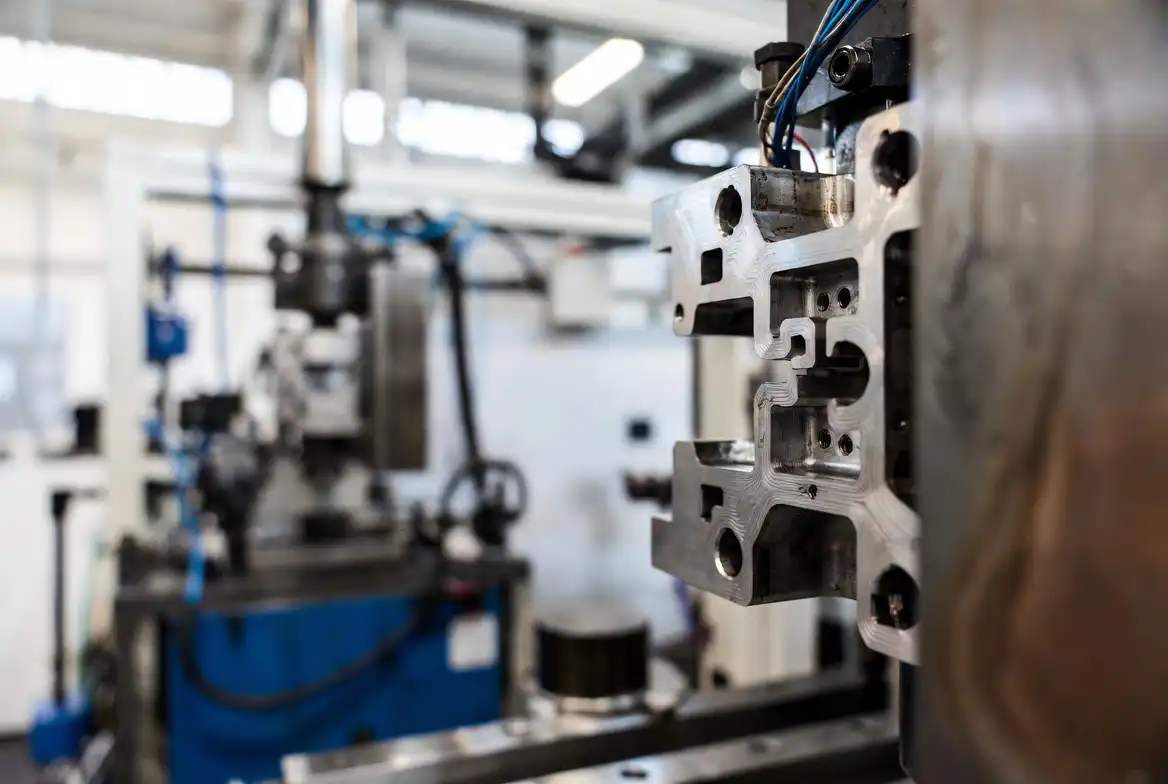
Wire EDM achieves corner radii as small as 0.02mm (using 0.02mm wire), slot widths narrower than 0.05mm, and positional accuracy within ±0.003mm. Sinker EDM produces 3D cavities with complex internal geometry that would require multiple setups and specialized tooling on a CNC mill. These capabilities make EDM essential for precision tooling, medical devices, and aerospace components.
Burr-Free and Stress-Free
EDM produces no burrs, no mechanical burrs, and no residual machining stress. Parts can often go directly from EDM to assembly without deburring operations. The spark erosion process creates a thin recast layer (typically 2-5 microns) that can be polished away if required, but does not affect dimensional accuracy or part function for most applications.
EDM Materials Compatibility
| 素材 | EDM Suitability | 主な用途 |
|---|---|---|
| Tool Steel (D2, A2, H13) | Excellent (after hardening) | Stamping dies, mold inserts, punch profiles |
| Stainless Steel (304, 316, 17-4PH) | 素晴らしい | Medical implants, surgical tools, precision filters |
| Titanium (Ti-6Al-4V) | グッド | Aerospace fasteners, medical devices, turbine seals |
| 炭化タングステン | Good (slower) | Cutting tool blanks, wear parts, die inserts |
| Inconel / Superalloys | グッド | Turbine blades, exhaust components, hot section parts |
| Copper / Brass | Excellent (fast) | Electrical contacts, heat sinks, electrode manufacturing |
Common Applications of EDM Machining
- Tool and Die Making: Stamping die profiles, injection mold cavities, progressive die inserts, extrusion die openings
- 航空宇宙: Turbine blade root forms, cooling hole arrays, seal slots in hardened alloys, structural fastener holes
- 医療: Surgical instrument profiles, implant features, micro-fluidic channels, stent patterns
- 電子機器: Connector pin arrays, micro-contacts, PCB micro-drilling, EMI filter screens
- 自動車 Fuel injector nozzle holes, valve seat profiles, transmission gear slots
- Prototype Tooling: Rapid die fabrication for short-run stamping and molding trials
よくあるご質問
When is EDM Machining Services: Wire EDM and Sinker EDM for Intricate Cuts in Hardened Materials the right choice?
EDM Machining Services: Wire EDM and Sinker EDM for Intricate Cuts in Hardened Materials is the right choice when the part requires machined accuracy, controlled surfaces, repeatable features, and a material that can be cut reliably.
What should be confirmed before ordering EDM Machining Services: Wire EDM and Sinker EDM for Intricate Cuts in Hardened Materials?
製造開始前に、図面のバージョン、材料等級、公差、数量、重要寸法、表面仕上げ、検査要件を確認する。.
What usually drives cost in EDM Machining Services: Wire EDM and Sinker EDM for Intricate Cuts in Hardened Materials?
コストは通常、材料、段取り時間、機械時間、公差の難易度、治具、工具アクセス、仕上げ、検査、注文数量によって左右される。.
How can quality risk be reduced in EDM Machining Services: Wire EDM and Sinker EDM for Intricate Cuts in Hardened Materials?
重要なフィーチャーを明確にマーキングし、不必要な厳しい公差を避け、製造可能性を早期に確認し、重要な寸法の検査データを使用することで、品質リスクを低減します。.