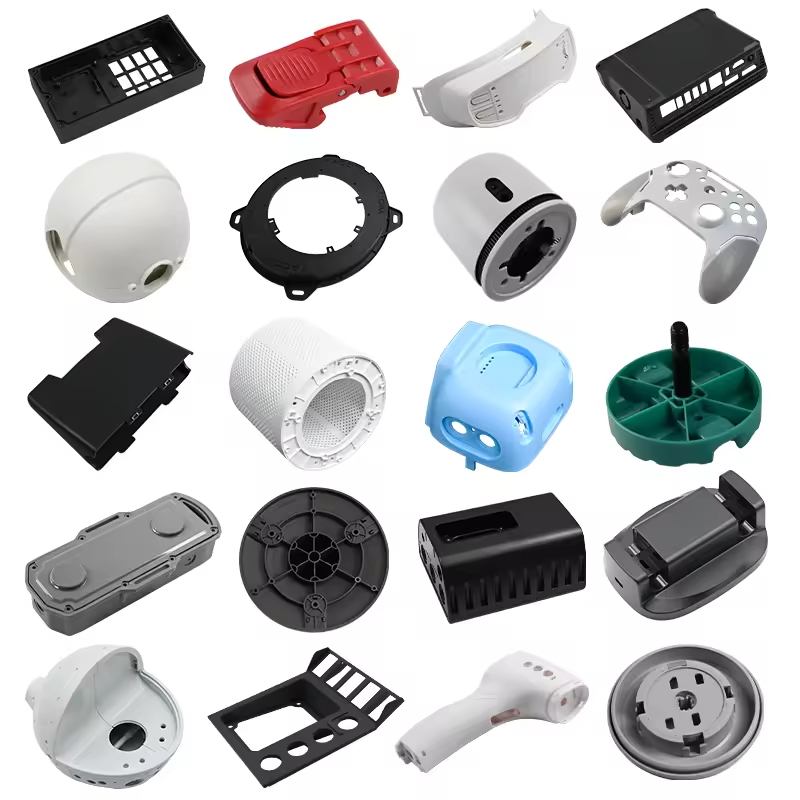
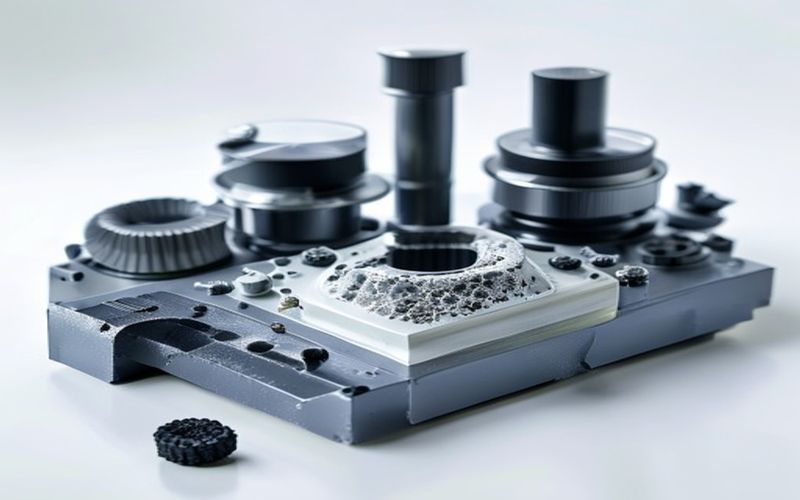
金型は、あらゆる射出成形工程の要です。ナイロン製部品の場合、適切な金型タイプを選択するには、初期投資、生産量の要件、部品の複雑さ、および納期上の制約を総合的に考慮する必要があります。選択肢を十分に理解することで、プロジェクトに最適な選択を行うことができます。.
射出成形金型の分類
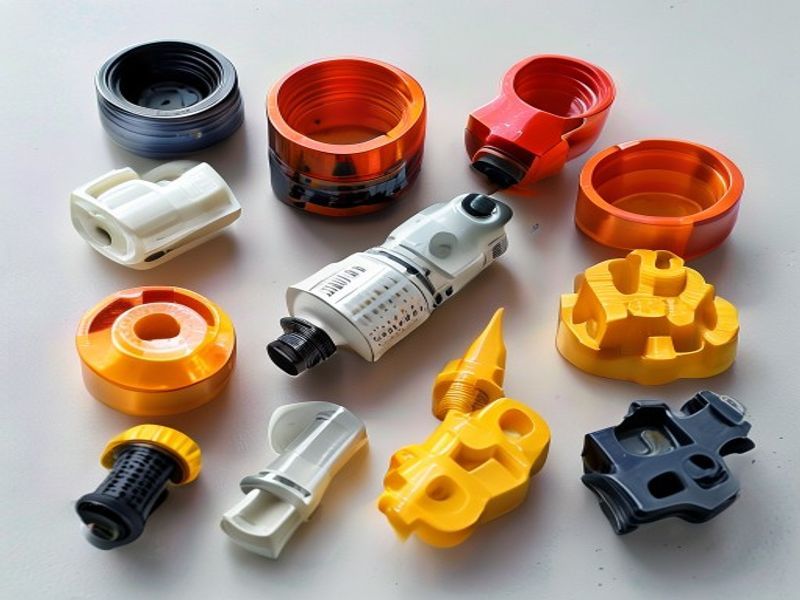
生産量別(SPI分類)
| クラス | 説明 | 予想寿命 | 一般的なコスト |
|---|---|---|---|
| クラス101 | 高い生産量 | 1,000,000回以上 | 最高 |
| 102組 | 中規模生産 | 50万~100万サイクル | 高い |
| 103組 | 生産量が少ない | 10万~50万サイクル | ミディアム |
| 104/105組 | プロトタイプ/ブリッジ | 10万サイクル未満 | 最低 |
建設形態別
2枚プレート型
最も一般的で経済的な金型タイプです。部品とランナーは同じ分型線から排出されます。構造がシンプルであるため、コストが低く、メンテナンスも容易です。アンダーカットのない部品や、分型線上のランナーの位置に問題がない場合に最適です。.
3枚プレート型
2本目のパーティングラインを追加することで、ランナーを成形品から分離させることができ、単キャビティ金型ではセンターゲート、各キャビティでは複数のゲートを設けることが可能になります。ランナーは成形品とは別々に排出されるため、自動化に有利です。2プレート構造に比べてコストが高く、メンテナンスも多くなります。.
ホットランナー金型
ランナーシステムを溶融状態に保つことで、ランナーのロスを完全に排除します。初期費用は高くなりますが、大量生産時には大幅な材料費の削減につながります。精密な温度制御が必要であり、金型の操作やメンテナンスが複雑になります。材料要件が一定である大量生産に最適です。.
スタック金型
2つ以上の型分け面を設けることで、プレス機のサイズを大きくすることなく、生産量を2倍または3倍に増やすことができます。キャビティを「積み重ねる」ことで、型締力をより効率的に活用します。複雑でコストもかかりますが、大量生産用途においてスループットを劇的に向上させます。.
金型製作における材料の選定
キャビティおよびコアの材料
- P20: 予備焼入れ鋼。充填剤を含まないナイロンとの組み合わせで、10万~50万サイクルの耐久性を発揮します。中規模生産に適した経済的な選択肢です。.
- H13: 焼入れ工具鋼。ガラス繊維強化ナイロンに最適です。50万サイクル以上の摩耗に耐えます。.
- S7: 耐衝撃性に優れた工具鋼で、頻繁な設計変更や修理が必要な金型に適しています。.
- アルミニウム(7075、QC-10): 高速加工が可能で、熱伝導性に優れています。試作品や10,000個未満の小ロット生産に最適です。.
ナイロンに関する特別な注意事項
ナイロンは融点が高く(260~290°C)、ガラスや鉱物系充填剤が使用される可能性があるため、材料の選定には細心の注意を払う必要があります:
- ガラス充填グレードには、硬化金型(H13または同等のもの)が必要です。
- 高温用ナイロングレードでは、冷却性を高めるためにベリリウム銅製のインサートが必要になる場合があります
- ゲート部の侵食は充填材によって加速されるため、硬化型ゲートインサートの採用を検討してください
試作金型と量産金型
新製品の開発にあたっては、まず試作金型から始めることを検討してください:
- 投資額の削減: 生産用金型のコスト(20-40%)
- 配送がより迅速に: 2~4週間 対 8~12週間
- 設計検証: 量産用金型を確定する前に、設計を検証する
- 市場調査: 本格展開に先立ち、試験生産を行う
設計の妥当性が確認され、生産数量が確定次第、量産用金型へ移行します。試作金型は、予備として、あるいは予備部品の製造に使用することができます。.
Nylon injection mold types should be compared by expected shots, resin wear, cavity strategy, maintenance access, lead time and ownership cost.
Mold-Type Questions That Change the Tooling Recommendation
- The buyer chooses a mold class from annual volume alone without checking resin wear, cycle time, cavitation, maintenance, and future design changes.
- Prototype tooling and production tooling are compared without defining sample quantity, tool-life expectation, spare inserts, and ownership terms.
- Filled nylon or corrosive compounds are quoted with generic mold steel and polish assumptions that may not control wear or cosmetic risk.
- The mold type is approved before the part, gate, cooling, ejection, and inspection requirements are reviewed together.
How Nylon Plastic Supports the Project
Nylon Plastic can connect mold construction, modified nylon grade selection, DFM, sampling, injection molding, and inspection. Since 2005, the project review has focused on the complete production route rather than assigning a mold class from volume alone.
- Review the drawing, material, quantity, critical features, and service environment before quotation.
- Connect samples, dimensional reports, material documents, traceability, and acceptance criteria to the same revision.
- Use custom compounding, injection molding, CNC machining, or 3D printing when the application requires a different route.
関連記事
- Rapid vs Production Tooling
- Mold Fabrication for Plastic Parts
- Injection Mold Gate Design
- カスタム成形プラスチック部品
よくある質問
How should a mold type be selected for nylon parts?
Review volume, annual demand, resin wear, cavitation, cycle time, geometry, finish, tolerance, maintenance, future changes, and ownership together. A volume label alone is not enough.
What is the difference between prototype and production molds?
Prototype molds usually favor speed, lower initial tooling commitment, and design learning. Production molds prioritize life, repeatability, maintenance, automation, and lifecycle economics.
Does glass-filled nylon require special mold construction?
It can. Filled nylon may increase abrasive wear and alter flow, shrinkage, surface texture, and weld-line behavior. Steel, gates, vents, cooling, and polish should match the exact grade and part geometry.
What should a mold quotation define?
Require mold base, steel, cavities, runner, hot runner if applicable, slides, cooling, ejection, tool life, trials, samples, correction scope, spare parts, ownership, maintenance, storage, and transfer terms.
Request a Nylon Mold-Type Review
Send the part model, resin, volume by phase, cosmetic requirements, tolerance, expected tool life, and ownership terms for a tooling-route review.