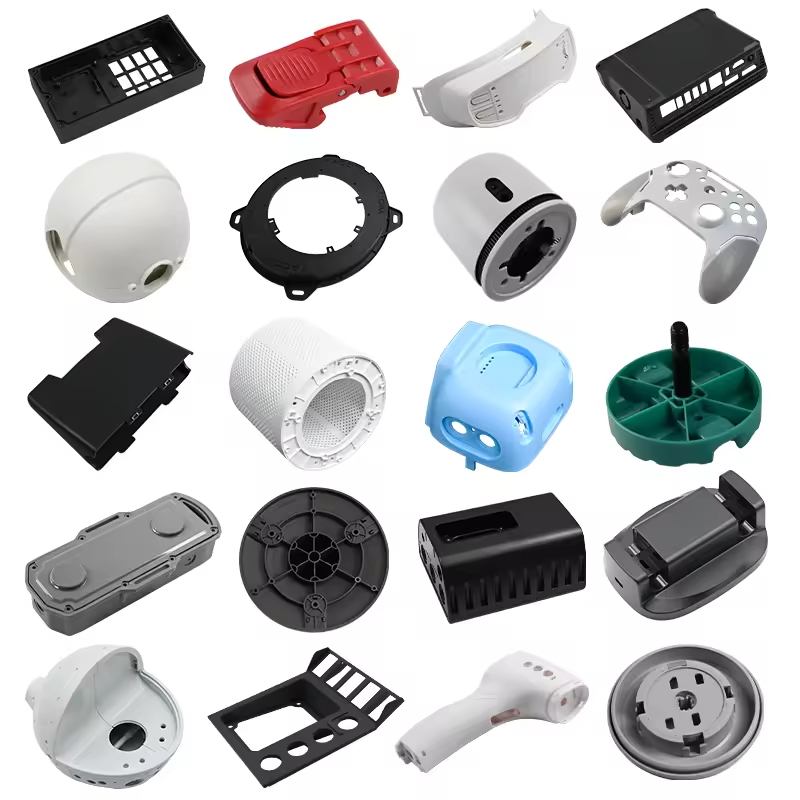
Sink marks in injection molding are shallow depressions on the part surface caused by uneven shrinkage, usually where thick walls, ribs, bosses, screw posts or heavy sections cool more slowly than surrounding material. Fixes usually require both DFM review and process tuning.
A molded part can pass basic dimensions and still fail visual inspection because of sink marks. For housings, covers, automotive trim and consumer-facing components, sink control should be planned before mold cutting through wall design, rib ratios, gate location and packing strategy.
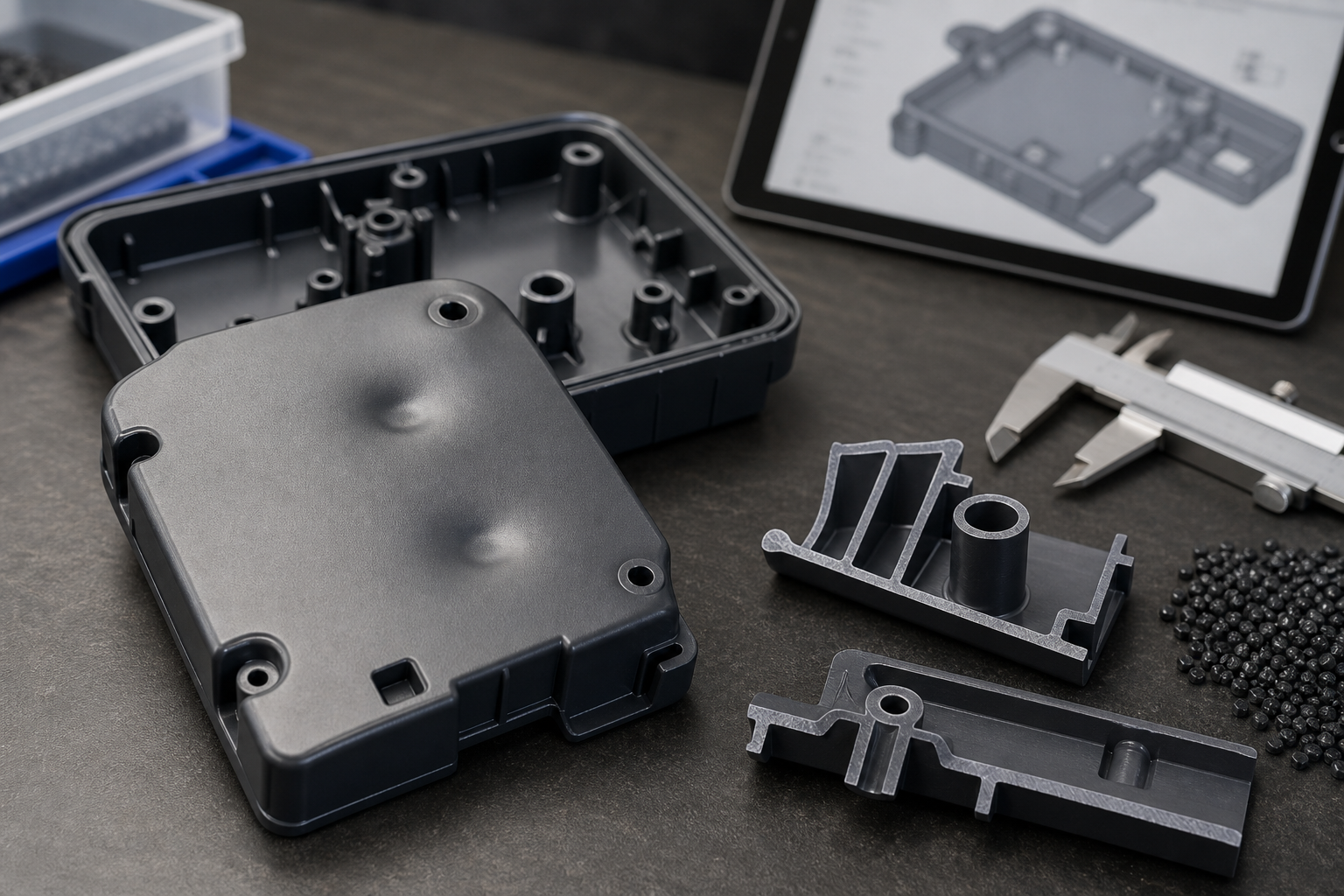
Common Causes of Sink Marks
| Cause / material | Typical sign or use | Buyer or engineering action |
|---|---|---|
| Thick wall section | Surface depression over heavy mass | Core out thick areas and keep wall transitions gradual |
| Oversized ribs | Sink opposite rib base | Keep rib thickness lower than nominal wall |
| Heavy bosses | Circular sink on visible surface | Use support ribs and proper boss design |
| Gate freeze too early | Poor packing in thick zones | Review gate size, location and packing time |
| High shrinkage material | More visible sink on PP, PE or crystalline resins | Adjust DFM and shrinkage expectations by material |
DFM Checks Before Tooling
- Keep nominal wall thickness as uniform as practical.
- Avoid abrupt transitions from thin walls to heavy sections.
- Design ribs thinner than the main wall and add radius where needed.
- Core out bosses instead of leaving solid plastic masses.
- Place gates so thick zones can be packed before gate freeze.
Material Shrinkage and Sink Risk
| Material / case | Main concern | Selection note |
|---|---|---|
| ABS | Moderate sink risk | Good for housings when ribs and bosses are designed correctly |
| PC / PC-ABS | Moderate risk | Cosmetic surfaces need stress and sink review |
| PP | Higher shrinkage | Control wall thickness and warpage together |
| POM | Crystalline shrinkage | Review precision features and packing |
| Glass-filled nylon | Fiber orientation and differential shrinkage | Check ribs, bosses and warpage |
Buyer RFQ Details for Sink Mark Prevention
For a useful review, send the 3D model or 2D drawing, resin grade or target material, part photos if the defect already exists, machine and mold information if available, expected annual volume, cosmetic requirements, critical dimensions, application environment and any inspection standard. Nylon Plastic can review the design, material and molding route before tooling or production changes are made.
Related Engineering Guides
- Rib and boss design guide
- Injection molding wall thickness guide
- Injection molded parts DFM checklist
Request a Quote or Design Review
Share your plastic part drawing, material requirements, production quantity and defect or DFM concern. Nylon Plastic can help compare material choices, tooling changes, process adjustments and production risks for custom molded plastic parts.
よくあるご質問
What causes sink marks in injection molding?
Sink marks are caused by uneven shrinkage where thick walls, ribs, bosses or heavy sections cool more slowly than nearby plastic.
Can packing pressure fix sink marks?
Packing pressure can reduce some sink marks, but repeated sink over ribs, bosses or thick sections usually needs DFM changes as well.
Which part features often create sink marks?
Heavy bosses, thick ribs, abrupt wall transitions and solid plastic masses under visible surfaces are common sink mark sources.
How can sink marks be prevented before mold making?
Review wall thickness, rib ratios, boss design, gate location, material shrinkage and cosmetic surfaces before mold design is released.